

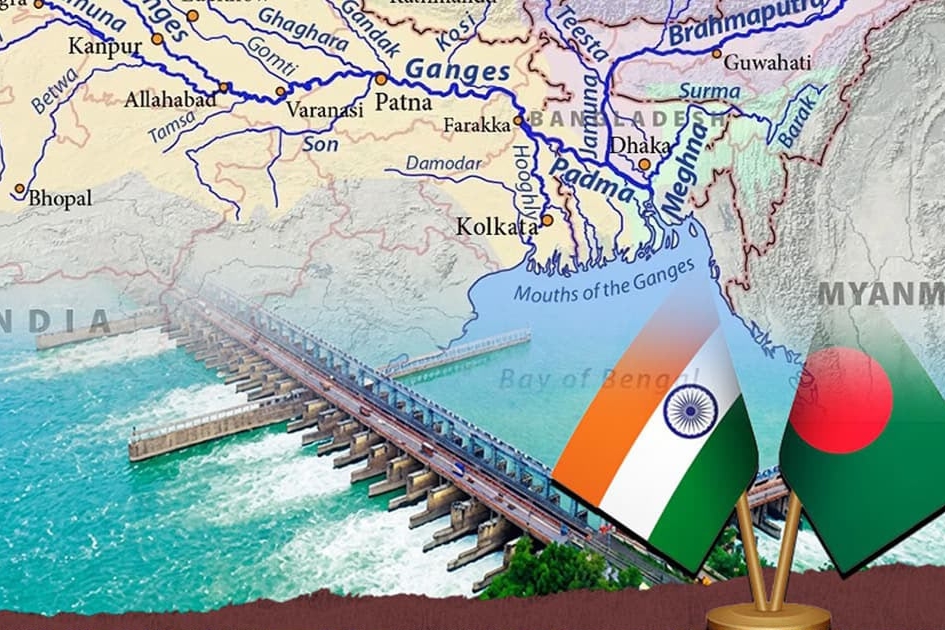



As climate pressures reshape South Asia’s rivers, experts are urging Bangladesh and India to integrate ecological protection, scientific data and regional resilience into future Ganges cooperation.
Bangladesh seeks new water-sharing arrangement as 30-year agreement nears expiry amid growing climate pressures.
The future of the Ganges Water Sharing Treaty is emerging as a major climate and regional cooperation challenge as India reiterates that discussions with Bangladesh on a successor agreement will continue through existing bilateral mechanisms ahead of the treaty’s expiry in December 2026.
The agreement, signed in 1996, governs the sharing of dry-season flows of the Ganges at the Farakka point and supports millions of people dependent on the river for agriculture, fisheries, livelihoods and ecosystems in both countries.
Bangladesh is seeking a renewed water-sharing arrangement that reflects current hydrological realities, climate change impacts and growing pressure on freshwater resources.
India keeps talks under existing mechanism
Indian Ministry of External Affairs (MEA) spokesperson Randhir Jaiswal said discussions on the Ganges water-sharing issue would continue through established bilateral platforms, including the Joint River Commission (JRC) and technical-level meetings.
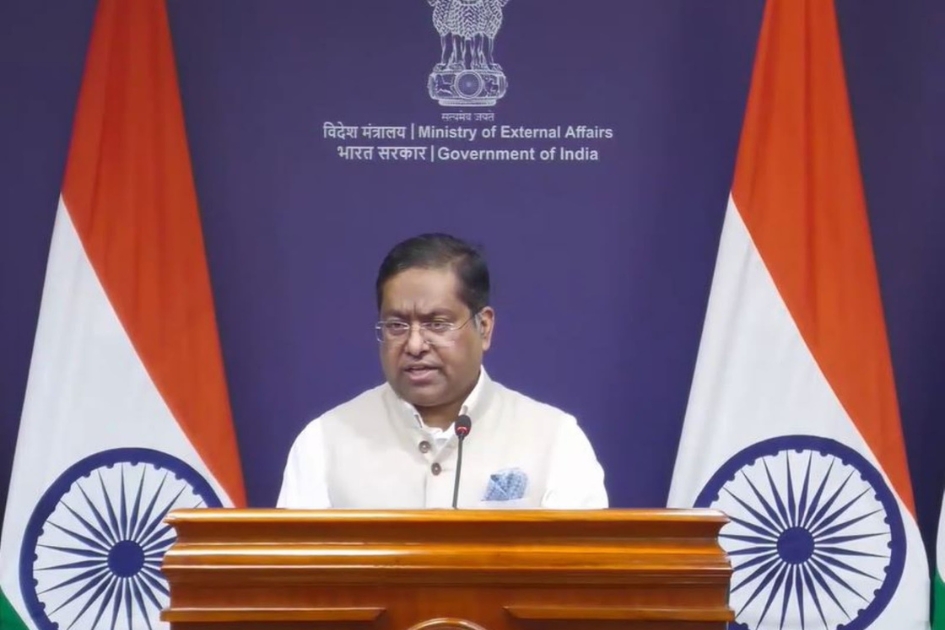
“Bangladesh and India share 54 common rivers. There is the Joint River Commission and several technical-level meetings on the common rivers water-sharing,” Jaiswal said during a media briefing in New Delhi on Monday.
He added that future discussions on the Ganges arrangement would take place through existing structured bilateral mechanisms.
The statement came after India’s Parliamentary Standing Committee on External Affairs recommended resuming negotiations with Bangladesh on the Ganges water agreement.
The two countries have long used the Joint River Commission as the primary platform for cooperation and discussion on shared river issues.
Dhaka hopes for positive movement
Bangladesh has expressed optimism that discussions on renewing the treaty will progress positively.
On 9 July, Bangladesh State Minister for Foreign Affairs Shama Obaed Islam said negotiations over the treaty’s renewal were moving in a positive direction.
“I think it is moving in a positive direction. I hope India will understand its importance and come forward accordingly,” she told reporters.
The 1996 treaty was signed for a 30-year period and is scheduled to expire in December 2026. Its renewal comes at a time when climate change, changing rainfall patterns and increasing water demand are reshaping river management challenges across South Asia.
Climate change adds urgency to river agreement
Experts say the next agreement must go beyond traditional water allocation and incorporate climate adaptation, ecological protection and long-term river-basin management.
The Ganges is one of South Asia’s most important transboundary rivers, supporting millions of people through farming, fisheries, drinking water supplies and natural ecosystems.
For Bangladesh, reduced dry-season flow has serious implications for irrigation, food security, river biodiversity and coastal regions already facing increasing salinity intrusion.
Changing rainfall patterns, Himalayan ecosystem shifts, extreme weather events and rising demand for freshwater have added new complexities to managing shared rivers.
Experts call for broader regional approach
Former Bangladesh High Commissioner to India Tariq A Karim said the 1996 treaty showed that cooperation between the two countries was possible even on politically sensitive issues.
“But the treaty is due to expire in December 2026, and its renewal will test whether the region can adapt old agreements to new hydrological and climatic realities,” he said at a recent seminar.
Karim said water, food security, energy, public health, disaster management and climate resilience should be treated as regional public goods.
“No country can secure them alone,” he said.
He proposed shared river-basin management, joint research, early-warning systems, climate adaptation financing and a regional ecological security dialogue.
“Such cooperation would not require states to surrender sovereignty. It would require them to recognise that sovereignty in an age of climate stress is strengthened, not weakened, by cooperation achieved through its pooling,” Karim said.
Bangladesh urged to prepare science-based strategy
International affairs expert Professor Shahab Enam Khan said Bangladesh needs extensive preparation before entering formal negotiations, with scientific evidence and data sharing playing a central role.
“MoFA has to do a lot of homework, and data sharing is key. We need to keep in mind that the situation in 1996 and 2026 is not the same,” he said.
He stressed that future negotiations should not be viewed only through diplomatic or engineering perspectives.
“This can’t be seen only from engineering or diplomatic prisms; they should include economists, urban planners and sociologists in the planning,” he added.
Experts warn that failure to reach an updated agreement could increase risks for Bangladesh’s agriculture, food availability and climate resilience, particularly as freshwater stress intensifies.
The renewal of the Ganges treaty is expected to become more than a bilateral water-sharing issue. Observers say it could serve as a test of whether South Asia can develop new models of cooperation for climate-stressed transboundary rivers, an issue facing regions around the world.
Sohanur Rahman, Executive Coordinator of YouthNet Global, said the future of shared rivers must be guided by climate justice, community voices and ecological sustainability.
“Rivers do not follow political boundaries, and the climate crisis is making water security a shared challenge for all countries. The renewal of the Ganges Water Sharing Treaty should not only focus on allocation of water but also on protecting ecosystems, safeguarding vulnerable communities and building a resilient future through regional cooperation,” he concluded.




