

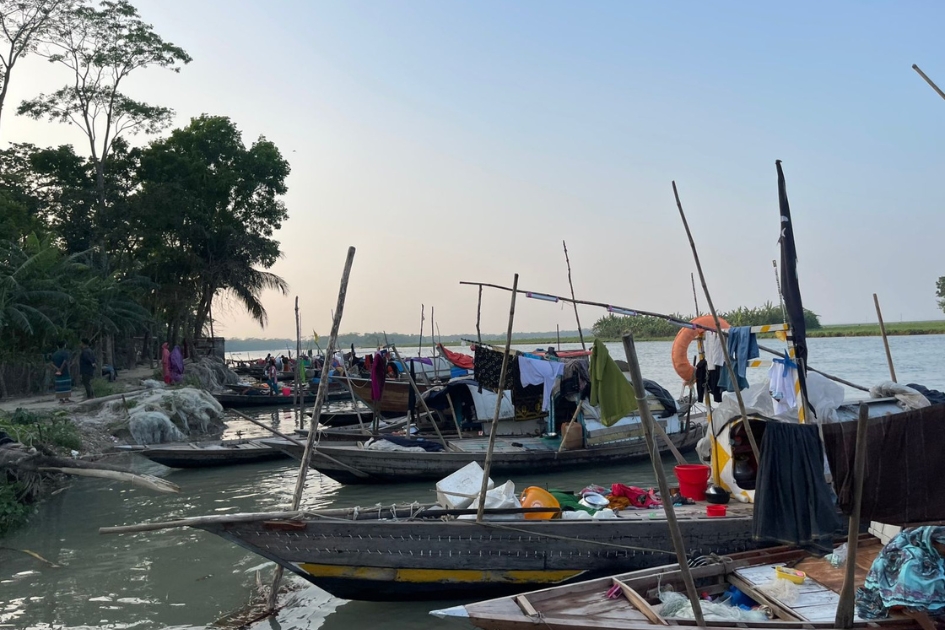



For Barishal’s nomadic Manta community, Eid offers only a fleeting break as families quickly return to lives defined by fishing, exclusion, and uncertainty on the rivers they call home.
For the nomadic Manta community living entirely on boats along the Bukhainagar River (a waterway located in the Barishal district of southern Bangladesh, flowing near Laharhat, Barishal Sadar), even festive days like Eid quickly give way to daily survival struggles.
Despite enjoying modest meals of chicken and rice on Eid day, families return to their usual routine the very next morning. Life for this floating community begins and ends on the water, with livelihoods and uncertainty flowing side by side.
More than 1,000 people from over 300 Manta families live across five unions in Barishal Sadar upazila, including Shayestabad, Charkaua, Charmonai and Tungibaria. Around 115 boats form the heart of this nomadic settlement, and fishing remains their sole source of income. Community members travel long distances across rivers such as the Tetulia and Arial Kha using hooks and nets to catch fish.
“This is a busy time for us due to strong winds and good fish availability,” said Jasim Uddin, a leader of the fleet. “On Eid day, we ate rice with chicken. But the next day, we returned to our previous condition. If we catch fish, we can eat. If not, we survive on plain rice with salt.”
Mumtaz Begum, a housewife, described similar struggles: “On Eid day, we could at least give our children some meat. But the next day, we had nothing. We managed with simple rice and lentils.”
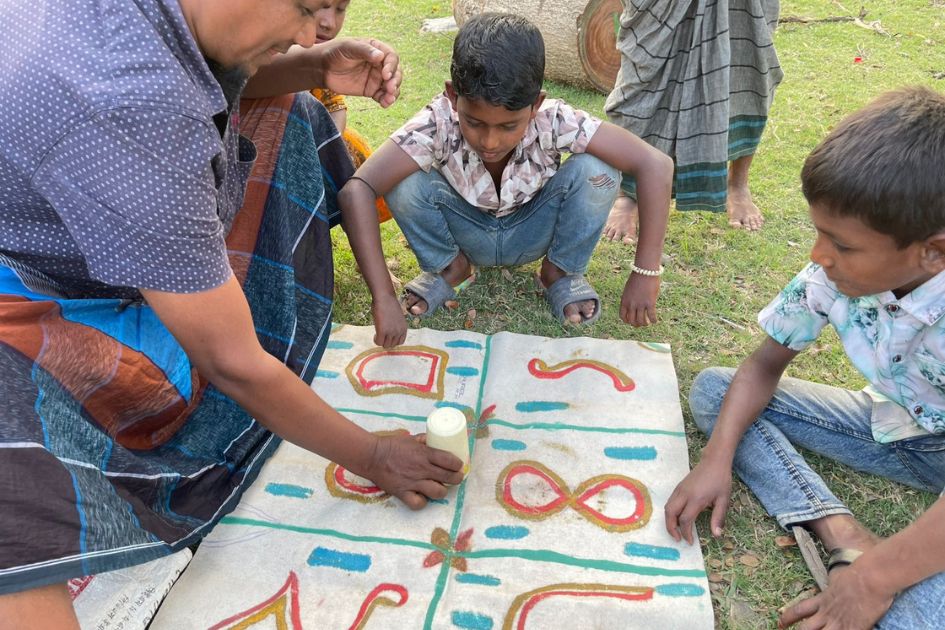
Beyond economic hardship, the Manta community faces systemic exclusion. Many members do not have national identification cards, which makes them ineligible for government social safety net programmes. Without access to public services or social support, survival remains uncertain.
“Because we live on boats, we are often left out. Many of us do not even have IDs. We want this situation to change,” community members said.
Authorities acknowledge the gap. District Social Services Officer Akhtaruzzaman Talukdar said that 50 members of the Manta community have been included in assistance programmes this year, and efforts are underway to gradually bring more families under social protection schemes.
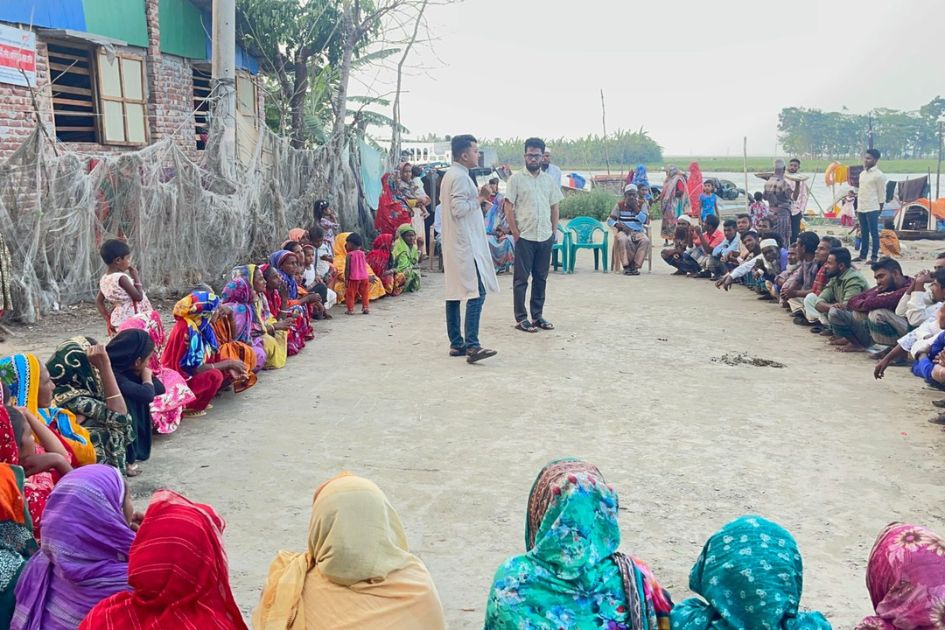
Sohanur Rahman, Executive Coordinator of YouthNet Global, emphasized the urgency: “The Manta community highlights how water, sanitation and social protection remain inaccessible for some of the most vulnerable. Their daily struggle reminds us that true climate and social justice must leave no one behind.”
Yet for many, meaningful change remains distant. The river shapes every aspect of their lives, but safety, sanitation and basic rights remain scarce. Their story highlights how access to water, sanitation and social protection remains a critical issue for marginalized communities worldwide.




