

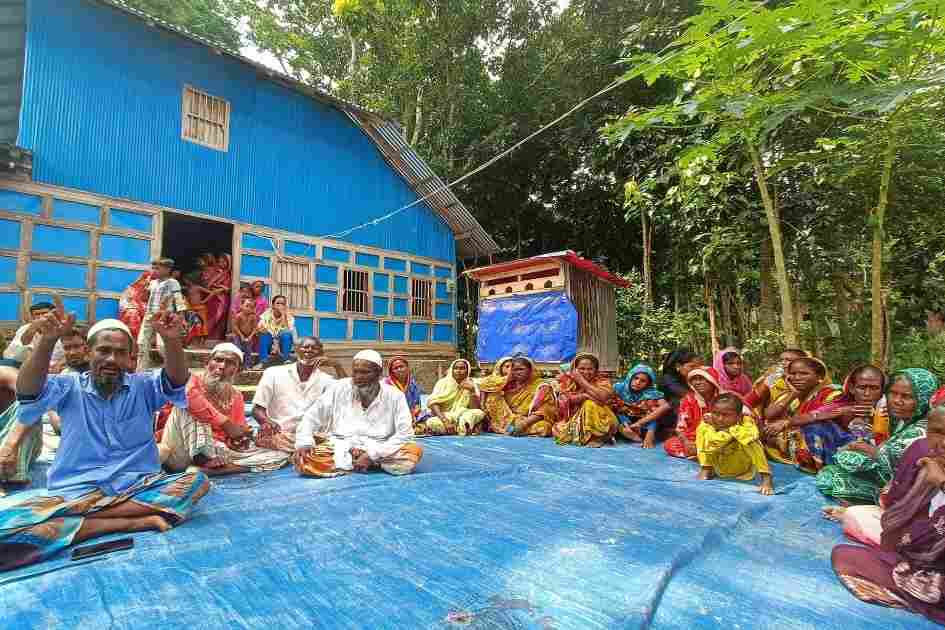



Hundreds of Bangladesh’s landless Manta fisher folk gain voter registration, securing identity and rights while entering elections for the first time amid climate hardship and decades of exclusion and marginalization.
For the first time in their lives, hundreds of members of Bangladesh’s Manta community, landless fisher folk who live entirely on boats from birth to death, are preparing to cast their votes in the upcoming national parliamentary elections. Nearly 400 people from 179 families in Laharhat under Tungibaria Union of Barisal Sadar Upazila have recently become registered voters, marking a historic milestone in political and social inclusion.
The Manta are a floating, landless community whose livelihoods depend on fishing. Climate change, river pollution and declining fish stocks have severely reduced their food sources and income, while frequent river disasters threaten their safety. They have little to no access to basic services such as healthcare, education, sanitation or formal housing, leaving them among Bangladesh’s most marginalized populations.
National ID cards and voter registration are not just administrative achievements. They are life changing milestones that provide legal recognition, protect rights, open access to essential services and allow the Manta to participate in decisions that shape their survival, livelihoods and future.
Jasim Sardar, a local community leader, said elections used to pass them by as no candidate ever reached out. “Now that we are voters, we will choose leaders who understand our struggles,” he said.
Alamgir, a newly registered voter, recalled past hardships. Traveling by boat to the mainland, he often faced harassment from police who demanded identification he could not provide. “With a national ID card, I can now proudly prove my identity and access basic rights,” he said.
Sixty year old Samiran Bibi highlighted the community’s daily struggles. Declining fish stocks have worsened food scarcity and even securing burial plots remains difficult. “We will vote for candidates who address these urgent challenges,” she said.

Community leader Jasim Sardar emphasized that access to sanitation, healthcare and education are the most critical priorities for the Manta people.
The Barisal District Election Commission confirmed that a local development organization has worked with the community for many years. With its support and assistance from local representatives, more than 1,000 Manta individuals have now obtained citizenship.
Since 2016, environmental organization YouthNet Global has been helping integrate the Manta into mainstream society. According to the organization, raising awareness about national ID cards was a major challenge, as many community members previously did not understand their rights.
Arifur Rahman Shuvo, Secretary General of YouthNet Global, highlighted the political importance of the Manta vote. “Candidates must clearly outline their plans for the Manta community in their manifestos. Those who successfully engage this group are likely to gain a significant advantage in the election,” he said.
The inclusion of the Manta in the electoral process reflects broader efforts to empower marginalized and climate impacted communities. Their historic participation not only gives them a voice in local governance but also represents a step toward a more inclusive democracy in Bangladesh.
Sohanur Rahman, Executive Coordinator of YouthNet Global, said the Manta community’s first opportunity to vote is a milestone not only for them but also for Bangladesh’s democracy. “Their voices matter and their participation can drive real change for marginalized and climate impacted communities,” he said.




