




As climate-hit fishermen turn to electric auto-rickshaws, many face crushing NGO loans and bribery, while Bangladesh’s proposed EV policy offers tax breaks benefiting wealthy importers rather than vulnerable workers.
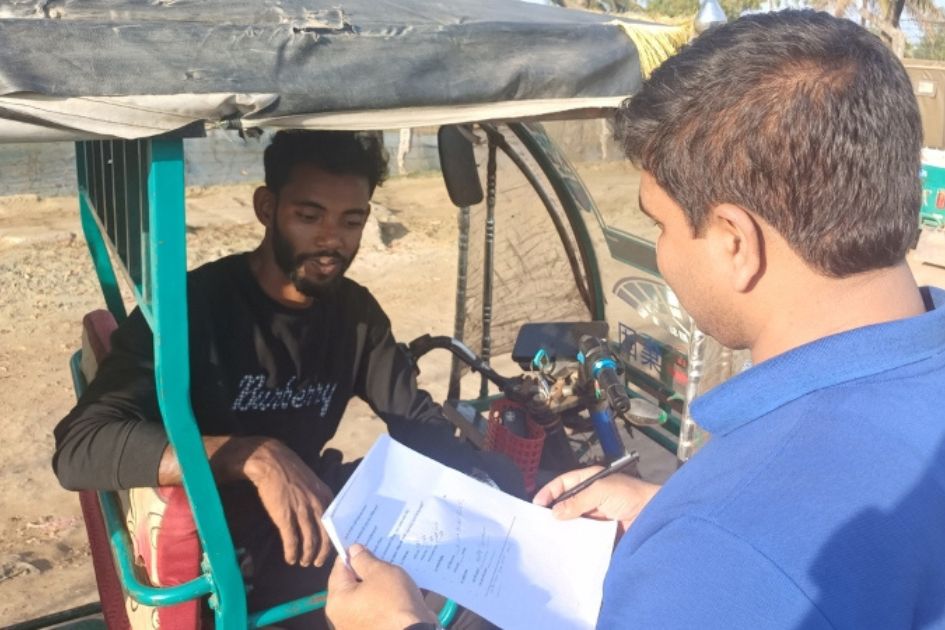
Driver Nurul Hossain sits in his auto-rickshaw on a sunlit afternoon in the Chhanua village of Banshkhali upazila in Chattogram. The vehicle gleams, but he seems tense.
“I took a loan of Tk 90,000,” the 32-year-old says. “In 40 weeks, I have to repay Tk 102,000. On top of that, I had to pay a bribe.”
Over the past several years, cyclones in the Bay of Bengal have grown more intense. Rising water temperatures have spurred a surge in jellyfish, while hilsa catches have sharply declined. As a result, Hossain, once a fisherman, was forced to leave the profession in 2025.
Hossain is not the only one. Hundreds of fishermen abandon the sea every year as catches dwindle and incomes shrink, said Abdus Sukkur, president of the Banshkhali Fishing Boat Owners Association, which represents around 200 boat owners in the upazila.
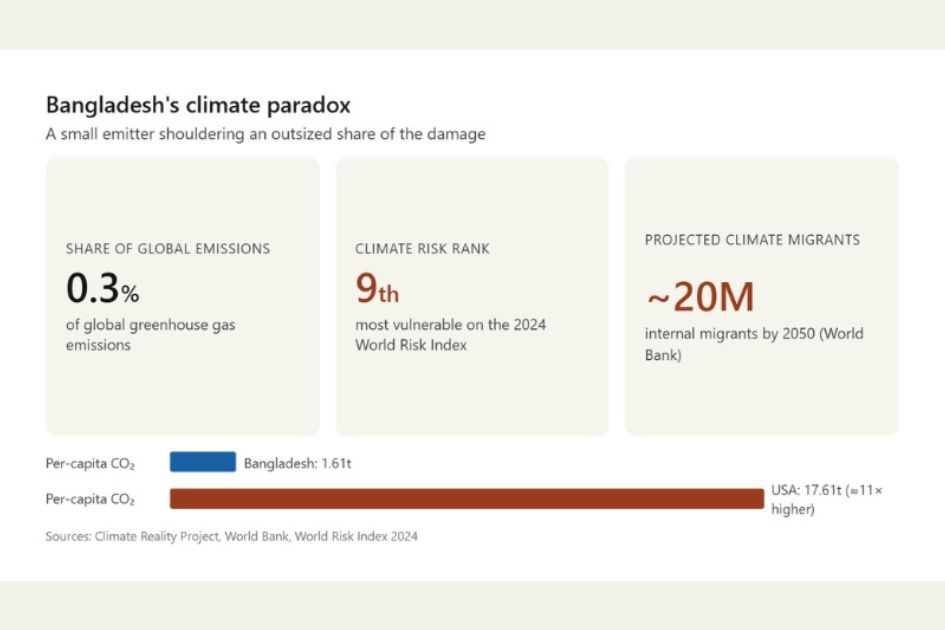
Despite producing just 0.3 percent of the world’s greenhouse gas emissions, Bangladesh ranks ninth on the 2024 World Risk Index of nations most vulnerable to extreme weather, according to the World Bank. The bank also expects climate change to turn nearly 20 million people into internal migrants and affect their livelihoods.
Struggling to survive, many shift to other trades and end up staying there permanently. Armed with modest savings and heavy debt, some have turned to driving battery-powered auto-rickshaws. Others, finding no alternatives, are taking deadly risks.
For example, Sukkur noted that another local fisherman, Azizur Rahman, from a nearby village, went missing on April 4 after a trawler capsized in the Andaman Sea while attempting to migrate illegally to Malaysia.
“The sea is no longer what it used to be,” Hossain says. “The storms come without warning, the hilsa has all but disappeared from our nets. For the last few years, we returned to shore with empty boats again and again. In the end, I had no choice but to leave the sea.”
Researchers studying Bangladesh’s coast have been tracking these changes for years: the warmer Bay, the fiercer cyclones, the hilsa moving to waters fishermen can no longer reach. Hossain has not read any of those studies. He has lived them.
Bangladesh’s government does have policies in place to support people like Hossain.
Bangladesh’s national climate plan, NDC 3.0, states that special funds will be established to protect people who lose their livelihoods due to climate change. Loans will be provided on easy terms. Vocational training will be offered.
The recent Labour Reform Commission report published in April 2025 echoed this sentiment, strongly advocating for a National Climate and Just Transition Fund and a social protection framework to shield informal workers such as EV drivers.
Yet interviews with dozens of drivers operating electric vehicles and officials from loan-providing NGOs suggest that these measures have yet to be implemented properly.
During a visit to the Hazari Dighi Par area of Dohazari in Chandanaish upazila on February 2, 2026, this reporter found long queues of loan seekers outside a cluster of 10 non-governmental organisations.
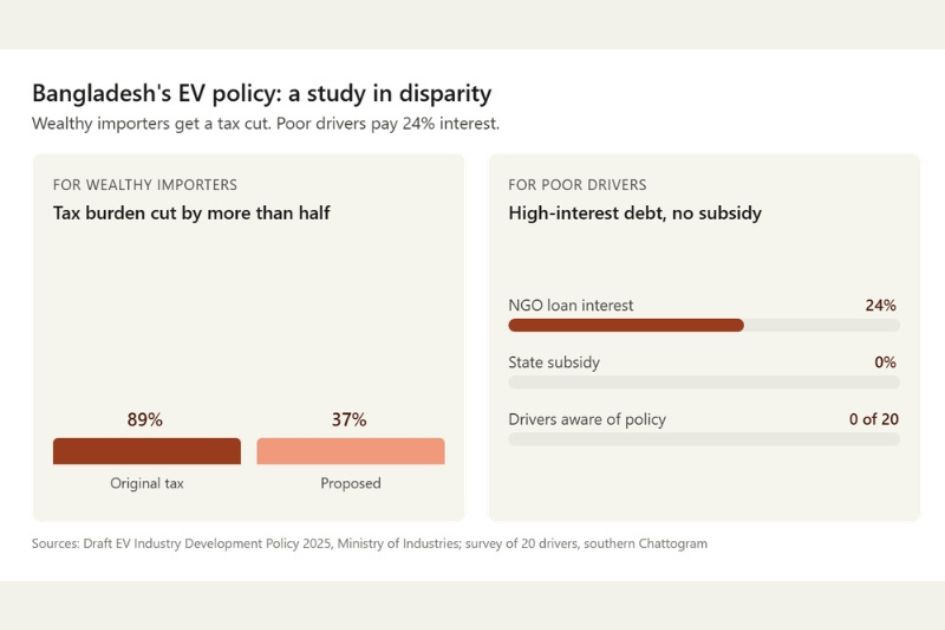
Officials from all 10 NGOs confirmed that there were no special loans for electric vehicle drivers. All they provide are ordinary loans with high interest rates of around 24 percent.
“We give our regular loans. Loans for vehicles carry higher risk, so the terms are strict,” said an official from SKS Foundation, who spoke on condition of anonymity.
Alongside the high interest rates, loan seekers often have to bribe officials as well. Hossain, for instance, had to pay an extra Tk 500 to get his loan approved.
In addition, two-thirds of the 25 auto-rickshaw drivers this reporter interviewed at a village market in southern Chattogram’s Satkania upazila in January said they had to pay bribes to secure loans.
Rahim Uddin, 45, is one such driver who paid the bribe by pawning his wife’s jewellery.
“Rich people take crores from banks and never pay them back. If I am even one day late on an instalment, they come to my home and make a scene,” he said.
Much like in some other sectors of Bangladesh, paying bribes appears to be an open secret.
“Beyond official costs, there are certain other costs. Everyone knows this,” an official at BASTOB, a Dhaka-based non-profit organisation, said with a smile in response to a query about bribery.
The high costs behind these loans are taking a toll on the livelihoods of drivers, many of whom once worked as fishermen.
About four dozen electric vehicle drivers interviewed for this report said they spend half of their earnings repaying loans, while the rest goes toward charging batteries and feeding their families.
As a result, many drivers have stopped buying fish and meat over the past six months, while some have also stopped sending their children to school.
None of these drivers are aware of the government’s policies promising subsidised loans for EV drivers.
Most of these drivers are not eligible for loans from traditional banks. As such, NGOs often become their only source of hope.
Still, with few other earning options and climate impacts intensifying, more people seem to be taking high-interest loans and hitting the road, making it even harder to earn a living.
“More vehicles mean fewer fares, and now I’m struggling to pay the instalment,” said Sahab Uddin, a driver from Chattogram who recently left farming to drive an auto-rickshaw.
While people like Uddin and Hossain struggle, wealthier buyers appear set to receive benefits from the government.
The proposed Electric Vehicle Industry Development Policy 2025, prepared by the Ministry of Industries and posted on the ministry’s website for stakeholder feedback, proposes slashing the total tax burden on fully imported EVs, including customs duty, supplementary duty and regulatory duty, from 89 percent to 37 percent.
Sultana Yasmin, joint secretary at the ministry’s Policy, Law and International Cooperation Wing, told this reporter that the draft is expected to be finalised within the year.
“The use of electric vehicles in the country will grow in the coming days. The aim of this policy is to ensure that EVs and their components can be manufactured here in Bangladesh,” she said.
But economists say the benefit of that tax cut will not reach the men who actually drive most of Bangladesh’s electric vehicles.
Dr Md Alauddin Majumder, professor of economics at Chittagong University, argues that the relief should have been directed toward people seeking to purchase small battery-powered vehicles, not wealthy importers.
“That did not happen,” he said.
In a country where a fully imported EV costs many times more than what an auto-rickshaw driver earns in a year, the tax break is effectively a discount for dealers, corporate fleets and wealthy buyers, not for Hossain.
Bangladesh Bank official Chowdhury Liakat Ali, director of the central bank’s Sustainable Finance Department, admitted that the country does not have any specific project to promote EVs.
“If we manage to start micro-level financing, we might be able to support them,” he said.
To understand why, specific questions were sent to Finance Ministry Secretary Dr Md Khairuzzaman Majumder and designated information officers Senior Assistant Secretary Taslima Mostari and Senior Assistant Secretary Md Shamsul Arifin on April 1, requesting an early response. None replied before publication.
Economics professor Dr Md Alauddin Majumder of Chittagong University said, “Our banking system is now corporate-friendly. Large groups get loans easily; the poor do not. In a market economy, issuing orders alone will not work. Banks must be given incentives.”
In his assessment, if a bank earns 11 percent on ordinary loans, it will not agree to lend at 4 to 5 percent for EVs. The government must bridge that gap through subsidies, he argued.
Al Kaderi Joy, district convener of the Easy Bike Struggle Council of Chittagong, said, “The government makes policy sitting in air-conditioned rooms. Meetings happen with big importers. Nobody calls us.”
He demanded that instead of relying on NGOs, the state arrange low-interest loans through government banks.
For this report, written questions were sent via email on April 6 to the central offices of ASA, SDI, Coast Foundation, BURO Bangladesh, SKF Foundation, Bastab, SSS, RIK, SKS and Pratyashi, seeking their positions on allegations of bribery, compulsory insurance and high interest rates. Each institution was given two days to respond. None had replied by the time of publication on May 5.
Nurul Hossain of Banshkhali knows the same arithmetic. Every morning, he takes his vehicle out. In his mind, the instalment calculation never stops.
He does not know whether his name has come up in any ministry in Dhaka. He does not know that something called NDC 3.0 exists, with promises written in it for people like him.
He only knows this: if the money is not there at the end of the month, the vehicle will be taken away.
The government may announce at international forums that the number of EVs in the country is growing. Nurul Hossain’s vehicle is counted in that number. So are thousands of others across the country.
But the story behind that number, the bribes, the crushing interest, the pawned jewellery, the fish and meat no longer bought, appears in no statistic.




