

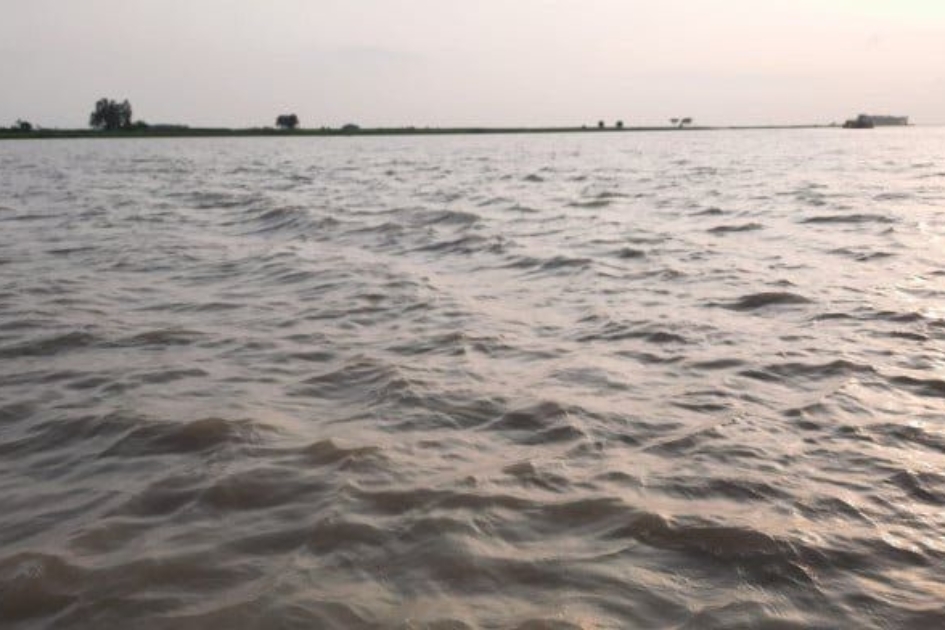



Bangladesh plans a massive Padma Barrage Project to revive rivers, tackle water shortages, strengthen agriculture, reduce salinity intrusion, and improve climate resilience across vulnerable southwestern and western regions nationwide.
Bangladesh is set to implement one of the country’s largest river and water management initiatives, the Padma Barrage Project, aimed at restoring drying river systems, strengthening water security, boosting agricultural production and improving climate resilience across the southwest and western regions.
The government plans to begin the first phase of the project at an estimated cost of Tk 33,474 crore, approximately USD 2.8 billion, while the total investment for the two-phase initiative is expected to reach nearly Tk 50,443 crore by 2033. The project will involve the construction of a major barrage on the Padma River at Pangsha in Rajbari district, with the capacity to store around 2,900 million cubic metres of water.
If approved by the Executive Committee of the National Economic Council this week, the first phase of the project will move forward with financing from the Bangladeshi government.
Officials believe the project could become a transformative intervention for agriculture, fisheries, biodiversity conservation, navigation and regional economic growth. The initiative gained renewed momentum following a high-level meeting on May 6 chaired by Prime Minister Tarique Rahman, where he reportedly emphasized the project’s long-term contribution to national development and GDP growth.
The Padma-dependent region covers nearly 37 percent of Bangladesh’s land area and includes 26 districts and 163 upazilas across four divisions. For decades, the region has faced severe dry-season water shortages due to declining upstream river flows, particularly following water diversion at India’s Farakka Barrage on the Ganges River.
According to project documents, the initiative seeks to revive five major river systems: the Hisna-Mathabhanga, Gorai-Madhumati, Chandana-Barasia, Baral and Ichhamati rivers. Experts say restoring these rivers could significantly reduce salinity intrusion in the country’s southwest, improve irrigation and drainage systems, revive inland water transport and support biodiversity restoration, including in parts of the Sundarbans mangrove ecosystem.
The first phase includes the construction of a 2.1-kilometre-long barrage equipped with 78 spillways, 18 undersluice gates, fish passes, a navigation lock, guide bunds and embankments. Hydropower plants are also planned at the Padma barrage site and at the Gorai off-take point, with an estimated combined electricity generation capacity of 113 megawatts.
Large-scale dredging and river restoration activities will form another major component of the project. Authorities plan to re-excavate 135.6 kilometres of the Gorai-Madhumati river system and 246.46 kilometres of the Hisna river system. Additional control structures and spillways will also be constructed at the Gorai, Chandana and Hisna off-take points, alongside nearly 180 kilometres of afflux bund development.
Government projections suggest the project could provide irrigation support to approximately 2.88 million hectares of cultivable land across the country. Officials estimate annual rice production may increase by 2.39 million tonnes, while fish production could rise by 2.34 million tonnes each year.
The project is also expected to secure water supply for several nationally important installations and irrigation schemes, including the Ganges-Kobadak Irrigation Project, the North Rajshahi irrigation system, the Godagari pump station and the Rooppur Nuclear Power Plant.
The idea of constructing a barrage on the Padma River dates back several decades. Between 1960 and 2000, multiple studies were carried out to identify suitable locations for the project. A comprehensive feasibility study was later completed in 2013 by a consortium of local and international consultants.
The study warned that declining dry-season water flows had already caused extensive ecological and economic damage in Bangladesh, affecting agriculture, fisheries, river navigation and biodiversity across large parts of the country.
Bangladesh, widely recognized as one of the world’s most climate-vulnerable countries, has increasingly focused on water security and river restoration as part of its broader climate adaptation strategy. Water experts describe the Padma Barrage Project not only as a major infrastructure undertaking but also as a strategic response to long-standing transboundary water challenges within the Ganges basin.
Sohanur Rahman, Executive Coordinator of YouthNet Global, said the project has the potential to reshape climate resilience and water governance in Bangladesh if implemented with transparency, ecological safeguards and meaningful community participation.
“Restoring the natural flow of rivers is critical for the future of Bangladesh. The Padma Barrage Project could help reduce salinity, revive biodiversity, strengthen food security and support millions of climate-vulnerable people. However, large-scale infrastructure projects must also ensure environmental justice, protect local ecosystems and include the voices of affected communities in decision-making processes,” he said.




