

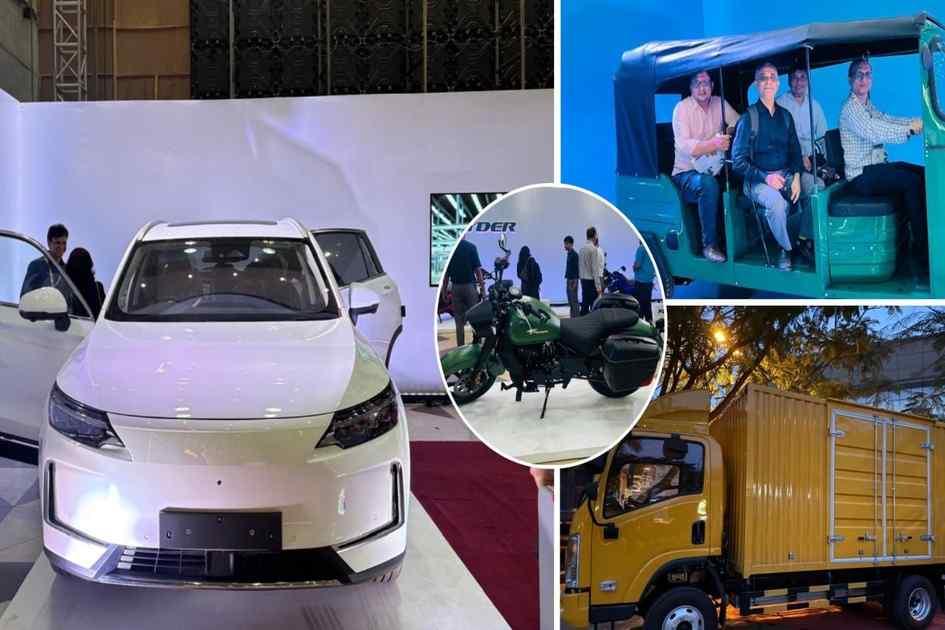



Bangladesh’s electric mobility push promises cleaner air, lower fuel imports and green industry, but experts warn success depends on just transition, renewable power, battery governance and inclusive planning.
Bangladesh is elevating electric vehicles (EVs) from a transport innovation to a core policy instrument linking energy security, public health, climate action, and industrial transformation, as the country accelerates efforts to reduce dependence on imported fossil fuels and modernise urban mobility systems.
The shift is outlined in the national budget for FY 2026–27 and the “Bangladesh Climate Budget Report 2026–27,” which introduce wide-ranging fiscal incentives, tariff reforms, and industrial support measures aimed at expanding electric mobility and building a domestic EV ecosystem.
Budget documents indicate that nearly 95 percent of Bangladesh’s petroleum demand is met through imports, exposing the economy to global price volatility and external supply risks and reinforcing the urgency of energy diversification.
Finance Minister Amir Khosru Mahmud Chowdhury described the transition as a structural economic shift linking energy policy with industrial transformation, saying increased adoption of renewable energy and electric mobility would reduce dependence on imported fossil fuels while supporting sustainable growth.
“We want Bangladesh’s industrialisation to be productive, sustainable and environmentally friendly,” he said.
EVs framed as public health, climate and equity intervention
Sohanur Rahman, Executive Coordinator of YouthNet Global, said the EV transition extends beyond transport policy and represents a broader public health and climate intervention.
“Dhaka’s transport sector sits at the intersection of air pollution, climate change, public health, and economic productivity. Electric buses are not only a transport solution; they are also a public health intervention and a climate action measure that can improve the quality of life for millions of urban residents,” he said.
He stressed that technological change alone will not ensure equity or justice in the transition.
“A just transition in urban mobility means ensuring that climate action does not deepen inequality. Clean transport systems should reduce emissions while expanding affordable and reliable access for low-income commuters.” He added, “The success of electric mobility in Dhaka will depend on whether it delivers not only cleaner air, but also safer, more inclusive, and more equitable transport for all.”
He further emphasized that climate justice must remain central to transport reform.
“Cleaner transport systems can reduce emissions and improve air quality, but they must also ensure that workers, commuters, and vulnerable communities are not left behind,” he said.
Inclusive transition, governance constraints and structural challenges
Bangladesh’s transition to greener transport systems must ensure protection for workers, vulnerable communities, and informal operators so that no one is excluded from the benefits of the shift, said Additional Secretary (Climate Change Wing) of the Ministry of Environment, Forest and Climate Change, Mohammad Navid Safiullah.
He made the remarks at the National Youth Summit on Just Transition and Sustainable Urban Mobility in Bangladesh, organised by YouthNet Global in partnership with Friedrich-Ebert-Stiftung (FES) Bangladesh at Aloki Convention Centre in Dhaka.
European Union Ambassador Michael Miller said inclusive investment, long-term planning, and youth participation are essential to ensure Bangladesh’s transition toward clean, safe, low-emission, and climate-resilient urban transport systems.
Experts said that despite strong policy momentum, Dhaka’s transport system continues to face structural challenges, including governance gaps, fragmented coordination, and infrastructure constraints that could slow implementation.
They also noted that the climate benefits of electric mobility will depend heavily on Bangladesh’s electricity mix. While electric buses eliminate tailpipe emissions, overall environmental gains will increase significantly if renewable energy—particularly solar and wind—expands its share in power generation.
$205 million electric bus programme for Dhaka region
Bangladesh has announced a $205 million initiative to deploy 400 electric buses in Dhaka and Narayanganj, one of the country’s largest investments in sustainable urban transport.
The programme aims to reduce severe air pollution, cut carbon emissions, and improve the efficiency and reliability of public transport in one of South Asia’s most densely populated and congested urban corridors.
Officials said the initiative forms part of a broader effort to modernise urban mobility while improving air quality, public health outcomes, and urban liveability for millions of daily commuters.
Fiscal incentives and industrial transition strategy
Under the FY 2026–27 budget, the government has significantly reduced the combined tax burden on imported electric vehicles while fully eliminating taxes on EV charging infrastructure.
A capacity-based advance income tax system has also been introduced for EV registration and renewal, replacing the previous flat structure, alongside broad fiscal incentives to encourage domestic manufacturing of EV components, buses, and trucks.
Officials said the policy framework is designed to stimulate demand, strengthen local supply chains, and position Bangladesh within the emerging regional green mobility value chain.
Battery waste, circular economy and regulatory urgency
Experts cautioned that the rapid expansion of electric mobility must be matched with strong environmental governance to avoid creating new forms of pollution linked to battery waste, informal recycling, and end-of-life disposal systems.
Experts further stressed the need for a dedicated national lithium battery management policy and expanded investment in research on e-waste, environmental health impacts, and socio-economic dimensions of green technologies.
They said a circular economy approach will be essential to ensure that the environmental costs of the transition do not undermine its long-term sustainability gains.
Environment group YouthNet Global called for mandatory Extended Producer Responsibility (EPR) frameworks requiring manufacturers and importers to take legal responsibility for collection, recycling, and safe disposal of used batteries, supported by strong enforcement mechanisms.
They also recommended structured formalisation of the informal recycling battery sector, ensuring occupational safety, environmental compliance, and integration into regulated recycling systems supported by modern facilities.
A digital battery passport system and QR-based traceability mechanism was highlighted as a key tool to improve transparency, track lifecycle performance, and strengthen accountability across the battery value chain.
Regional significance and long-term outlook
If successfully implemented, Bangladesh’s electric mobility programme could become one of South Asia’s largest urban transport transitions and serve as a model for rapidly urbanising cities across the region.
However, analysts said long-term success will depend on strengthened governance, sustained investment in renewable energy, effective regulatory enforcement, and coordinated engagement across government, private sector, and civil society stakeholders.




