

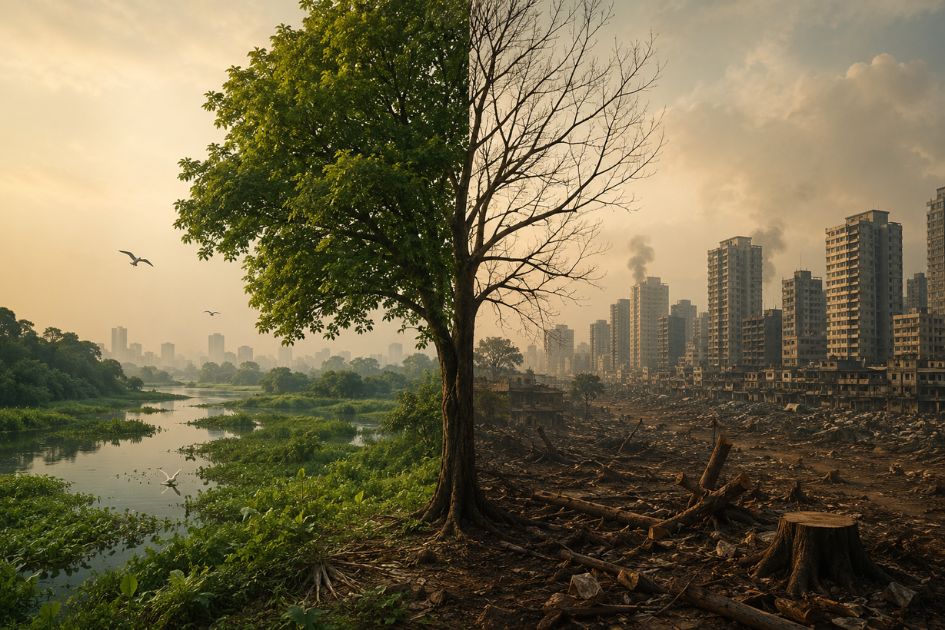

Environmental campaigners urged immediate protection of Bangladesh’s urban trees, forests and wetlands, warning that unchecked destruction is worsening climate risks, biodiversity loss, urban heat, pollution and waterlogging.
Environmental campaigners have called for the urgent protection and restoration of trees, forests and wetlands in Bangladesh’s cities, warning that continued destruction of green spaces is accelerating climate risks, biodiversity loss and deteriorating living conditions, particularly in Dhaka.
The appeal was made by Green Solidarity, a platform bringing together young people, teachers, writers, researchers, journalists, students, development workers and members of the public to advocate for the conservation of urban trees and wetlands.
Quoting poet Mahadev Saha’s words, “This life you see is not my own. I live through the life of trees,” environmental activist Md. Ohidur Rahman said trees and wetlands are essential to sustaining life, protecting biodiversity and making cities habitable.
Rahman, Regional Coordinator of BARCIK, said trees purify the air, supply water, store vast amounts of carbon and help shield communities from the impacts of climate change. Wetlands function like the lungs of Bangladesh by reducing disaster risks and maintaining ecological balance, he said.
He warned that forests, trees and wetlands are disappearing across the country, forcing birds and wildlife to lose their natural habitats. According to him, many wild animals have become displaced and some have been forced to move into neighbouring forests.
Rahman said everyday human activities, including reading books printed on paper, building homes, making furniture, breathing clean oxygen, listening to birds and enjoying nature, all depend on forests, trees and wetlands.
He said children growing up in cities without open skies, green spaces, rain, birdsong, flowers, fruit trees, grass or opportunities to interact with nature risk losing creativity, empathy, courage, honesty and emotional development.
He criticised the destruction of Panthakunja Park and the Hatirjheel wetland in the name of development, saying genuine development must protect these natural assets instead of replacing them.
Green Solidarity also expressed concern that many native tree species, including banyan, pakur, dumur, mango, jamun, shimul, palash, hijal, chatim, kadam, sal, palm, tamarind, jarul, gab, borun, koroch, neem and jackfruit trees, are gradually disappearing.
The campaigners said rapid urbanisation has replaced trees, wetlands, ponds, canals and lakes with brick, concrete buildings and paved roads, leaving little space for rainwater absorption and contributing to rising urban temperatures.
Rahman warned that the disappearance of trees and wetlands in Dhaka could trigger severe environmental consequences. Without trees, he said, air pollution would worsen because fewer plants would absorb carbon dioxide and release oxygen. The city would also lose its natural ability to regulate temperature, intensifying the urban heat island effect.
He added that the loss of wetlands would increase waterlogging by reducing rainwater drainage while also lowering groundwater levels and deepening the city’s water crisis. Biodiversity would decline and residents would face increasingly difficult living conditions.
According to Rahman, Dhaka is becoming hotter each year because of unplanned urbanisation and environmental degradation. The reduction of trees has weakened the city’s natural cooling system while the expansion of concrete buildings and roads has increased heat absorption and retention. Vehicle emissions and industrial pollution have further contributed to rising temperatures and the filling of wetlands has undermined the city’s natural cooling capacity.
The campaigners attributed the continuing loss of forests to climate change, ecological degradation, habitat destruction, food shortages for wildlife, declining navigability of rivers and wetlands, excessive use of chemicals in agriculture, forest criminals and destructive human activities.
They stressed that forests remain essential for the survival of tigers, elephants, deer and countless other species while also serving the interests of humanity.
Rahman said rivers, haors, canals, wetlands, forests and hills collectively sustain Bangladesh’s biodiversity, prosperity and environmental stability. He said preserving this diversity and the mutual dependence between humans and nature is critical for future generations.
Describing forests as the country’s largest reservoir of biodiversity, he said they provide breeding, shelter and movement corridors for wildlife while protecting both plants and animals.
He said population growth remains one of the main drivers of deforestation. Forests continue to be cleared for fuelwood, housing, agriculture, road construction, urban expansion, shifting cultivation, hill cutting, illegal logging, environmental pollution, poor tree management, plant diseases and violations of forest regulations.
The campaigners also cited warnings from wildlife experts that climate change has become an emerging threat to wildlife. They said habitat destruction remains one of the greatest dangers facing wild animals while legal and illegal human encroachment into forests and increasingly frequent natural disasters continue to shrink wildlife habitats. They added that Bangladesh is losing natural forests and native tree species every year.
Rahman further alleged that sal forests have been cleared to establish an air force firing range while the Lawachara forest has been damaged during oil exploration activities by Chevron. He called for the restoration of the country’s degraded hill forests, saying many hills have already become barren.
He described forests as the lungs of the planet because trees absorb carbon dioxide, release oxygen, provide shade, maintain soil moisture and protect surrounding ecosystems.
He warned that cutting or burning forests reduces humidity, dries out vegetation and increases the likelihood of natural disasters. Forest degradation also raises the risk of disease outbreaks and wildfires in tropical forests while causing widespread losses of wildlife.
Rahman said protecting trees, forests and wetlands is essential for creating liveable cities. Without urgent conservation efforts, he warned, urban life would become increasingly difficult for future generations.
About the Writer
Md. Ohidur Rahman is an environmental activist and Regional Coordinator of BARCIK. He has long been working on climate change, biodiversity conservation, wetlands, forests and community-based environmental protection initiatives across Bangladesh.




