

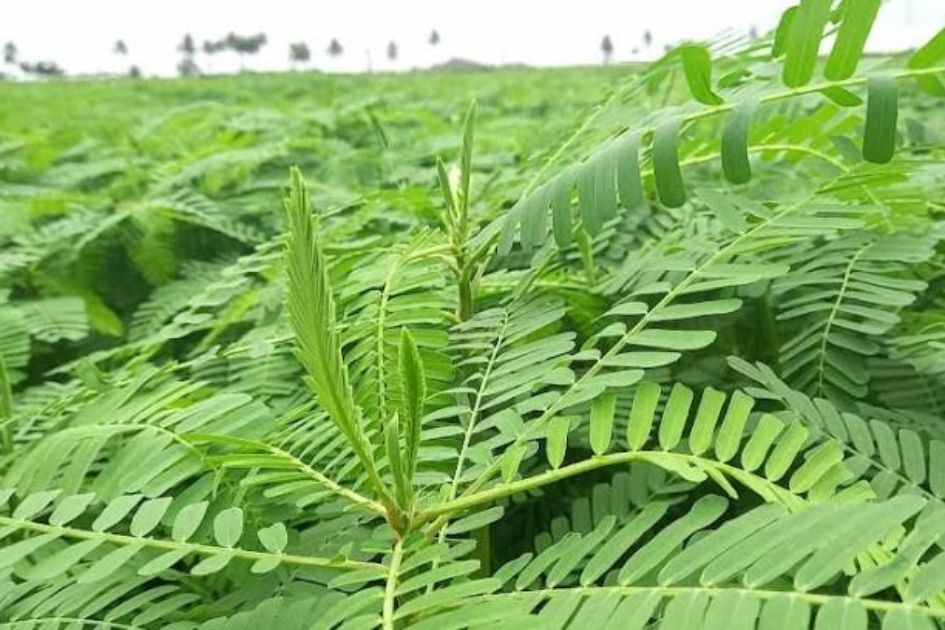



BADC has cultivated Dhaincha on 65 acres at Paikgacha’s Boalia Seed Production Farm to restore saline soil health, increase organic matter, reduce chemical fertilizer use and support sustainable coastal agriculture.
The Bangladesh Agricultural Development Corporation (BADC) is cultivating Dhaincha on 65 acres at its Boalia Seed Production Farm in Paikgacha Upazila of Khulna district in southwestern Bangladesh to improve soil health, produce organic green manure and demonstrate the crop’s potential for farming on saline coastal land.
The experimental cultivation of Dhaincha, also known as Sesbania, is aimed at restoring soil fertility in coastal saline areas while reducing dependence on chemical fertilizers. The initiative is being carried out at the Boalia Seed Production Farm in Paikgacha Upazila of Khulna district in Khulna Division, where the crop is grown annually to preserve soil quality through the use of organic green manure.
Agricultural officials say Dhaincha is widely recognised as a green manure crop because it improves soil fertility when incorporated into the ground. Repeated cultivation of different crops on the same land gradually reduces soil vitality, but ploughing young Dhaincha plants back into the soil helps restore its natural strength.
The plant naturally fixes atmospheric nitrogen through nodules that develop on its roots. Small grain-like nodules also appear on its roots, stems and the undersides of its leaves in the Vietnamese variety being cultivated at the farm. These nodules capture nitrogen from the atmosphere and store it within the plant. As a result, incorporating Dhaincha into the soil can eliminate the need for urea fertilizer on that land.
The green leaves and stems of the plant decompose after being tilled into the soil, replenishing organic matter and improving the soil’s physical, chemical and biological properties. The nitrogen fixed by the crop also provides an essential nutrient for future plant growth.
According to sources at the Boalia Seed Production Farm, Dhaincha is cultivated on the farm’s land every year to preserve soil health and produce organic fertilizer. As in previous years, the crop has been planted on 65 acres this year. Its seeds are sown at the beginning of the rainy season to encourage natural green growth.
After one and a half to one and three-quarter months, when the plants reach a height of three to four feet, they are ploughed into the soil to maximise their benefits as green manure.
Nahidul Islam, Senior Assistant Director and an agriculturist at the Boalia Seed Production Farm, said Dhaincha has no substitute for increasing organic matter in the soil and improving fertility.
“There is no substitute for Dhaincha when it comes to increasing organic matter in the soil,” he said. “Incorporating the crop into the land enhances soil fertility while reducing the need for chemical fertilizers and pesticides. It also lowers the incidence of diseases and pest infestations, helping reduce crop production costs.”
Nahidul said the farm cultivates Dhaincha primarily to preserve soil health, improve soil fertility and produce organic fertilizer.
He said the 65-acre cultivation programme under the farm’s supervision is playing an important role in maintaining soil health, adding that organic fertilizer remains essential for preserving soil quality. The project also highlights the potential of Dhaincha cultivation as a sustainable solution for improving saline soils in Bangladesh’s coastal regions.




