

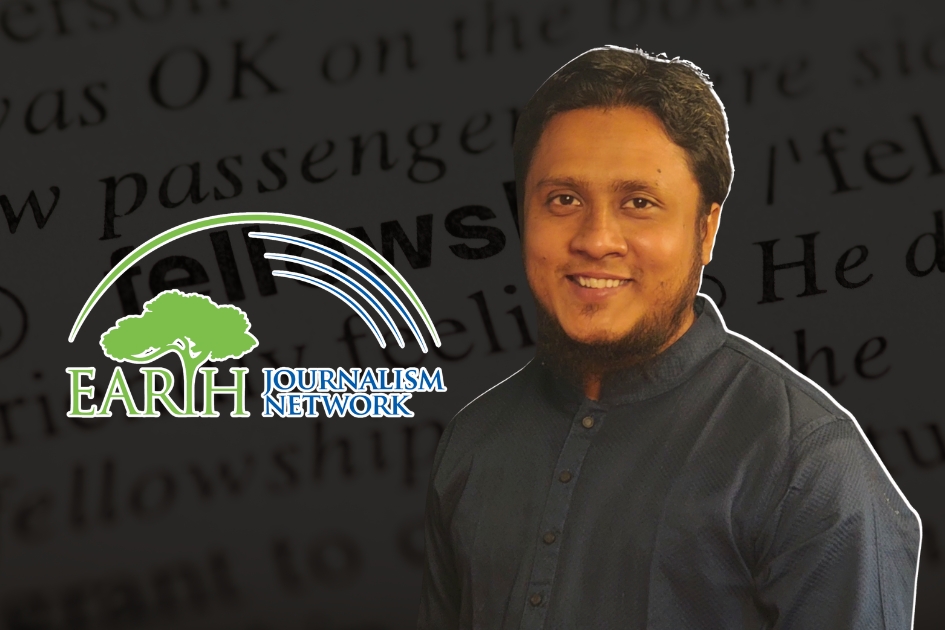



The fellowship will support reporting on the human consequences of climate change along the Bay of Bengal coast, highlighting overlooked dimensions of loss and damage through evidence-based journalism.
Bangladeshi investigative journalist, documentary filmmaker and climate storyteller Md Ibrahim Khalilullah has again been selected for a fellowship by the Internews Earth Journalism Network (EJN), strengthening his growing international profile in climate and environmental reporting.
Khalilullah was selected for EJN’s Text and Video Reports on Non-Economic Loss and Damage Due to Climate Impacts Along the Bay of Bengal Coast 2026 programme. His proposal was selected for funding.
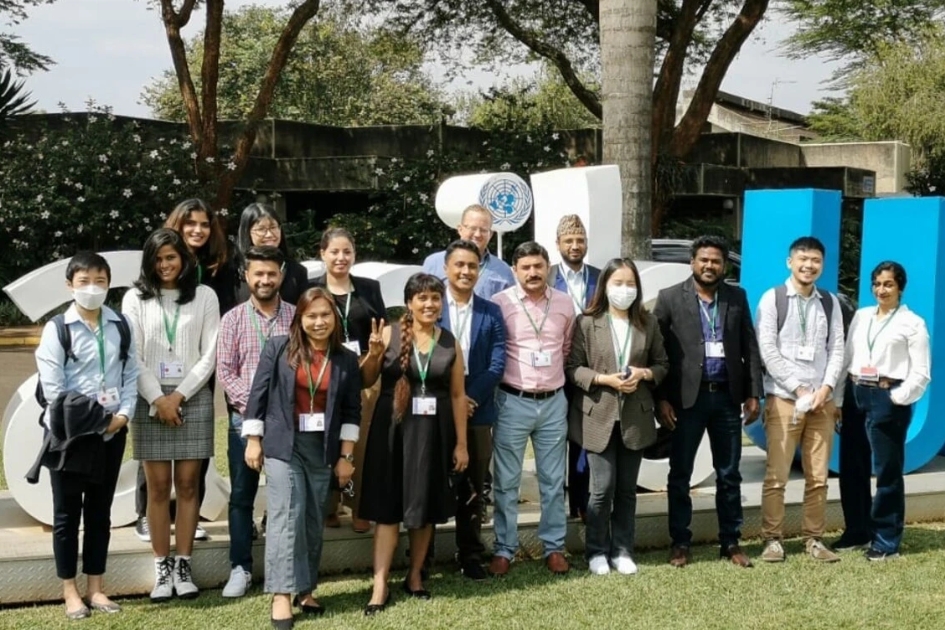
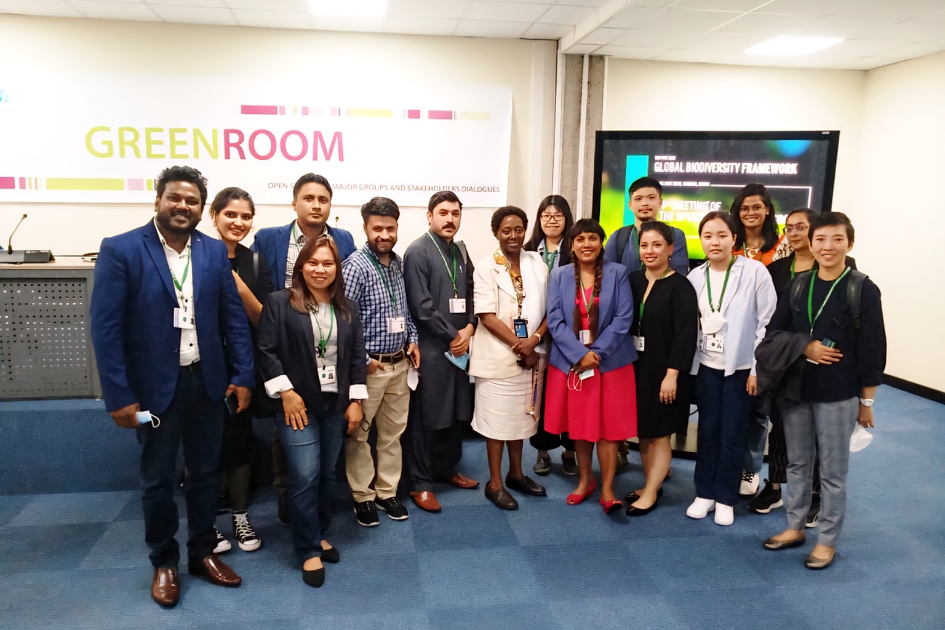
The new fellowship marks another milestone in Khalilullah’s career after his earlier EJN selection in 2022, when he was one of 11 Asia-Pacific journalists awarded fellowships to report from Nairobi, Kenya, on the UN Convention on Biological Diversity negotiations. At that time, he represented Bangladesh.
“This fellowship is not only a professional recognition for me; it is a responsibility,” Khalilullah said. “The Bay of Bengal coast is one of the world’s front lines of climate change, but many of its deepest losses are still invisible in policy debates. I want to tell those stories with dignity, evidence and accountability.”
The 2026 fellowship will support his reporting on non-economic loss and damage, an increasingly important climate justice issue that goes beyond financial losses to include education disruption, mental stress, cultural loss, displacement, community breakdown and uncertainty over the future.
Khalilullah is a Bangladesh-based journalist whose work focuses on climate displacement, loss and damage, environmental justice, migration, human rights and governance accountability. He is an investigative journalist, documentary filmmaker and climate storyteller documenting climate displacement and public-interest failures through field reporting, investigations and documentary work.
He has more than a decade of experience in public-interest journalism and has worked across television, documentary and digital platforms. His documentary Taken by the River, produced through CNN, won the 2025 Covering Climate Now Journalism Award in the Displacement and Migration category. The award, selected from more than 1,200 entries from 65 countries, is considered one of the world’s leading honours in climate journalism. The documentary follows Bangladeshi climate migrants who lost their homes and livelihoods to river erosion and displacement.
He was also a global Top 10 finalist for the Thomson Foundation Young Journalist Award in 2021 for environmental investigative reporting.
His other recognitions include the IRE Conference Fellowship Award in 2020 and the Bangladesh Journalist Alliance Award in 2019. He is also a fellow of the Rockefeller Foundation and WaterAid Bangladesh, and a member of the Oxford Climate Journalism Network at the Reuters Institute. He received the GIJN Conference Fellowship in 2021.
He is also a Nuffic Scholar of the Government of the Netherlands, having collaborated with RNTC and RNW Media on digital media strategies to counter disinformation and hate speech. He was a CNN Academy Climate Storyteller.
In 2022, EJN said fellowships were important to help environmental journalists from low- and middle-income countries report directly from major decision-making spaces. The network said such access helps journalists provide the public with the information needed to hold policymakers accountable.
Khalilullah said the new fellowship will allow him to deepen his reporting on how climate impacts are reshaping children’s education, family life and community resilience in vulnerable coastal areas.
Through the fellowship, he is expected to work with EJN mentors to develop and structure his story before field reporting. Khalilullah said he sees the recognition as part of a wider mission to strengthen climate journalism from Bangladesh and South Asia.
“Bangladesh has evidence the world needs to hear,” he said. “My goal is to connect local suffering with global responsibility, and to show that climate justice begins by listening to people at the front line.”
Ibrahim serves as a journalism mentor partner with IRE and the Lone Star EMMY Chapter. Through his reporting, he seeks to raise public awareness, shape conversations on climate justice, advance policy discussions on environmental finance and adaptation and encourage community behavioural change through evidence-based journalism.




