

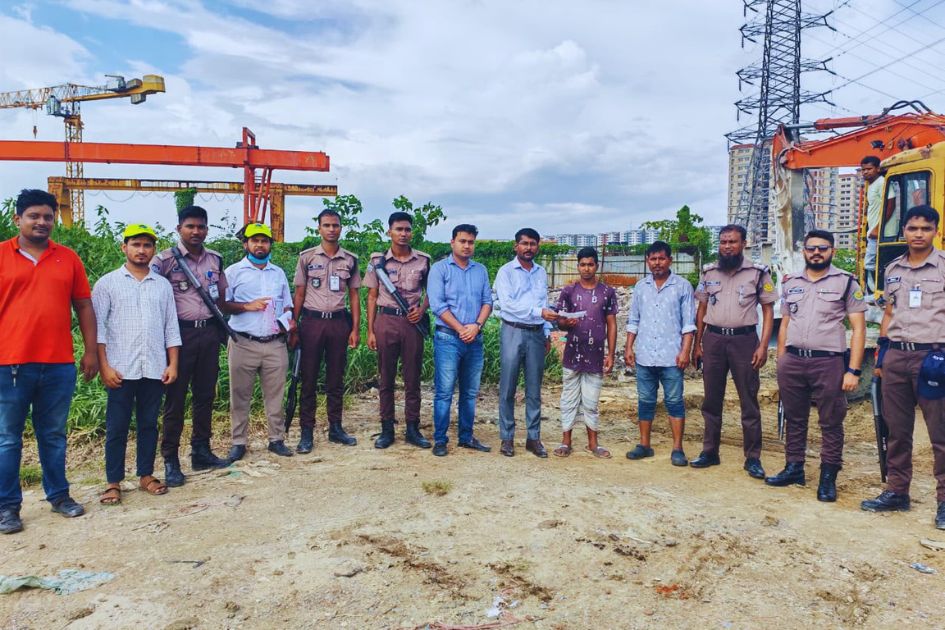



The DoE fined the illegal facility Tk 200,000 after dismantling furnaces and seizing equipment used for lead production near Birulia Bridge in Turag.
Authorities in Bangladesh have demolished an illegal used battery-breaking and lead smelting plant in the capital’s northern outskirts as part of an intensified campaign to eliminate pollution sources and enforce environmental regulations.
The Department of Environment (DoE), through a joint operation involving its Dhaka Metropolitan Office and the Monitoring and Enforcement Branch at its headquarters, carried out the raid at an unnamed illegal battery recycling facility near Birulia Bridge in the Dhowr area under Turag Police Station.
During the enforcement operation, authorities destroyed two furnaces used for lead processing and completely dismantled the factory’s illegal structures with an excavator. The factory’s activities were shut down permanently, while equipment, materials, and tools used for lead production were seized from the site.
The illegal facility was fined Tk 200,000 (two lakh taka) for violating environmental regulations, and the penalty was recovered during the operation.
The raid was conducted under the leadership of Executive Magistrate of the Department of Environment Kishore Kumar Das. Inspector Md. Tarikul Islam of the DoE’s Dhaka Metropolitan Office served as the prosecution officer, while Rasul Ya Bari Kamal, a sample collector from the Dhaka District Office, assisted as bench assistant.
A team from Bangladesh Police was present during the operation and provided necessary legal support to ensure the enforcement action was carried out effectively.
The Department of Environment said such enforcement drives will continue as part of its efforts to control air pollution, prevent illegal industrial activities, and strengthen compliance with environmental laws across urban areas.
Informal battery recycling and lead smelting are major environmental concerns as they can release toxic lead particles and other hazardous substances into the environment. Lead contamination can affect air, soil, and water quality and create long-term risks for communities living near such facilities.
The latest crackdown highlights Bangladesh’s broader efforts to address urban pollution challenges and improve environmental governance by taking action against industries operating outside regulatory frameworks.




