

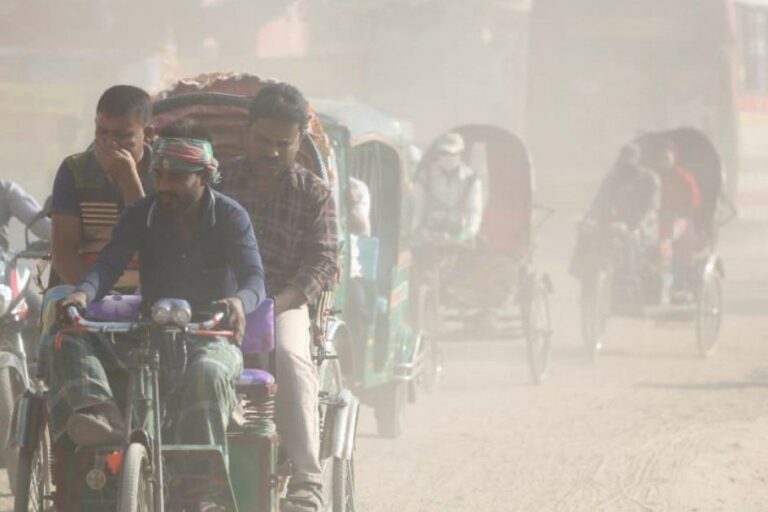



IQAir data placed Addis Ababa at the top of the pollution ranking, while Lahore, Dubai, Jakarta and Singapore also recorded unhealthy air quality.
Dhaka, the capital of Bangladesh, ranked 28th among the world’s cities in terms of air pollution on Sunday morning. Its Air Quality Index (AQI) score was 72. According to the score, Dhaka’s air quality was in the ‘moderate’ or ‘tolerable’ category.
The information was shown on the index of IQAir, a Switzerland-based air quality monitoring organisation, at 9:15am on Sunday (Sept 27). According to the IQAir list, Ethiopia’s capital Addis Ababa was the world’s most polluted city at that time. The city had an AQI score of 199, which is considered ‘unhealthy’.
Lahore in Pakistan ranked second with a score of 181. Dubai in the United Arab Emirates ranked third with the same score. Jakarta in Indonesia ranked fourth with a score of 166 and Singapore City ranked fifth with a score of 157.
According to IQAir’s standards, an AQI score between 0 and 50 indicates ‘good’ air quality. A score between 51 and 100 is considered ‘moderate’ or ‘tolerable’.
A score between 101 and 150 indicates that the air is ‘unhealthy for sensitive groups’. In this case, children, older people and sick people are at comparatively higher risk. IQAir considers scores between 151 and 200 ‘unhealthy’, 201 and 300 ‘very unhealthy’ and above 301 ‘hazardous’.




