

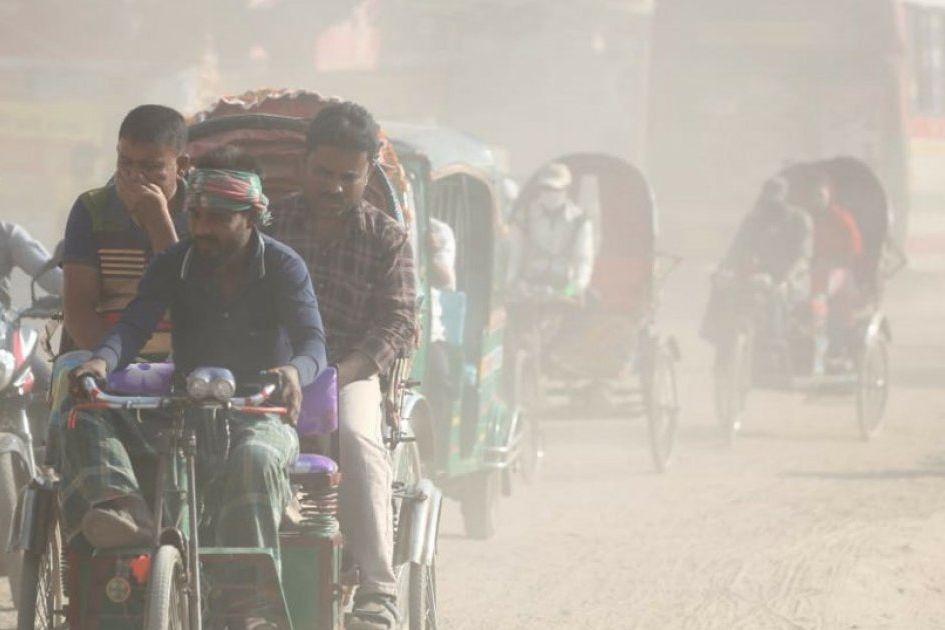

Dhaka ranked the world’s most polluted city Sunday morning, with AQI in the unhealthy range despite rainfall, as multiple areas recorded severe air quality levels, according to IQAir data.
Dhaka, the capital and largest city of Bangladesh, ranked as the most polluted city among 124 cities worldwide on Sunday morning, as persistent rainfall failed to bring relief from worsening air quality, according to real-time data from IQAir.
At 10:25 pm, the capital recorded an Air Quality Index score of 142, which is classified as “unhealthy” for residents. In such conditions, IQAir advised people to keep windows closed and wear masks when going outside to reduce exposure.
The Switzerland-based air monitoring platform publishes live air quality data, helping people understand how clean or polluted the air is in a specific city while also issuing health guidance.
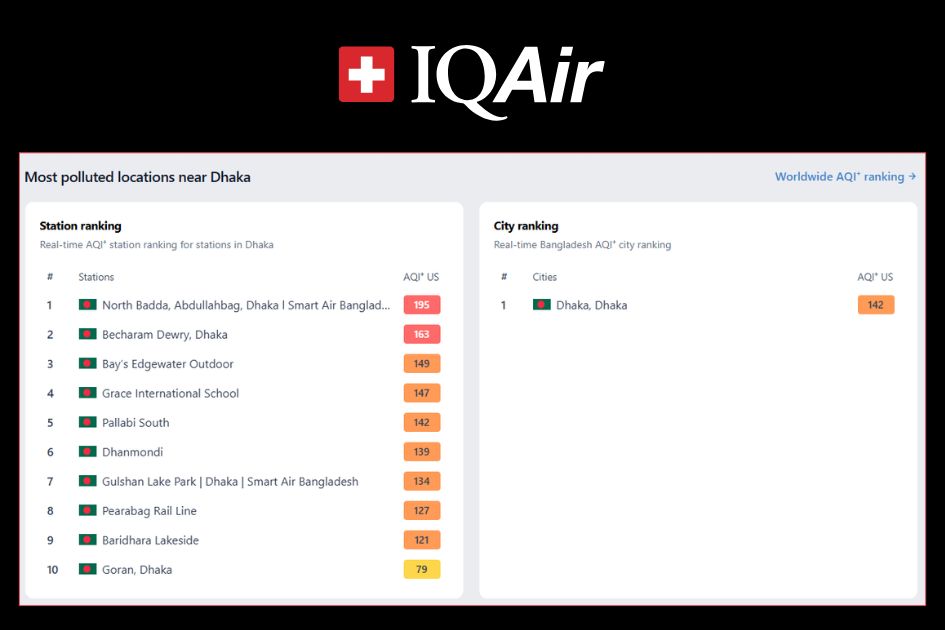
Data from monitoring stations showed that several areas in Dhaka were experiencing significantly higher pollution levels. North Badda’s Abdullahbagh topped the list with an AQI score of 195, followed by Becharam Dewry in Old Dhaka at 163. Other major hotspots included Bay’s Edgewater Outdoor at 149, Grace International School at 147, Pallabi South at 142, Dhanmondi at 139, Gulshan Lake Park at 134, the Pearabag rail line area at 127, Baridhara Lakeside at 121, and Goran in Khilgaon at 79.
Globally, Dhaka remained at the top of the pollution ranking, reflecting persistent air quality challenges in the densely populated мегacity.
According to AQI standards, a score between 0 and 50 is considered “good,” while 51 to 100 is “moderate.” Levels between 101 and 150 are classified as “unhealthy for sensitive groups,” while 151 to 200 are deemed “unhealthy.”
Air quality between 201 and 300 is labeled “very unhealthy,” prompting advice for children, the elderly and people with illnesses to stay indoors. Scores between 301 and 400 are considered “hazardous,” posing serious health risks to the entire population.




