


Delays in approving the assessment schedule are disrupting volunteer scientists’ planning, raising concerns over the delivery of the IPCC’s next major climate reports.
Jim Skea warned that the lack of an agreed timetable was making it harder for volunteer scientists to plan their work.
The head of the United Nations climate science panel urged governments on Monday to agree on a timetable for its next major assessment, warning that the impasse was disrupting scientists’ work and putting the panel’s reputation at risk.
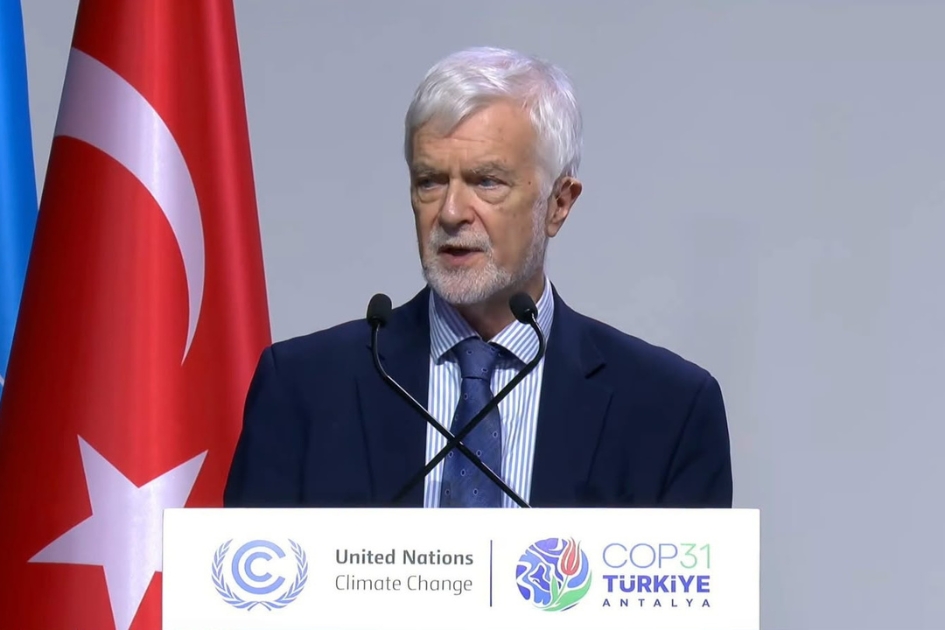
Speaking at the ceremonial opening of COP31 in Antalya, Jim Skea, chair of the Intergovernmental Panel on Climate Change (IPCC), said governments had yet to agree on a schedule for three reports at the heart of its Seventh Assessment Report. They cover the physical science of climate change, its impacts and options for adaptation, and options for reducing greenhouse gas emissions.
Skea said volunteer authors still do not know what work they will be expected to do in early 2027, making it harder to plan around their jobs and personal commitments.
Governments will have another chance to agree on the timetable and the related budget for 2027 and beyond when the IPCC resumes its suspended plenary on 1 December.
“Climate action without climate science is like a ship without a rudder,” Skea told delegates. With implementation a priority at COP31, he said governments could use the IPCC’s existing findings to put their climate pledges into practice while scientists prepare the next assessment.
Authors are revising the physical science draft for review by governments and experts. The expert review of the impacts and adaptation report closes on 4 December, while the emissions reduction report opens for expert review on 16 November.
Separately, the IPCC plans to publish three reports in 2027. A special report on climate change and cities is scheduled for an approval session in March. The other two will set out methods governments can use to report greenhouse gas emissions and removals under the UN climate convention.