


With global temperatures projected to overshoot 1.5°C, vulnerable nations face mounting pressure to secure stronger emissions commitments, accessible climate finance and equitable pathways to low-carbon development.
Vulnerable nations demand faster emissions cuts and fair transition finance as negotiator criticises India and Saudi Arabia over mitigation talks.
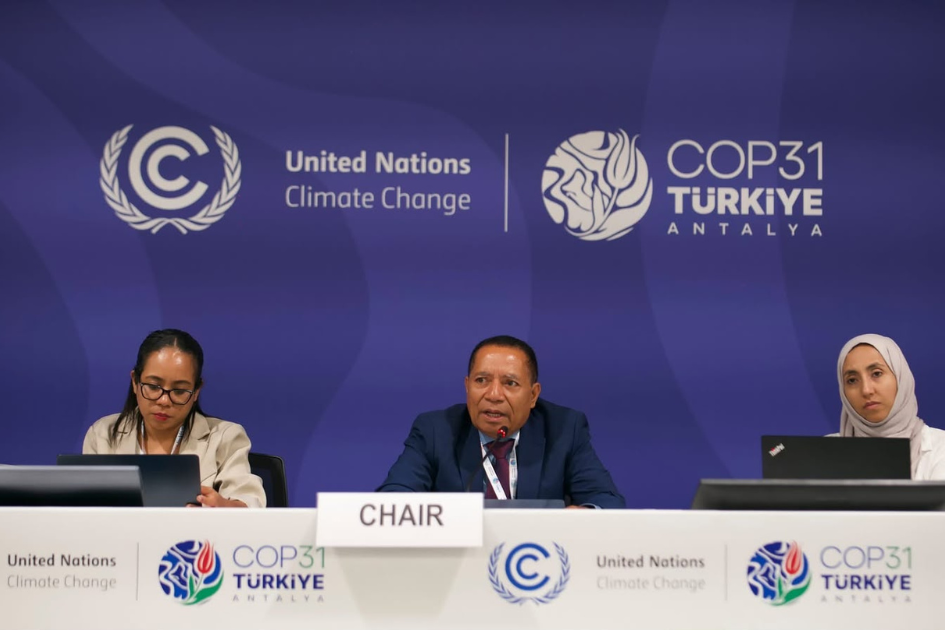
The world’s least developed countries (LDCs) have raised concerns that divisions over global emissions cuts could undermine efforts to return warming to 1.5°C, as negotiators prepare for critical decisions on mitigation, climate finance and a just transition at COP31.
An LDC negotiator told The Climate Watch that India and Saudi Arabia were obstructing progress under the Sharm el-Sheikh Mitigation Ambition and Implementation Work Programme, while describing China’s position as comparatively more flexible.
“1.5 degree is our survival,” the negotiator said, stressing the importance of maintaining effective international cooperation on emissions reductions.
The remarks came as representatives of the LDC Group gathered in Antalya on November 3 for preparatory discussions ahead of the UN Climate Change Conference, scheduled for November 9–20.
The meeting focused on coordinating positions on mitigation, adaptation, climate finance, loss and damage, and other priorities affecting climate-vulnerable nations.
The warning comes amid new United Nations findings that temporarily exceeding the Paris Agreement’s 1.5°C temperature threshold is now effectively unavoidable, although returning temperatures to that level by the end of the century remains possible.
India and Saudi Arabia face criticism over mitigation
The LDC negotiator singled out India and Saudi Arabia as obstacles to stronger outcomes under the mitigation work programme, reflecting disagreements within the broader developing-country coalition.
India, however, has emphasised that mitigation negotiations should remain nationally determined, facilitative and non-punitive, rather than creating additional obligations through top-down targets.
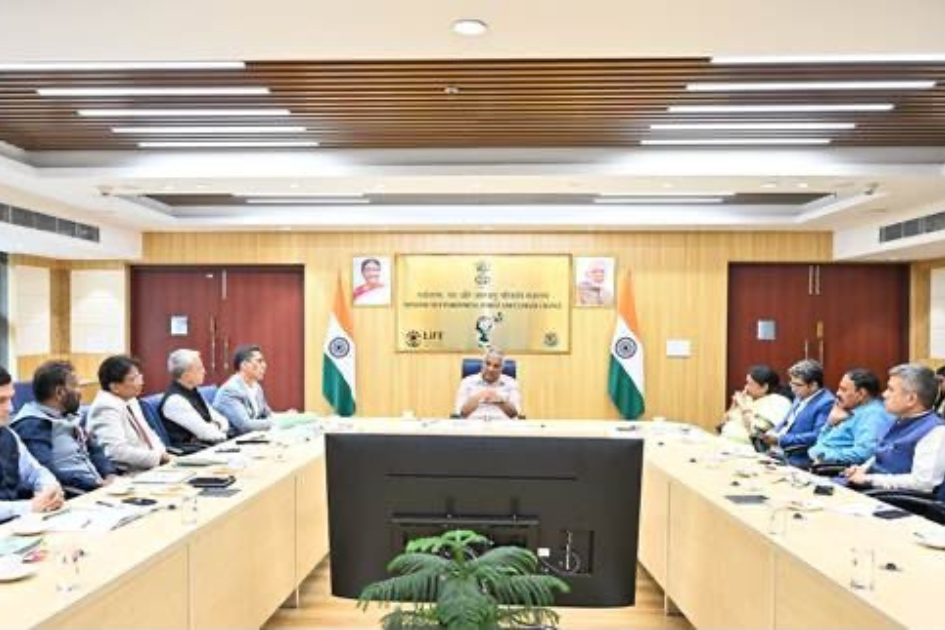
At a media briefing in New Delhi on November 3, India’s Union Minister for Environment, Forest and Climate Change, Bhupender Yadav, outlined the country’s priorities for COP31, calling for equitable climate action, predictable finance, technology transfer and support for developing economies.
Yadav said India would approach the negotiations with a solution-oriented vision, focusing on practical responses to the challenges facing the Global South.
He emphasised that climate finance remains an obligation of developed countries under Article 9.1 of the Paris Agreement and should be predictable, largely public and concessional, without increasing developing countries’ debt burdens.
The minister said India would seek a COP31 decision to commence the Climate Finance Work Programme and press for mitigation and Global Stocktake discussions to remain country-driven, facilitative and non-punitive.
He also reiterated that the nationally determined nature of climate commitments must be respected and opposed the introduction of additional top-down targets.
India intends to coordinate closely with the G77 and China, the Like-Minded Developing Countries (LMDC) group and the BASIC coalition during the negotiations.
Saudi Arabia has similarly stressed national circumstances, economic diversification and differentiated responsibilities, while resisting uniform approaches to mitigation that could affect countries with different economic structures.
Although both countries advocate equity and the principle of common but differentiated responsibilities, the LDC negotiator argued that their positions were limiting progress towards greater collective mitigation ambition.
The source described China as comparatively more flexible, although the specific negotiating exchanges underlying that assessment could not be independently verified.
The disagreement highlights differences between the LDC Group and the LMDC coalition, which includes India, Saudi Arabia and China.
The LDC Group represents countries facing severe development challenges and climate vulnerabilities, while the LMDC coalition includes major developing economies emphasising historical responsibility, national circumstances and equitable climate action.
The dispute centres on whether international mitigation negotiations should generate additional political guidance beyond existing national commitments.

However, opposition to additional obligations under a particular negotiating programme does not necessarily indicate opposition to emissions reductions themselves.
Mitigation programme reaches decision point
Established at COP27 in Egypt in 2022, the Sharm el-Sheikh Mitigation Ambition and Implementation Work Programme was designed to accelerate emissions reductions during the critical decade to 2030.
The programme provides a platform for identifying mitigation opportunities, investment needs, technological solutions and barriers to implementation.
Its mandate runs until 2026, making COP31 a significant decision point for its continuation and future scope.
Negotiators must consider whether the programme should continue, what form its outcomes should take and how it should complement nationally determined climate commitments.
For vulnerable countries, maintaining an effective international mitigation process is essential because existing national pledges remain insufficient to prevent dangerous levels of warming.
The LDC Group’s preparatory discussions build on its September ministerial meeting in Dili, Timor-Leste, where ministers called for stronger mitigation, predictable climate finance and greater support for adaptation and loss and damage.
UN warns 1.5°C overshoot unavoidable
The UN Environment Programme’s ‘Emissions Gap Report 2026: The Point of Return’, released on October 21, found that global warming is set to exceed 1.5°C above pre-industrial levels.
Under the report’s lowest-overshoot scenario, global temperatures would peak at approximately 1.7°C to 1.8°C around mid-century before potentially returning to 1.5°C or below by 2100.
The scenario offers approximately a 50 percent chance of achieving that return, provided governments undertake exceptionally rapid emissions reductions alongside increased carbon dioxide removal.
Global greenhouse gas emissions would need to decline by 18 percent by 2030, 45 percent by 2035 and 69 percent by 2040, compared with 2025 levels.
By contrast, full implementation of current national commitments would deliver reductions of only 5–8 percent by 2030 and 11–15 percent by 2035, against the same baseline.
Under UNEP’s projections, existing climate policies could lead to approximately 2.8°C of warming this century, while full implementation of current national pledges would result in around 2.6°C.
The findings underline the urgency of stronger mitigation while demonstrating that temporarily exceeding 1.5°C does not eliminate the possibility of returning to the threshold.
However, an eventual temperature decline would not reverse every consequence of overshoot. Some impacts, including ecosystem degradation and long-term sea-level rise, could persist.
For vulnerable countries, limiting the magnitude and duration of overshoot is therefore critical to reducing irreversible losses.
Just transition must reflect LDC realities
Alongside mitigation, the development of a Just Transition Mechanism (JTM) is emerging as another major issue for vulnerable countries.
In an analysis published on November 4, Climate Analytics researchers Zuneera Shah and Manjeet Dhakal argued that international discussions on just transition have largely reflected the experiences of industrialised economies.
Dhakal is the lead adviser to the chair of the UN LDC Group on Climate Change and heads the LDC Support Team at Climate Analytics.
The researchers noted that wealthy countries generally face the challenge of phasing out established fossil fuel industries while supporting affected workers.
LDCs, however, face a different starting point. They must expand electricity access, create employment and build essential infrastructure while avoiding carbon-intensive development pathways.
According to the analysis, electricity access in LDCs reached only 60.4 percent in 2024, compared with 90.3 percent across low- and middle-income countries.
Installed renewable electricity-generating capacity stood at just 43 watts per person in LDCs, highlighting substantial investment needs.
Despite severe energy poverty, LDCs received only 15 percent of international public clean energy finance flows to developing countries in 2024, equivalent to $3.7 billion.
Around two-thirds of that financing came through debt-based instruments.
The financial pressure is significant. In 2024, LDCs spent an average of 22.3 percent of government revenue on debt servicing, reducing resources available for essential services, infrastructure and climate action.
The researchers argued that grant-based and highly concessional finance would be essential to expanding clean energy without deepening debt vulnerabilities.
They also emphasised employment and livelihoods. LDC labour markets are expected to receive approximately 13.2 million new entrants annually until 2050, while agriculture and informal employment remain major sources of livelihoods.
An effective just transition must therefore extend beyond energy to include decent work, skills development, social protection and climate-resilient livelihoods.
The UAE Just Transition Work Programme was established at COP28 in Dubai, while governments agreed at COP30 in Belém to develop a Just Transition Mechanism.
Its detailed functions and governance arrangements remain under negotiation.
Shah and Dhakal recommended that the mechanism support country-driven transitions, improve access to suitable finance, strengthen technical capacity and ensure inclusive participation.
Their recommendations reflect expert analysis rather than a formally agreed negotiating position of the LDC Group.
The findings nevertheless illustrate the connection between stronger mitigation and equitable development: vulnerable countries need support to pursue low-carbon growth without sacrificing essential services or economic opportunities.
Adaptation finance falls far short
Climate finance is expected to remain a major point of contention in Antalya.
The UNEP *Adaptation Gap Report 2026*, released on November 4, estimated that developing countries will require approximately $305 billion annually for adaptation by 2035.
International public adaptation finance from developed countries reached only $28.2 billion to $31.7 billion in 2024.
Even if the COP30 aspiration to triple international public adaptation finance by 2035 is achieved, the increase would meet only 20–29 percent of developing countries’ estimated requirements.
The financing shortfall is especially concerning as climate disasters intensify.
The report also highlighted growing demands on the Fund for Responding to Loss and Damage, with initial funding requests substantially exceeding available resources.
LDC negotiators are expected to seek predictable, accessible and grant-based financing, simplified procedures and stronger accountability for international commitments.
For vulnerable countries, access to suitable finance is essential not only for adaptation but also for expanding clean energy and protecting livelihoods.
Bangladesh faces high stakes
Bangladesh has significant interests in the negotiations because of its exposure to cyclones, floods, riverbank erosion, salinity intrusion and extreme heat.
On October 29, the UN General Assembly approved an extension of the country’s preparatory period for graduation from the LDC category, moving its scheduled graduation date to November 24, 2029.
The extension provides additional time to prepare for changes in international support measures and address structural economic vulnerabilities.
For Bangladesh, accessible adaptation finance could support coastal protection, disaster preparedness, climate-resilient agriculture and livelihoods in vulnerable communities.
Similarly, appropriate financing and technical cooperation under a Just Transition Mechanism could help expand affordable renewable energy while protecting workers and communities.
However, the country’s specific negotiating positions on the mechanism and mitigation programme will need to be established through official submissions and interventions from its COP31 delegation.
Other vulnerable nations are also demanding greater attention to their circumstances.
Nepal and Bhutan have requested a dedicated COP31 agenda item addressing climate risks in mountain regions, while the Alliance of Small Island States has warned against weakening international commitment to the 1.5°C temperature goal.
COP31 faces critical decisions
Beyond formal negotiations, Türkiye and Australia are promoting initiatives to accelerate electrification and the global energy transition.
Brazil’s COP30 Presidency has also advanced a voluntary roadmap for transitioning away from fossil fuels, building on the commitment adopted at COP28.
However, the immediate test in Antalya will be whether governments can agree on the future of the mitigation work programme and establish the foundations of a Just Transition Mechanism responsive to the needs of vulnerable countries.
COP31 will take place under the presidency of Türkiye’s Murat Kurum, with Australia’s Chris Bowen serving as President of Negotiations.
For the LDC Group, stronger mitigation and equitable transition support are interconnected priorities. Faster global emissions reductions could help limit future climate damage, while accessible finance and technology are necessary to support sustainable development.
The decisions taken in Antalya will help determine whether international cooperation can address both challenges.
With the world now expected to exceed 1.5°C, the question facing negotiators is whether they can accelerate emissions reductions, limit the duration of overshoot and support vulnerable countries in pursuing low-carbon, climate-resilient development.