


COP31 President Chris Bowen called for accelerating renewable energy and electrification, arguing that clean energy offers the best response to global energy insecurity, climate change and economic risks.
The president of the COP31 climate negotiations, Australia’s Climate Change and Energy Minister Chris Bowen, on Sunday (June 7) called for a faster global transition to renewable energy and electrification, saying the world was facing its worst energy crisis in history while climate change continued to intensify.
Addressing the opening plenary of the UN June Climate Meeting (SB64) in Bonn, Bowen said governments around the world had spent recent months responding to severe fossil fuel supply disruptions and price shocks that had affected economies, supply chains and households.
“When we departed Belem in November last year, we did not know that when we gathered for the next time here in Bonn that the world would have experienced the worst energy crisis in our history,” Bowen said.
Although uncertainty remains over when tensions in the Middle East will ease and when shipping through the Strait of Hormuz will fully resume, Bowen warned that such crises are likely to become more frequent, more unpredictable and more severe in an increasingly contested geopolitical environment.
At the same time, he said, the urgency of tackling climate change had not diminished. Global temperature records continue to be broken while climate-related disasters are becoming more frequent and less predictable. Every nation is affected, though smaller and less-developed countries bear a disproportionate share of the burden.
Despite the challenges, Bowen struck an optimistic tone, arguing that the solutions to climate change and energy insecurity are closely aligned.
“More clean energy. More electrification. Less dependence on fossil fuels. More energy sovereignty and reliability. Lower emissions,” he said.
According to Bowen, accelerating the energy transition would help protect countries from energy shocks while reducing emissions and avoiding the economic costs associated with climate change.
He noted that 2026 marks the 20th anniversary of the Stern Review, which concluded that the economic costs of climate action are far lower than the costs of inaction. The vulnerability of fossil fuel supply chains, he said, has only strengthened that case.
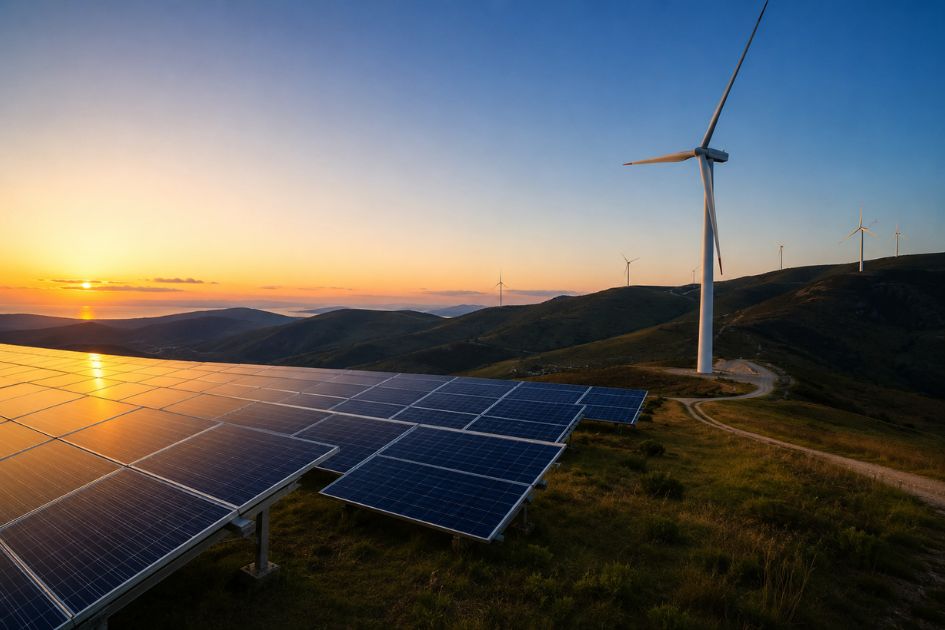
“Solar energy must travel 150 million kilometres from the sun to the earth, but it does not have to travel the 150 kilometres through the Strait of Hormuz,” he said, adding that wind cannot be sanctioned and hydroelectric power cannot be blockaded.
Bowen said COP31, which will be jointly hosted by Australia and Türkiye, would focus on implementation and acceleration of climate action. He said governments must send a strong signal to investors, corporations and markets that they remain committed to decarbonisation, renewable energy deployment and reducing reliance on fossil fuels.
He highlighted progress made since the Paris Agreement, noting that projected global warming has fallen from around 4 degrees Celsius before the agreement to 2.8 degrees Celsius today. He described the Paris accord as having triggered the largest modernisation of energy systems since the Industrial Revolution.
Bowen said COP31 would be guided by transparency, inclusivity and predictability. Australia will lead the negotiations while Türkiye will oversee the Action Agenda, with both countries working together to ensure practical outcomes.
He urged all parties to submit updated Nationally Determined Contributions (NDCs) for 2035 before COP31 and called for progress across the full SB64 agenda, including reviews of work programmes on just transition, mitigation and agriculture.
The minister also highlighted opportunities to advance the Just Transition Mechanism, strengthen adaptation frameworks, implement the New Collective Quantified Goal (NCQG) on climate finance, increase adaptation finance and finalise arrangements for the Adaptation Fund.
Improving access to climate finance for vulnerable countries, particularly small island developing states and least developed countries, remains a key priority, he said.
Bowen welcomed participation in the Belem Mission to 1.5 and the Global Implementation Accelerator, describing both initiatives as important tools for supporting implementation, investment and international cooperation.
As part of COP31 preparations, Australia will work closely with Pacific nations. The pre-COP meeting will be held in Fiji with a special segment in Tuvalu.
He announced the appointment of three Pacific Climate Envoys who will play major roles in COP31: Tina Stege of the Republic of the Marshall Islands as Regional Envoy for Oceania focusing on keeping the 1.5°C target within reach; Ruel Yamuna of Papua New Guinea as Envoy for Access to Climate Finance; and Fiji parliamentarian Inia Seruiratu as Envoy for the Ocean.
Bowen also introduced COP31 Youth Champion Sally Higgins, an Australian farmer who has witnessed the effects of climate change on agricultural land and has already begun engaging with young people and governments ahead of the summit.
The minister said oceans should play a larger role in climate action, noting that they absorb around 30 percent of carbon emissions and 90 percent of excess heat generated by human activity.
Australia, Türkiye and Pacific partners aim to promote practical, scalable and investable ocean-based climate solutions. Bowen encouraged countries to actively engage in the Ocean Dialogue and consider stronger integration of ocean issues into future Global Stocktakes, NDCs and National Adaptation Plans (NAPs).
Looking ahead, Bowen identified the electrification of the global economy as a central priority for COP31.
He said modern electricity grids and energy storage systems are essential whether supporting industrial decarbonisation in countries such as Germany, helping African communities transition to clean cooking or improving energy security in Pacific island nations through solar power.
Renewable energy, he said, is now the cheapest source of electricity available. In Australia, solar generation has become so abundant that households will soon receive three hours of free electricity in the middle of the day.
Bowen cited figures showing that renewable energy’s share of global energy production has more than tripled since the Paris Agreement, while global battery installations have increased twentyfold in the past five years.
In Australia alone, about 430,000 households installed home batteries over the past year. Globally, he said, clean energy attracted US$2.3 trillion in investment, accounting for two-thirds of all energy-sector investment worldwide.
Citing projections from the International Energy Agency, Bowen said electricity would need to account for around 35 percent of final energy consumption by 2035 to keep the 1.5°C target within reach, compared with the current trajectory of 26 percent.
“In a world of geopolitical uncertainty and energy disruption, the transition is not a risk. It is the solution and an immense opportunity,” Bowen said.
He concluded by urging countries to strengthen decarbonisation efforts, expand clean industries and jobs and build more resilient energy systems through diversified energy sources.
“What we achieve here in Bonn will directly shape outcomes at COP31,” he said. “Our collective action, grounded in multilateralism, spurring investment and practical outcomes, remains our strongest tool to address the global challenge of climate change and harness the opportunities of the energy transition.”




