

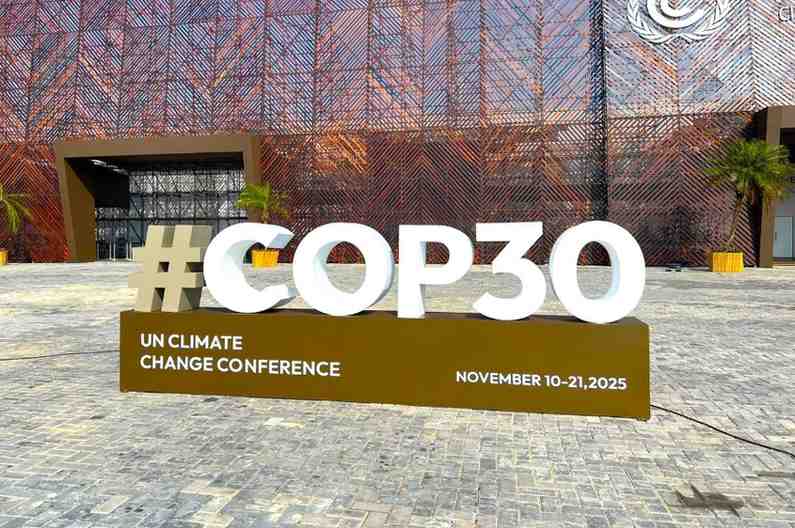



COP30 opened in Belém with both hope and frustration as leaders, activists, and the Global South demanded bold action and fair finance. Bangladesh urged stronger accountability, real delivery on pledges, and justice for vulnerable nations facing escalating climate impacts.
As world leaders and delegates gather in Belém for the 30th UN Climate Change Conference (COP30), the air is thick with both anticipation and unease. The two-week summit, set in the heart of the Amazon, begins amid growing calls from the Global South for fairness, climate finance and accountability.
The conference, taking place for the first time in the Amazon, symbolizes both the planet’s fragility and its resilience. For countries like Bangladesh, one of the world’s most climate-vulnerable nations, COP30 is a pivotal test of whether promises made in previous years can finally translate into meaningful action.
Lula Calls for a COP of implementation and accountability
At the opening ceremony, Brazilian President Luiz Inácio Lula da Silva declared that hosting the summit in Belém was “a political and symbolic decision,” intended to show that the Amazon is not a backdrop for debate but a living, vital part of the global climate solution.
Lula said COP30 must focus on three key priorities: fulfilling climate commitments already undertaken, strengthening global governance, and ensuring people remain at the center of all climate-related decisions.
“The Amazon is not an abstractionit is home, it is economy, it is culture, it is life,” Lula said. “When delegates leave Belém, they must take with them not just commitments, but a renewed determination to act.”

He warned that the world was “moving in the right direction, but at the wrong speed,” urging countries to convert rhetoric into real delivery. Lula called for a new Global Climate Council under the UN to ensure accountability and coordination, declaring that COP30 should be remembered as the “COP of Implementation”—one that transforms pledges into results.
UN Climate Chief: “Paris is working-now hit the accelerator”
UN Climate Chief Simon Stiell echoed Lula’s urgency, telling delegates that “humanity is still in this fight.” In his opening address, Stiell said the Paris Agreement is showing results, with the latest data indicating that new and updated national climate pledges could reduce global emissions by 12 percent by 2035—the first time the global trajectory is bending downward.
“Every fraction of a degree avoided will save millions of lives and billions of dollars in damage,” Stiell said. “We’ve built the engine. Paris is working. Now it’s time to hit the accelerator—for people, prosperity, and the planet.”

He emphasized that renewable energy is now cheaper than 90 percent of fossil fuels and has overtaken coal as the world’s leading energy source. However, progress remains uneven. “We are moving in the right direction, but we must move faster,” Stiell warned, adding that climate impacts—from typhoons in Asia to hurricanes in the Caribbean—are inflicting devastation across all regions.
From Baku to Belém: A Roadmap to Delivery
The opening of COP30 also marks the handover from Azerbaijan’s COP29 presidency to Brazil, symbolizing what many are calling “the decade of delivery.”
At COP29 in Baku, developed countries adopted the New Collective Quantified Goal (NCQG), pledging to mobilize at least USD 300 billion annually by 2035 in climate finance for developing countries. Outgoing COP29 president Mukhtar Babayev called this “a historic step forward” but admitted that much remains to be done to transform the goal into action.
“The world is entering an era of implementation, solidarity, and credibility,” Babayev said. He highlighted the “Baku to Belém Roadmap,” designed to explore how global climate finance could scale up to USD 1.3 trillion annually by 2035. Yet details on how such vast sums will be mobilized remain scarce, leaving many developing nations questioning the roadmap’s credibility.
Dr. Mohammed Arifur Rahman, Chief Executive of Young Power in Social Action (YPSA), a Dhaka based think tank told The Climate Watch: “From Bangladesh’s perspective, COP30 in Belém is a defining moment to turn global climate commitments into real action. The Brazilian idea of ‘Global Mutirão’, collective effort, reflects our community-led adaptation approach, from climate-resilient agriculture in the hills to cyclone preparedness on the coast. We urge a clear roadmap to scale climate finance from $300 billion to $1.3 trillion annually, with half for adaptation, and to operationalize the Loss and Damage Fund with direct, grant-based access for vulnerable communities.
Mohammad Shahjahan, Director- YPSA and Chair- CANSA Bangladesh NSC told The Climate Watch “We are also very concerned by the utter lack of participation from major historical emitters that undermines global progress, and by the immense logistical and financial barriers which exclude many voices from the Global South from even participating in the conversation.”
He also said “For this COP to be effective, global leaders must come forward with courage and honesty. They must finally provide adequate, predictable and grant-based climate finance and not loans, which burden the vulnerable economies with more debt. They must take historic responsibility by scaling up their own emissions cuts in line with the 1.5°C target.”
“Most importantly, they must move beyond eloquent speeches and deliver tangible resources and technology transfer that countries like Bangladesh need to secure a livable future for our people,” he added.
This COP must be the implementation COP, with measurable adaptation goals, ambitious national plans, and approved funding proposals. Yet, the persistent gap between pledges and delivery remains alarming. World leaders must act with honesty and courage, providing predictable, grant-based finance and technology to ensure a livable future for vulnerable nations like Bangladesh.”
Bangladesh’s View: Hope and concern intertwined
For Bangladesh, the conference presents both a glimmer of opportunity and a reminder of past disappointments. Experts in Dhaka say the country approaches COP30 with cautious optimism.
“Despite a new global climate finance framework agreed at COP29, implementation remains uncertain,” said Dr. Ahmad Kamruzzaman Majumder, Professor of Environmental Science at Stamford University Bangladesh, in an interview with The Climate Watch. “Bangladeshi experts expect incremental progress on grants and loss-and-damage funding while urging stronger transparency, accountability, and national preparedness to access climate finance.”
Dr. Majumder described the USD 300 billion goal as “progress but insufficient,” noting that the amount falls far short of the USD 1.3 trillion demanded by developing countries. He warned that if most of this money arrives as loans or private investment rather than grants, it will deepen debt pressures for least developed nations.
At the same time, he highlighted areas of optimism. COP29’s renewed attention to adaptation and loss-and-damage funding gives countries like Bangladesh new grounds to push their priorities. “Countries from South Asia are now asserting their voices more confidently,” he said. “There is recognition that without equity and justice, global climate governance cannot succeed.”
Global South demands a functional finance framework
Md. Shamsuddoha, Chief Executive of the Centre for Participatory Research and Development (CPRD), said developing nations cannot afford another cycle of vague promises. “The 29th Climate Conference set a meager target of USD 300 billion under the NCQG to be mobilized by 2035,” he told The Climate Watch. “It also called for scaling up total climate finance to at least USD 1.3 trillion per year by 2035, but the roadmap to reach that remains hollow.”
He called for a “ratcheting-up mechanism,” beginning with a USD 300 billion annual floor in 2025 and increasing to USD 1.3 trillion by 2035. “Bangladesh should take a strong position for negotiating a functional definition of climate finance,” he added. “Without that, we cannot establish transparency and accountability in finance delivery.”
Marking the tenth anniversary of the Paris Agreement, Shamsuddoha also expressed frustration at the slow pace of real emission reductions. “In ten years, we’ve seen rules for carbon trading and talk of technological fixes like carbon capture, but not real cuts,” he said. “COP30 must restore political momentum and prove that the 1.5°C goal is still alive.”
Civil society calls for Climate Justice
In Dhaka, civil society leaders have rallied under the banner of the Climate Justice Alliance–Bangladesh (CJA-B), a coalition of over 50 national and international organizations led by CPRD. Ahead of COP30, the alliance launched a CSO Position Paper calling for “bold, just, and inclusive outcomes” at the Belém summit.
The paper urges developed nations to honor their Paris commitments by delivering predictable, grant-based finance, ensuring fair access for developing countries, and embedding equity, gender equality, and Indigenous rights across all climate policies. “Belém must mark the end of rhetoric and the beginning of accountability,” the alliance said in its statement. “The time for justice is now—COP30 must act boldly and inclusively to rebuild trust in the global climate process.”
Urgent tasks for negotiators
Three interlocking challenges dominate COP30: preventing runaway warming, protecting vulnerable communities, and delivering long-promised finance.
UNEP’s Emissions Gap Report 2025 shows that current national pledges still put the planet on a dangerous path of 2.3 to 2.5°C warming this century. Scientists warn that overshooting 1.5°C is almost inevitable within the next decade, making rapid emission cuts in high-emitting sectors like energy and transport essential.

At the same time, UNEP’s Adaptation Gap Report 2025 estimates that developing countries will need more than USD 310 billion each year by 2035 to cope with climate impacts such as floods, droughts, and heatwaves. Yet existing international finance covers only a fraction of that need.
Delegates in Belém are also expected to discuss how to operationalize the Loss and Damage Fund, established last year, and align it with the new NCQG target. For the Global South, these funds represent lifelines rather than loans.
Bangladesh’s Priorities at COP30
Bangladesh’s negotiators are focusing on securing easier access to adaptation funds, ensuring that the Loss and Damage Fund becomes fully functional, and pressing for greater support for climate-resilient agriculture, renewable energy, and technology transfer.
Dhaka also aims to push for international recognition of climate migrants, arguing that millions displaced by rising seas and extreme weather need legal protection and access to aid. The government has also called for reforms to make climate finance more transparent, grant-based, and responsive to local needs.
“Bangladesh has both the experience and determination to turn pledges into progress,” said Dr. Majumder. “But we need global partnership, not just promises.”
A defining moment for the Global South
As COP30 unfolds in the world’s largest tropical rainforest, the contrast between progress and paralysis is impossible to ignore. Brazil’s leadership has framed this conference as one that should “turn commitments into action,” while the UN insists that the decade ahead must be one of implementation.
For the Global South and for Bangladesh in particular—the outcome will be measured not by words, but by whether finance finally flows, adaptation is scaled up, and justice is made real.
As Simon Stiell reminded delegates, “We’ve built the engine. Paris is working. Now it’s time to hit the accelerator for people, prosperity, and the planet.”




