

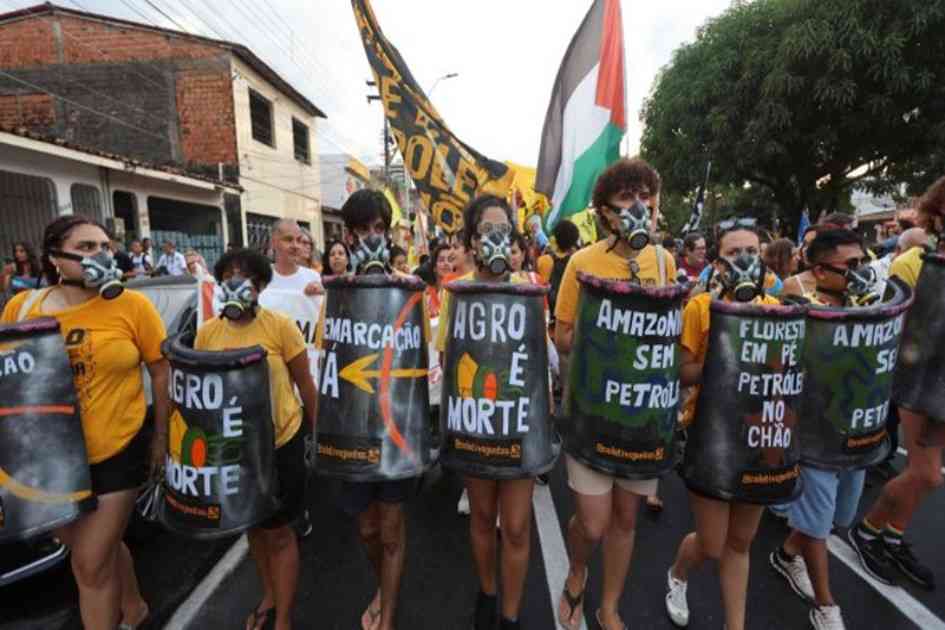

COP30 in Belém, Brazil, dragged past its official deadline, reflecting not just procedural delays but a deeper crisis of global climate politics. Negotiators struggled to reach consensus on even the most urgent issues, and the summit ended without a final agreement. The much-anticipated roadmap for a global transition away from fossil fuels, central to the integrity of the Paris Agreement, was dropped from the revised Brazilian draft, leaving climate-vulnerable countries frustrated and exposed.
In the negotiating halls, tensions ran high. UK Energy Secretary Ed Miliband insisted the fossil fuel transition process must be kept alive “through voluntary or creative means,” even if mandatory consensus remains out of reach. A representative from a vulnerable country admitted the discussions felt like “arguing with robots,” as if science and human suffering were both lost in a maze of political interests. The Arab Group’s firm resistance ensured that any language on fossil fuel phase-out remained off the table, a position bolstered by 22 oil-producing states and supported at moments by the African Group. Yet within Africa, many countries openly supported the roadmap, revealing fractures within major negotiating blocs. Lawrence Tubiana, one of the architects of the Paris Agreement, urged least developed countries to push ahead despite opposition, reminding them that transformative pathways often begin with courage, not consensus.
The European Union reacted sharply to the weakened Brazilian draft, saying it contradicted the promises of a “COP of Truth.” Without a fossil fuel signal, without a credible global stocktake, and without honouring finance commitments made previously, the text fell far short of what science demands. Several Latin American countries echoed this frustration, describing the revised draft as disconnected from nature, climate and the lived realities of those most affected. The Brazilian presidency acknowledged that Saudi Arabia’s objections prevented the roadmap from moving forward, while Russia reinforced the deadlock by refusing to participate in conflict-resolution “huddles.” India, meanwhile, reiterated that historical responsibility must guide all decisions, insisting developed countries must carry the heavier burden. Against this backdrop of tension, Turkey and Australia reached an agreement to co-host COP31, with Australian Energy Minister Chris Bowen now under pressure to demonstrate credible climate leadership at home before guiding global negotiations next year.

Financing remained the most divisive issue. The draft “Global Mutirão” text proposed a US$1.3 trillion climate action plan by 2035, including substantial support for developing nations and a tripling of adaptation finance. But developed countries immediately pushed to dilute these commitments, favouring vague language and debt-heavy “innovative finance” over grants. Developing nations rejected these attempts outright. The long-delayed US$100 billion pledge still hangs unresolved, deepening mistrust between the Global North and South. Civil society groups and youth networks argue that the problem is no longer the size of pledges but the lack of implementation and accountability. Climate finance, they remind the world, is not a gesture of goodwill but a legal obligation under Article 9.1 of the Paris Agreement. For adaptation and loss-and-damage support to be meaningful, funding must be predictable, long-term and accessible directly to local communities not filtered through bureaucratic bottlenecks and debt instruments that prolong inequality.
For Bangladesh, the stakes could not be higher. COP30 may have been branded the “COP of Truth,” but for climate-vulnerable countries, truth is not a slogan it is the daily reality of storms, rising seas, eroding coastlines and intensifying heat. Bangladesh, Fiji, Mozambique, Haiti, Bolivia or Samoa contribute the least to global emissions yet must borrow money, often at high interest, just to survive climate disasters. Bangladesh’s own vulnerabilities are compounding: coastal erosion affects millions, freshwater scarcity is rising, infrastructure is under strain, and adaptation costs continue to escalate. The country built its climate resilience strategy on the promise of reliable international support. Yet as global finance falters, that foundation looks increasingly unstable.
At home, recessionary pressures, rising defaulted loans, and expanding social protection needs have squeezed Bangladesh’s national budget. The space to allocate adequate domestic funds for climate adaptation is shrinking rapidly. Most external assistance still comes in the form of loans, increasing macroeconomic pressure at a time when the country needs stability to support its most vulnerable communities. The stagnant progress on the loss-and-damage fund is especially worrying, as Bangladesh faces recurrent cyclones, floods, salinity intrusion and river erosion. The lack of direction in mitigation discussions among developed countries has added to these anxieties.
Throughout the negotiations, Bangladesh emphasized fairness. It argued that no new burdens should be placed on developing countries without matching financial and technological support. It stressed that adaptation targets must reflect realities on the ground, livelihoods, biodiversity, social protection and local resilience, not just infrastructure or carbon metrics. But the gulf between ambition and support only widened as COP30 progressed.
The unresolved decisions of Belém will shape Bangladesh’s adaptation trajectory, economic stability and long-term development path. Their effects will ripple through river deltas, across coastal embankments, and into the lives of millions who depend on the stability of land and water. As COP30 ends without clarity, Bangladesh returns once again with the same basket of demands and aspirations it carried into the summit. For a country on the frontlines of the climate crisis, this cycle of hope and disappointment is becoming devastatingly familiar.
Professor Dr Ahmad Kamruzzaman Majumder is Dean of the Faculty of Science and Professor at the Department of Environmental Science, Stamford University Bangladesh. He is Joint Secretary of the Bangladesh Environment Movement (BAPA) and Chairman of the Center for Atmospheric Pollution Studies (CAPS).




