

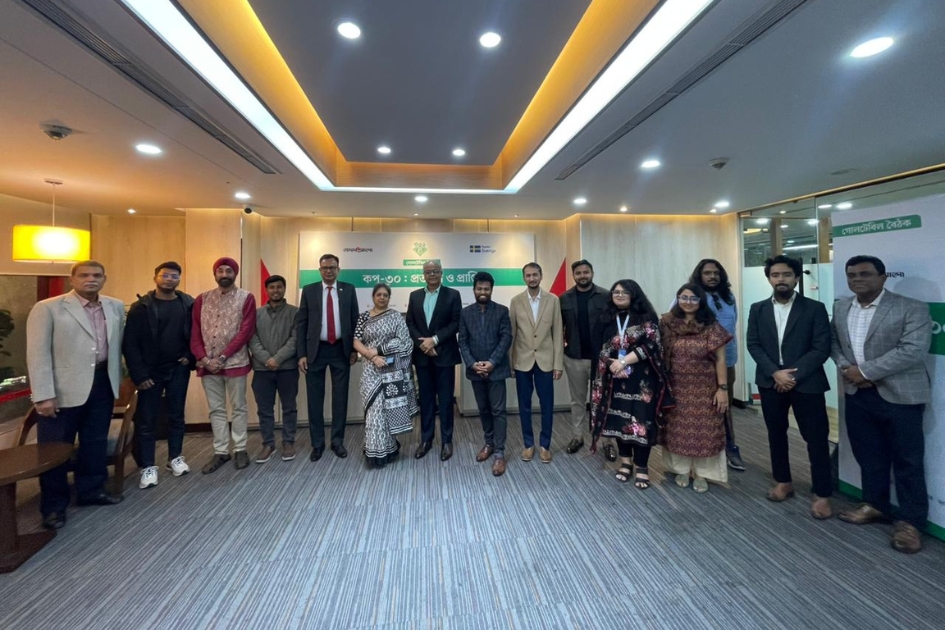

Speakers at a Dhaka roundtable say COP30 delivered limited gains for climate vulnerable countries, yet continued engagement is essential to secure finance, strengthen adaptation and prevent harmful global climate decisions.
UN climate conferences are failing to deliver the desired outcomes for climate-vulnerable countries, and the persistent failure of developed nations to honour their commitments has widened the trust deficit with the developing world. However, despite growing frustration, disengaging from the Conference of the Parties (COP) process is not an option, speakers said at a roundtable discussion in the capital on Saturday (December 13).
The discussion, titled “COP30: Expectations and Outcomes”, was organised by the Bangladesh Environmental Lawyers Association (BELA) in collaboration with Daily Prothom Alo at the newspaper’s Karwan Bazar office. The roundtable reviewed the successes and shortcomings of COP30, held in late November in Belém, Brazil.
Speakers noted that while major breakthroughs remain elusive, incremental gains made through the COP process could pave the way for larger victories in the future.
Additional Secretary of the Economic Relations Division (ERD) of the Ministry of Finance, AKM Sohel, said climate finance remains far below actual needs. “The amount required to address climate-induced losses in a single country often exceeds what the Loss and Damage Fund currently offers,” he said.
He added that developed countries only began contributing to the fund after nearly 30 years of negotiations. “This is not a reason for despair. COP is not a place where demands are instantly met. Progress comes through sustained bargaining,” he said, stressing the need for Bangladesh to enhance its capacity to access global climate funds.
Sohel cited Bangladesh’s experience with the Green Climate Fund, noting that it took nine years to secure funding, while the fund’s most recent board meeting approved projects worth USD 1.2 billion. “To benefit from such opportunities, our institutional preparedness must improve,” he added.
Director of the Climate Change and International Convention Wing of the Department of Environment, Mirza Shawkat Ali, said COP30 was never expected to deliver landmark decisions. “It followed a routine agenda. From the outset, expectations were modest,” he said, adding that outcomes at COPs typically emerge through gradual compromise between developed and vulnerable countries.
Harjeet Singh, Global Engagement Director of the Fossil Fuel Non-Proliferation Treaty Initiative, said the trust gap between developed and developing countries has deepened rather than narrowed. He warned that developing nations are currently facing annual climate-related losses of at least USD 400 billion, which could rise to USD 700 billion or even USD 1 trillion.
“Although there was some consensus on adaptation at COP30, no clear financial commitment was specified, leaving serious uncertainty,” he said.
UNDP Assistant Resident Representative Sardar Md Asaduzzaman described COP as a space for negotiations, debates and bargaining among countries with diverse positions. “It is a long-term process, but climate impacts will not wait,” he said, citing last year’s unprecedented floods in Feni as evidence of escalating climate risks.
BELA Chief Executive Taslima Islam emphasised the need for stronger preparation alongside managing expectations. “Climate impacts have become so severe that farmers in the Barind region are abandoning agriculture and turning to battery-run rickshaws for survival,” she said.
Asian Peoples’ Movement on Debt and Development (APMDD) Coordinator Lidy Nacpil expressed deep scepticism about the effectiveness of climate conferences, saying they have yet to deliver meaningful action. Still, she underscored the importance of continued participation. “If affected countries are absent, harmful policies will be adopted without resistance. Our presence helps prevent that. Small gains today can lead to bigger victories tomorrow,” she said.
Friends of the Earth (England, Wales and Northern Ireland) Chief Executive Asad Rehman warned that exceeding the 1.5°C temperature threshold is increasingly inevitable in many regions. “We must strengthen adaptation and protection measures while continuing efforts to keep the 1.5°C goal alive,” he said.
YouthNet Global Executive Coordinator Sohanur Rahman said unrealistic expectations often lead to disappointment. “We assume attending COP will immediately bring funding. COP is a multilateral process. Despite political shifts in the US and Europe, a COP was held and achieved some progress. That itself is a significant victory,” he said.
Dhaka University Disaster Science and Climate Resilience lecturer Abul Kashem Faruqi Fahim stressed the importance of improving disaster modelling capacity to understand where and how climate risks are increasing.
The roundtable was moderated by Prothom Alo Assistant Editor Firoz Chowdhury. Participants also included representatives from civil society, academia and climate-affected communities from Satkhira and Rajshahi.




