




The proposal has reignited debate over whether international climate funding is reaching people most affected by climate change, with questions raised about transparency, spending priorities and implementation procedures.
Planning Commission raises concerns over 87pc allocation for consultants, management and administrative costs. Only 13% of the Tk61.29 crore budget earmarked for climate-affected people, while the majority is allocated for consultants and administrative costs.
A climate displacement project in Bangladesh funded by the German development agency Deutsche Gesellschaft für Internationale Zusammenarbeit (GIZ) has come under scrutiny after project documents revealed that only Tk8.10 crore of the Tk61.29 crore budget has been allocated directly for people affected by climate change, while nearly 87 per cent is proposed for consultancy, project management and administrative expenses.
The project, implemented by Bangladesh’s Ministry of Social Welfare, aims to support climate-displaced communities through livelihood assistance, including small-business grants for 300 climate-affected people and livelihood improvement support for nearly 1,500 others in Khulna, Satkhira, Rajshahi and Sirajganj.
However, the Planning Commission, the government’s planning authority, has declined to recommend the project for approval, citing concerns over the spending structure and the limited allocation for direct beneficiaries compared with operational costs.
According to documents reviewed by the Project Evaluation Committee, the project has an estimated cost of Tk61.29 crore and is designed to run for one year and nine months. Of the total allocation, Tk8.11 crore, or 13.23 per cent, has been earmarked as direct grants for beneficiaries.
The remaining Tk53.18 crore, or 86.77 per cent, has been allocated for consultancy services, project management, office rent, training, travel, information technology equipment and other administrative expenses.
The proposed consultancy budget has drawn particular attention. The project plans to spend Tk29.62 crore to engage 473 local and international consultants for 300 direct beneficiaries.
The Planning Commission has questioned whether such a large consultancy component is proportionate to the number of people receiving direct support and whether a greater share of climate finance should reach communities facing displacement, livelihood loss and climate-induced poverty.
The project also includes Tk3.51 crore for overseas travel and training of officials, Tk1.27 crore for domestic travel, Tk10.07 crore for project management charges and Tk3.19 crore for office rent.
The Planning Commission also raised concerns over comparatively high allocations under other operational categories, including information technology and telecommunications equipment.
Shah Md Helal Uddin, chief of the Planning Commission’s Socio-Economic Infrastructure Division and an additional secretary, said the project was not recommended because of the imbalance between support for beneficiaries and administrative expenditure.
“We did not recommend its approval because a very small amount has been allocated for the beneficiaries,” he said.
“In contrast, significantly higher expenditure has been proposed for consultants and other sectors.”
Climate finance must reach frontline communities
The debate over the project has highlighted a broader global concern: whether climate finance is reaching the people most affected by the climate crisis.
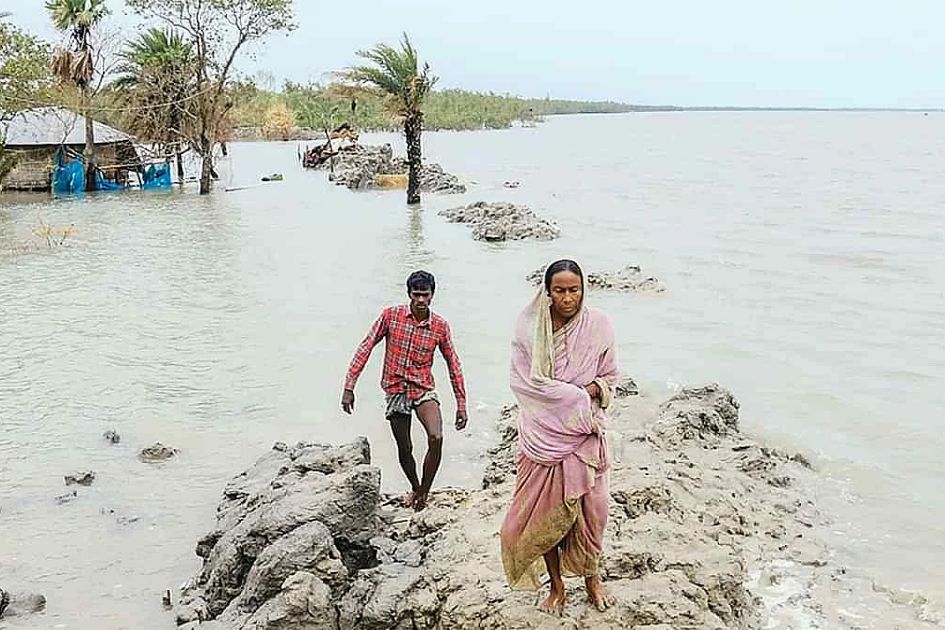
Bangladesh is one of the countries most vulnerable to climate change, where millions of people are affected by river erosion, flooding, salinity intrusion, sea-level rise and extreme weather events. Climate displacement has forced many families to lose their homes, farmland and traditional livelihoods.
For communities facing repeated climate shocks, direct financial support and locally appropriate livelihood solutions can determine whether they recover or remain trapped in cycles of poverty and displacement.
Sohanur Rahman, executive coordinator of YouthNet Global, a youth-led climate justice organisation in Bangladesh, said climate finance must prioritise communities living on the frontlines of climate change.
“Climate-vulnerable communities in Bangladesh are losing their homes, farmland and livelihoods because of a crisis they contributed very little to creating. Climate finance must put affected people at the centre and ensure that resources directly strengthen their resilience rather than being disproportionately absorbed by administrative structures,” he said.
Rahman said transparency, accountability and meaningful participation of affected communities are essential for effective climate adaptation.
“People facing the climate crisis should not only be viewed as beneficiaries of projects. They must be recognised as partners and decision-makers in shaping solutions. Every investment in climate adaptation should deliver measurable benefits for those carrying the greatest burden of climate change,” he added.
Climate justice advocates worldwide have increasingly called for locally led adaptation, arguing that climate-affected communities should have greater influence over how adaptation resources are designed and delivered.
The project documents, however, do not provide detailed information on the amount each beneficiary will receive, the types of businesses to be supported or how the long-term sustainability of livelihood interventions will be ensured.
Experts say further transparency is needed regarding the consultancy component, including the roles of the consultants, their duration of engagement, payment structures and how these costs compare with similar international development programmes.
Questions over implementation process
The controversy intensified after reports emerged that some activities under the project may have already begun before the proposal received consideration from the Planning Commission.
Helal Uddin said the proposal did not mention that project activities had already started.
As the initiative is financed through a foreign grant, however, the Planning Commission’s refusal to recommend approval may not necessarily halt activities funded directly by GIZ.
The Department of Social Services, the implementing agency, said the project structure was prepared according to donor requirements.
Md Sajjadul Islam, director of the department’s Planning and Development Wing, said the project was being implemented under an agreement reached through the Economic Relations Division, the Bangladesh government agency responsible for managing foreign development assistance.
“This is a GIZ-funded grant project,” he said.
“The project proposal was prepared in accordance with the donor agency’s conditions under an agreement reached through the Economic Relations Division. In many cases, there is no scope to go beyond the structure determined by the donor agency.”
He said the department had also raised concerns about the proposed expenditure structure.
Mohammad Selim Hossain, senior assistant secretary at the Ministry of Social Welfare, said foreign-funded projects operate under procedures different from government-funded projects.
“Under project rules, a government-funded project cannot begin without a recommendation from the Planning Commission,” he said.
“However, foreign donor agencies spend their grant funds according to their own procedures or begin their activities independently.”
He said he could not officially confirm whether GIZ had started implementing the project but acknowledged reports that activities were under way.
An Economic Relations Division official, speaking on condition of anonymity, said GIZ generally manages grant funds according to its own procedures.
“In some cases, there may be instructions to prepare and implement a project proposal through the relevant ministry, but this is not mandatory,” the official said.
A wider climate finance challenge
The controversy reflects a larger challenge facing climate-vulnerable countries: ensuring that international climate finance translates into meaningful support for communities experiencing the impacts of a crisis they did little to cause.
Development programmes often require technical expertise, coordination and management systems. However, experts argue that adaptation initiatives must maintain a stronger balance between operational requirements and direct benefits for vulnerable communities.
For climate-displaced families in Bangladesh, the success of climate finance will ultimately not be measured by the size of project budgets but by whether it helps people rebuild their homes, restore livelihoods and strengthen resilience against future climate risks.
Greater transparency from all stakeholders, including implementing agencies and donors, will be essential to maintaining public trust and ensuring that climate finance delivers justice for those on the frontlines.
GIZ has been approached for clarification regarding the project’s consultancy structure, administrative costs and measures to ensure direct benefits for climate-affected communities.




