

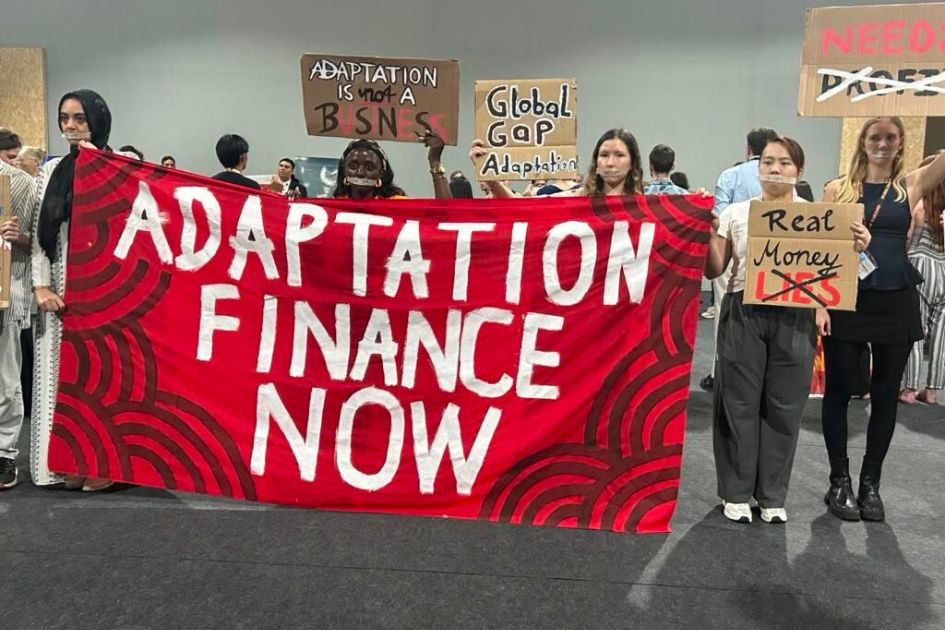



Climate-vulnerable countries used the UNFCCC Adaptation Committee dialogue to press for larger, grant-based and more accessible adaptation funding, while negotiations on the Global Goal on Adaptation remain divided over finance commitments.
From rising seas threatening coastal communities to floods, droughts and extreme heat affecting millions, developing countries are warning that the growing climate crisis requires a fundamental transformation in how adaptation finance is delivered.
For many climate-vulnerable countries, adaptation finance is not only an economic issue but a question of justice, survival and protecting communities that contributed least to the climate crisis.
At the United Nations Framework Convention on Climate Change (UNFCCC) Adaptation Committee (AC) 2026 thematic dialogue, held virtually on July 14, vulnerable nations called for a major increase in adaptation finance, stronger reliance on grant-based funding and simpler access mechanisms to ensure climate finance reaches communities facing the greatest risks.
Titled “Opportunities for accessing adaptation finance from the operating entities of the Financial Mechanism and the Adaptation Fund,” the dialogue brought together representatives from major climate funds, including the Green Climate Fund (GCF), Global Environment Facility (GEF) and Adaptation Fund (AF), alongside representatives from climate-vulnerable countries to discuss ongoing challenges and opportunities in accessing adaptation support.
While representatives from multilateral climate funds highlighted efforts to improve support systems, Global South countries argued that current finance flows remain far below the scale required to address escalating climate impacts.
Developing countries and climate-vulnerable groups have called for adaptation finance to be tripled from current levels to better reflect the scale of growing climate risks. They argue that increased funding must be accompanied by reforms that make finance faster, more predictable, transparent and easier to access.
A growing gap between climate needs and finance delivery
The need for adaptation has never been more urgent. Yet geopolitical tensions, debt burdens and shrinking fiscal space are increasingly compounding climate vulnerability. Many developing countries face growing challenges in investing in resilience, while international support remains insufficient.
Adaptation finance continues to fall far short of rapidly increasing needs. According to the UN Environment Programme’s Adaptation Gap Report, developing countries’ adaptation finance needs are estimated at USD 215-387 billion annually, while international public adaptation finance remains only a fraction of that requirement.
Speaking on behalf of the Group of 77 and China, Vositha Wijenayake emphasized that adaptation finance remains essential for developing countries facing increasingly severe climate impacts. She stressed that persistent barriers to accessing funds must be urgently addressed and that timely replenishment of climate funds is critical for sustaining locally driven adaptation initiatives.
Representing the Least Developed Countries (LDCs) Group, Raju Pandit Chhetri of Nepal questioned whether existing financial mechanisms are delivering support at the level required by vulnerable nations.
“The needs of developing countries and the delivery of finance by the funds simply do not match,” Chhetri said, highlighting that adaptation needs continue to outweigh mitigation priorities for many LDCs.
He stressed that adaptation finance should be primarily delivered through grants and public finance rather than loan-based instruments that may increase debt pressures. He also called for greater use of Direct Access Accredited Entities (DAEs), which allow national and regional institutions to access climate funds directly without relying entirely on international intermediaries, helping strengthen long-term institutional capacity within vulnerable countries.
Countries had previously agreed at COP26 to at least double adaptation finance from 2019 levels by 2025. However, developing countries argue that current flows remain insufficient compared with rapidly increasing climate risks.
For many LDCs and climate-vulnerable countries, adaptation investments such as flood protection, climate-resilient agriculture, urban flood management, water security, early warning systems and locally led adaptation initiatives do not generate financial returns that can repay loans, making grant-based support essential.
For LDCs such as Bangladesh and Nepal, where communities face cyclones, floods, river erosion, rising sea levels and climate-induced displacement, adaptation finance is essential for protecting lives, livelihoods and ecosystems.
Global Goal on Adaptation negotiations reveal deep divisions
These concerns were also reflected in negotiations on the Global Goal on Adaptation (GGA), established under the Paris Agreement and aimed at operationalising the UAE Framework for Global Climate Resilience (FGCR).
The GGA process is intended to establish a framework for measuring global progress on adaptation and ensuring countries can track whether climate resilience efforts are delivering results.
At the Bonn climate talks, discussions focused on several critical issues, including the Belém decision, which called for efforts to place adaptation finance on a pathway towards tripling support for developing countries; the work of the taskforce developing the Belém indicator list; the future of the Baku Adaptation Roadmap (BAR); and the review of the UAE Framework for Global Climate Resilience.
However, parties remained deeply divided over both the composition of the indicator taskforce and, more fundamentally, how and where the commitment to triple adaptation finance should be addressed.
Developing countries called for the full and urgent implementation of the Belém commitment, arguing that adaptation finance must increase on a clear trajectory towards tripling while strengthening transparency and accountability.
Some developed country parties expressed the view that the GGA process was not the appropriate forum for addressing adaptation finance commitments.
Despite intensive negotiations, governments were unable to bridge these differences. Questions surrounding adaptation finance, the taskforce’s work beyond the 64th sessions of the UNFCCC Subsidiary Bodies (SB64) and the future direction of the Baku Adaptation Roadmap remained unresolved.
SB64 concluded without agreement on draft conclusions for COP31 under Rule 16, meaning negotiations on the Global Goal on Adaptation will effectively restart at COP31 in Antalya.
The months ahead will be critical for rebuilding trust, resolving differences over the GGA indicator framework and ensuring that adaptation commitments are matched with concrete finance and implementation support.
For vulnerable countries and communities already experiencing severe climate impacts, continued delays are increasingly difficult to justify. Effective adaptation requires not only improved measurement and indicators but also greater support for implementation, including resilient infrastructure, early warning systems, climate-resilient agriculture and social protection systems.
Without progress on both ambition and support, the credibility of the GGA risks being undermined. The success of the process will ultimately not be measured by negotiation texts alone, but by whether it accelerates resilience for people and communities already facing the impacts of climate change.
Inside the multilateral climate funds
During the dialogue, representatives from the major climate funds outlined their approaches to supporting adaptation.
Green Climate Fund (GCF)
Climate Policy Specialist Hansol Park highlighted the GCF’s commitment to maintaining a balance between mitigation and adaptation finance. The fund has a target ensuring that at least 50% of its adaptation resources are directed towards particularly vulnerable countries, including Least Developed Countries (LDCs), Small Island Developing States (SIDS) and African nations.
Global Environment Facility (GEF)
Senior Climate Change Specialist Rawleston Moore explained that the GEF supports adaptation through dedicated funding windows, including the Least Developed Countries Fund (LDCF) and the Special Climate Change Fund (SCCF). These programmes aim to strengthen resilience while supporting innovation and engagement with different stakeholders.
Adaptation Fund (AF)
Representatives from the Adaptation Fund highlighted increasing demand for support, with its active project pipeline reaching approximately USD 1.9 billion. Operating through grant-based financing, the fund provides country-level allocations of up to USD 40 million over a project’s lifetime, alongside dedicated windows for innovation and locally led adaptation.
Despite these initiatives, developing countries stressed that reform efforts must go beyond improving procedures and address the deeper challenges of scale, accessibility and predictability.
The road ahead for adaptation finance
Opening the dialogue, Adaptation Committee Co-Chairs Mariana Ronchini of Italy and Abdulaziz Albutti of Saudi Arabia emphasized that the session aimed to identify practical solutions and improve access to adaptation finance.
As climate impacts intensify across vulnerable regions, developing countries argue that adaptation finance cannot remain a promise for the future. They are calling for a system that delivers resources at the scale, speed and terms required to protect communities already living on the front lines of the climate crisis.
The success of global adaptation efforts will ultimately not be measured by negotiation outcomes alone, but by whether finance reaches communities in time to protect lives, livelihoods and ecosystems.
For communities already experiencing the consequences of climate change, adaptation finance is not simply a development resource; it is a matter of climate justice, survival and resilience.
Developing countries are demanding a fundamental shift in adaptation finance: greater volumes of predictable funding, simplified access procedures, stronger local ownership and increased reliance on grants rather than loan-based instruments that may deepen debt pressures.
Ensuring meaningful participation of youth, women, Indigenous peoples and local communities will be critical to making adaptation efforts more inclusive, effective and responsive to the realities of those most affected by climate change.
The message from vulnerable nations is clear: adaptation finance must not only increase in scale but also reach communities quickly and effectively, empowering those on the front lines of climate change to build a safer and more resilient future.




