




Experts warn climate change is driving economic losses, labour risks and health crises in Bangladesh, urging urgent reforms, workplace protections and investment in climate resilience to ensure a just transition.
Bangladesh is facing mounting economic losses, labour risks and public health challenges due to the escalating climate crisis, speakers warned at a roundtable in Dhaka on Sunday, calling for urgent policy reforms, stronger workplace protections and accelerated investment in climate resilience.
They also warned that heat-related health risks are causing Bangladesh to lose nearly 250 million working hours annually, resulting in an estimated economic loss of around US$1.78 billion, equivalent to approximately 0.4 percent of the country’s GDP. Without effective adaptation measures, they cautioned that Bangladesh and the regional ready-made garment sector could face export losses of nearly US$65 billion and lose around one million potential jobs by 2030.
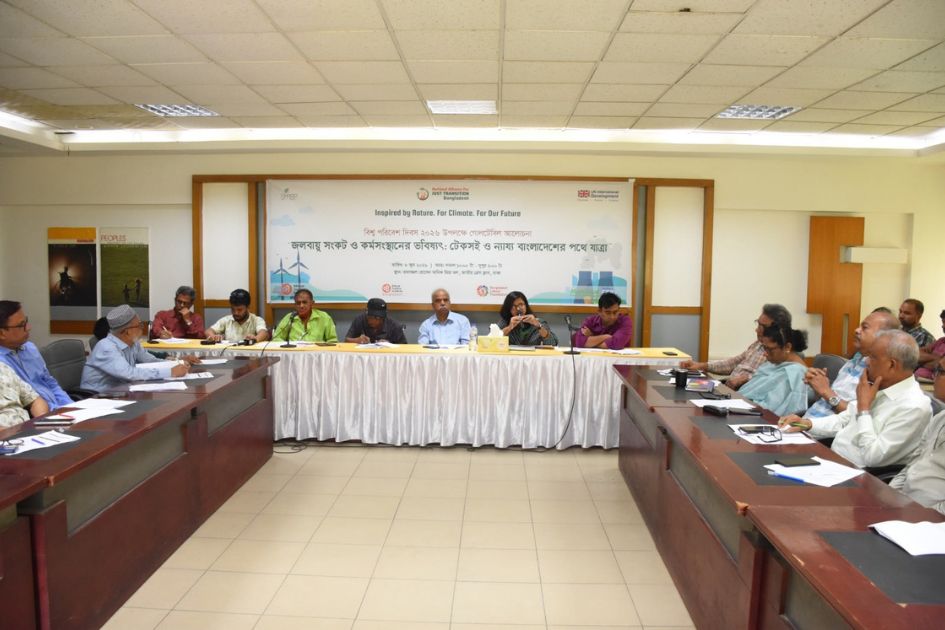
The observations were made during a roundtable discussion titled “Climate Crisis and the Future of Work: Journey Towards a Sustainable and Just Bangladesh”, organised by the National Alliance for Just Transition Bangladesh (NAJTB) in collaboration with the Sustainable Manufacturing and Environmental Pollution (SMEP) Programme at the National Press Club on the occasion of World Environment Day 2026.
The speakers urged the government, employers, workers’ organisations and development partners to collaborate urgently in advancing a just transition that protects workers, strengthens public health systems, accelerates renewable energy deployment and ensures a climate-resilient and sustainable future.
The event was chaired by Syed Sultan Uddin Ahmed, executive coordinator of the National Alliance for Just Transition Bangladesh, and attended by trade union leaders, labour rights activists, environmental experts, civil society representatives, youth leaders and development practitioners.
The speakers also urged the government to increase budgetary allocations for public health protection and just transition measures, ensuring stronger investment in occupational safety, heat-resilient healthcare systems and worker-focused climate adaptation programmes.
Syed Sultan Uddin Ahmed said global commitments on climate action are often not reflected in the realities faced by working people.
He called for integrating social protection, climate-resilient housing, occupational health measures and safe public transportation into labour and climate policies. He also stressed the importance of developing coordinated labour positions for international climate negotiations and identifying climate-vulnerable communities and regions for targeted action.
Presenting the keynote paper, BLF Programme Officer Md Zubaer Alam said Bangladesh experienced one of the longest and most severe heatwaves in its history in 2024, with temperatures exceeding 43 degrees Celsius in several parts of the country. In 2026, temperatures in most regions have remained above 39 degrees Celsius.
He noted that the World Meteorological Organization (WMO) has warned of an 80 percent probability of El Niño conditions during June-August 2026, raising concerns about more frequent and prolonged heatwaves and extreme weather events.
The keynote presentation highlighted that extreme heat, electricity shortages and unplanned urbanisation are forcing workers to operate in increasingly hazardous conditions.
Workers are suffering from dehydration, heatstroke, dizziness, fainting and kidney-related illnesses, while extreme heat is also affecting nutrition, maternal health and access to sexual and reproductive health services, particularly among women workers, informal workers and climate-vulnerable communities.
The speakers said climate change is increasingly reshaping labour markets, productivity and employment patterns, making climate resilience a critical component of Bangladesh’s future development strategy.
They stressed that a just transition is essential to ensure climate action creates decent jobs, protects workers’ rights, strengthens social protection systems, promotes gender equality and advances environmental sustainability while reducing social and economic inequalities.
Nurul Amin, joint convenor of Sramik Karmachari Oikya Parishad (SKOP), said Bangladesh’s industrial policies continue to focus on production targets while workers remain largely excluded from climate adaptation planning.
Kutubuddin Ahmed, chairperson of IndustriALL Bangladesh Council (IBC), said nature cannot be fought against and warned that environmental degradation would inevitably bring severe consequences.
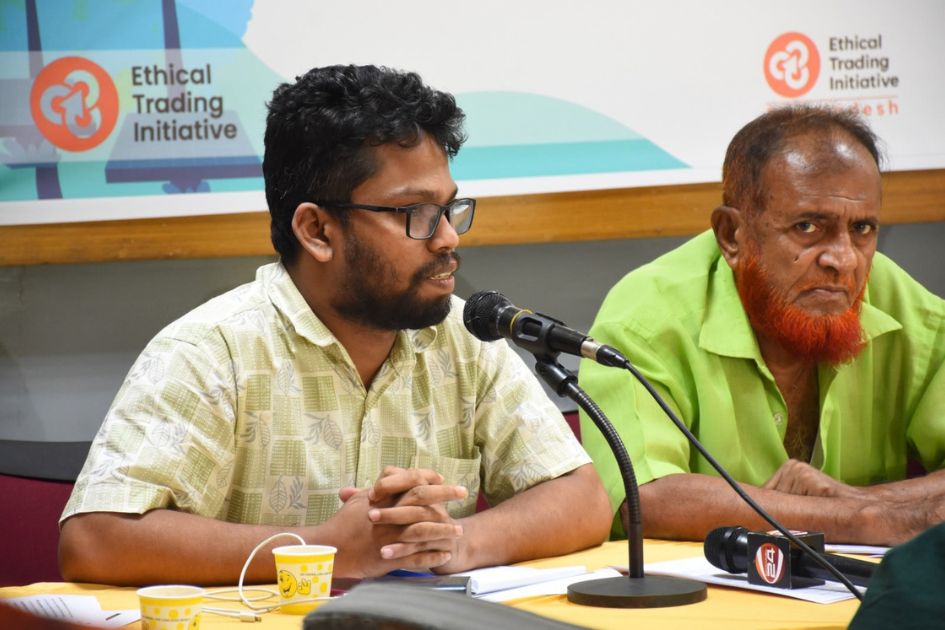
Representing the youth perspective, Sohanur Rahman, executive coordinator of YouthNet Global, said young people would inherit both the climate crisis and the future labour market.
“Investing in green jobs, climate-resilient infrastructure, renewable energy, climate-smart skills development and workplace heat protection is essential to ensure decent work opportunities for future generations while supporting a sustainable and low-carbon economy,” he said.
Environmental expert Farzana Yasmin said economic systems have long prioritised profit over people and the planet, adding that sustainable development is no longer a luxury but a necessity for survival.
Kalpona Akter of the Bangladesh Center for Workers Solidarity criticised global brands for promoting green factories while failing to ensure fair wages and decent working conditions for workers.
Abul Kalam Azad of the Just Energy Transition Network Bangladesh (JETNET Bangladesh) called for removing bureaucratic barriers to renewable energy projects and urged policymakers to prioritise the use of fallow, low-use and degraded land for solar power development instead of agricultural land.
Speaking at the programme, Bangladesh Labour Foundation (BLF) Programme Director Raisul Islam Khan said the climate crisis is no longer solely an environmental issue but has become a major challenge affecting workers’ rights, public health, economic productivity and sustainable development.
The speakers also highlighted the disproportionate impacts of climate change on women workers, including occupational health risks, income insecurity, increased unpaid care responsibilities and barriers to healthcare and social protection.
They called for stronger gender-responsive climate policies and greater alignment between climate resilience efforts and Bangladesh’s national development priorities, including the Sustainable Development Goals (SDGs), the National Adaptation Plan and renewable energy targets.
The speakers called for mandatory workplace heat protection standards, urban greening initiatives, restoration of water bodies, climate-sensitive social protection programmes, expanded investment in renewable energy, stronger public health awareness campaigns and improved access to healthcare services.
They warned that the growing frequency and intensity of heatwaves have become among Bangladesh’s most pressing development, labour, public health and human rights challenges.




