

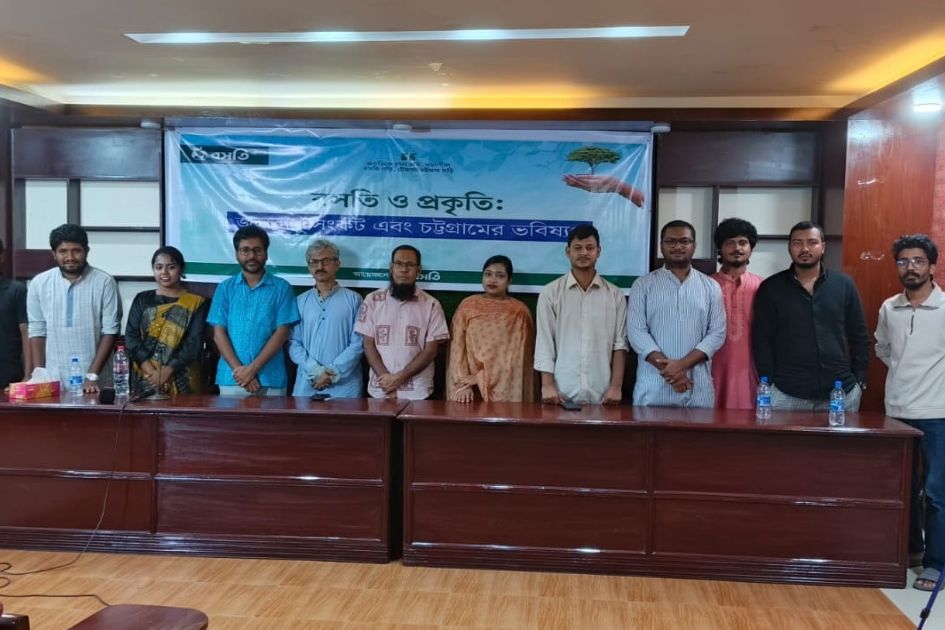



Environmentalists, academics and activists at a Chattogram seminar warned that climate change, ecological degradation and unplanned urbanization threaten the city’s future, urging coordinated action, sustainable planning and stronger environmental protection.
Environmentalists, academics, rights activists and development professionals on Friday (June 12) called for urgent and coordinated action to address mounting environmental challenges in Chattogram, Bangladesh’s second-largest city and principal seaport, warning that climate change, unplanned urbanization and ecological degradation could seriously threaten its future.
The call came at a seminar titled “Settlement and Nature: Climate Crisis and the Future of Chattogram”, organized by environmental organization Bosoti at the Chattogram Press Club in Jamal Khan. The event aimed to identify ways to address the city’s current and future climate-related challenges while raising public awareness about environmental protection.
Chaired by Md. Mobarak Hossain and moderated by Umme Kulsum Tarin, the seminar brought together environmental activists, researchers, professionals and civil society representatives who highlighted a range of environmental concerns and emphasized the need for effective measures to mitigate the impacts of climate change.
In his opening remarks, Bosoti activist Khan Ayyub outlined the organization’s objectives, mission and future plans.
Bangladesh Human Rights Foundation (BHRF) Secretary General Advocate Zia Habib Ahsan discussed illegal urbanization, hill cutting, encroachment on hilly land and the destruction of green spaces in Chattogram. He also highlighted legal complexities and institutional shortcomings that have hindered efforts to address those issues.
Rezwan Ahmed, spokesperson for the CRB Protection Platform and a trade union activist, pointed to the lack of government support for people displaced or affected by natural disasters. He also recounted longstanding efforts by vested business interests to exploit the CRB area, widely regarded as the city’s “lungs,” and urged environmentally conscious citizens to remain vocal in protecting the site.
SDG Youth Forum President Noman Ullah Bahar stressed the importance of achieving the Sustainable Development Goals (SDGs) and promoting environmentally sustainable development.
Environmental activist Khan Muhammad Mustafa highlighted the negative environmental impacts of industrialization and economic zone development in the Sitakunda and Mirsarai regions.
Nargis Akter of the Center for Health Innovation Research and Learning spoke about the importance of environmentally friendly urban planning. Engr. Arif Mahmud, central organizing secretary of the Bangladesh Professionals’ Rights Council, emphasized the need for a “green tax” and called for greater recognition of individuals and organizations contributing to environmental protection. He also urged policymakers to adopt more effective environmental strategies.
Writer and intellectual Mokarram Hossain highlighted the shortage of open recreational spaces in Chattogram, illegal occupation of hills by both government and private entities and the construction of environmentally harmful infrastructure. He also stressed the importance of adopting eco-friendly lifestyles.
Hasan Maruf Rumi, a central leader of Ganosamhati Andolan and an environmental activist, called for the restoration of canals in Chattogram that have gradually been filled in over the years.
Tahsina Rahman, secretary for social welfare, environment and human rights at Chaksu, discussed youth-led environmental awareness initiatives and outlined the role young people can play in addressing environmental challenges.
The seminar also featured remarks from Professor Dr. Abul Kashem of the Department of Soil Science at the University of Chittagong and Matiur Rahman Chowdhury, chief executive of the Organization for Disaster Management Society.
Among those present were Bosoti founder Md. Jamir Uddin, Tanzil Mahmud Shah of July Network and poet Sulaim Mahmud, along with other guests and participants.
The event concluded in the evening following extensive discussions, with closing remarks delivered by Khobaib Hamdan, one of the key organizers of Bosoti.




