


Record-breaking temperatures, ocean warming and extreme weather are putting millions at risk, prompting calls for cleaner energy, stronger health protections and urgent climate action at COP31.
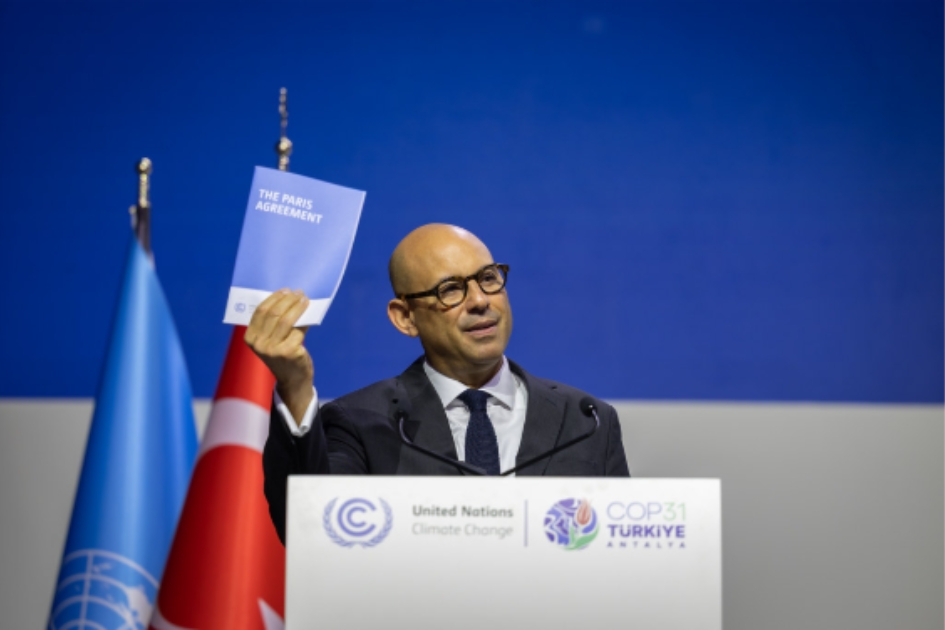
The climate crisis has become a global health crisis of “pandemic proportions”, UN Climate Change Executive Secretary Simon Stiell said Monday, as the World Meteorological Organization warned that record heat, rising seas and a powerful El Niño are intensifying threats to people worldwide.
“The world is getting dangerously hot,” Stiell said at a press conference at the COP31 climate summit in Antalya, citing hundreds of millions of people exposed to extreme heat across southern Asia and an estimated 50,000 deaths from heatwaves across Europe during the northern summer.
“A super El Niño is turbocharging climate impacts, delivering a deadly double-blow,” he said.
The WMO on Monday released its State of the Climate Update 2026, reporting that the past 12 years have been the warmest on record and that the past four years, including 2026, are the four warmest.
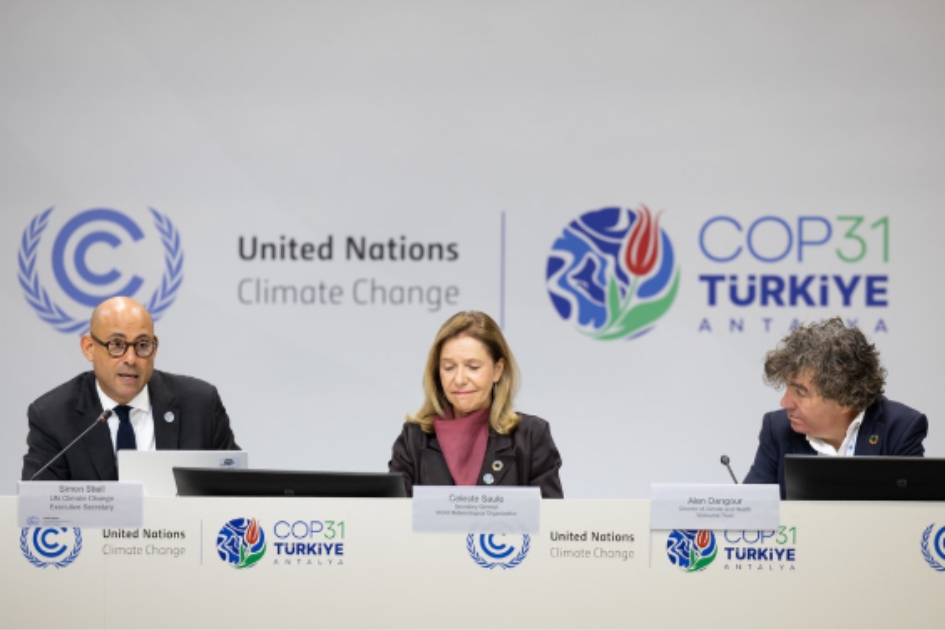
Alan Dangour, at press conference at COP31 in Antalya, Türkiye today. Credit: UN Climate Change, Kiara Worth
From January to September, the global average temperature was about 1.47 degrees Celsius above the pre-industrial average. With a strong El Niño underway, temperatures are likely to rise further for 2026 as a whole, WMO Secretary-General Celeste Saulo said.
She warned that 2027 could bring another record-breaking year because El Niño typically has its greatest impact on global temperatures the year after it develops.
The 2026-2027 El Niño is “off the charts” and differs from any El Niño the WMO has monitored, Saulo said. The organisation declares an El Niño when sea-surface temperatures in the tropical Pacific, the phenomenon’s epicentre, are 0.5C above average. It forecasts that the temperature could reach nearly four times that level between November 2026 and January 2027.
Ocean heat is at a record high for the 10th consecutive year, while sea-surface temperatures reached monthly records during 2026, Saulo said. Sea levels have also reached a record high, increasing risks for 900 million people living along low-lying coasts.
“We are super-charging our weather,” Saulo said, adding that heatwaves, tropical cyclones and rainstorms were intensifying faster than historical baselines had prepared for.
Millions of people were exposed to unbearable heat in 2026, leading to tens of thousands of excess deaths in Europe alone, she said. India, Pakistan and large parts of Asia and North America also suffered dangerous heatwaves.
As the southern hemisphere heads into summer, more such events are expected, Saulo said.
She also cited the catastrophe in China and Nepal as showing the dangers of high-mountain disasters for downstream communities. At the time of the COP31 summit, devastating floods were affecting parts of South America and Africa, while countries in Asia and the Pacific and Central America were facing drought.
Stiell said the effects of climate change were increasingly being felt through health systems and infrastructure.
“The climate crisis is now a global health crisis of pandemic proportions. From toxic pollution to extreme heat, and climate disasters slamming through health systems and infrastructure,” he said.
He also highlighted the effects of rising heat on pregnancy, newborns and maternal health.
“The impacts of rising heat on pregnancy, newborns and maternal health are another unfolding health disaster which has the fingerprints of the climate crisis all over it,” Stiell said. “The root cause is humanity still burning colossal amounts of coal, oil and gas, and destroying forests.”
Dr Alan Dangour, director of climate and health at the Wellcome Trust, said the WMO report showed the highest-ever concentrations of greenhouse gases in the atmosphere, record-breaking heat on land and ocean, alarming sea-ice melt and sea-level rise, as well as an unprecedented El Niño.
He said the response to climate warnings had been neither large enough nor fast enough, with people’s lives and livelihoods at stake.
Dangour said fossil fuel burning and human-caused climate change were estimated to kill more than 3 million people each year through fossil-fuel-related air pollution and extreme heat, while many millions more were suffering harm to their health and prosperity.
Extreme drought affected nearly 52 percent of the world’s land for at least one month in 2025, the second-highest level on record, affecting farmers and outdoor workers. Changing patterns of dry and wet groundwater storage were also affecting food security and sanitation, with major health consequences, he said.
Dangour pointed to cleaner air, electrification, cleaner energy, heat early warning systems and adaptation measures as solutions already capable of saving lives.
“Cleaner air is already preventing over 300,000 deaths a year in at least 77 countries where air pollution from fossil fuels has fallen in the last decade,” he said.
“Electrification and cleaner energy will both save lives and reduce healthcare costs,” he added.
Stiell said health would again be central at COP31 under the guidance of Türkiye and Australia, building on progress made at COP30 in Belém.
The Climate & Health Funders Coalition, which was established at COP30 in Belém, had already awarded more than $200 million, Stiell said.
Dangour said Wellcome had joined forces with more than 35 other philanthropic organisations to form the coalition, with an initial joint commitment of $300 million.
The coalition has awarded more than $225 million in its first year for work on extreme heat, air pollution, climate-sensitive infectious diseases and data systems, he said. It has also attracted an additional $150 million in commitments from new and existing funders.
Wellcome and multiple partners also launched a global call to action at the Pre-COP31 in Fiji to ensure that health guidelines, information, plans and data are available to protect pregnant women from extreme heat worldwide, Dangour said.
He said children, pregnant women, outdoor workers and older people were among those most vulnerable to climate change.
“We must change course and put the health and wellbeing of people at the heart of our response to climate change, measuring success not through emissions targets or degrees Celsius but by lives saved and health outcomes improved,” Dangour said.
Saulo said there were also signs of progress, noting that the number of countries reporting multi-hazard early warning systems had increased from 56 in 2015 to 136 in 2025.
She said COP31 would assess progress towards achieving Early Warnings for All, stressing that early warnings depended on observations and data.
The progress made in predicting the current El Niño had been supported by decades of investment in the global observing system, she said.
“We cannot afford to fly blind,” Saulo said, calling for COP31 decisions to be made with urgency and for funding to back the response to the threat.
Stiell said countries at COP31 faced a choice between accelerating electrification and continuing to bear the costs of fossil fuels.
“At this COP, nations face a choice: electric or shock. Rewire the global economy for the electric age. Or accept ongoing fossil fuel cost pain for families, firms, and governments, and of course that includes health systems,” he said.
“Efficient electrotech and clean energy are a vital cure for planet-heating pollution and spiraling household costs, amid the ongoing fossil fuel cost crisis,” he added.
The press conference took place at 1pm on Monday in Antalya. Stiell left before questions, saying there would be a full press conference with the COP31 Presidency on Tuesday and that he expected the discussions in Antalya to provide an opportunity to advance the climate agenda.