

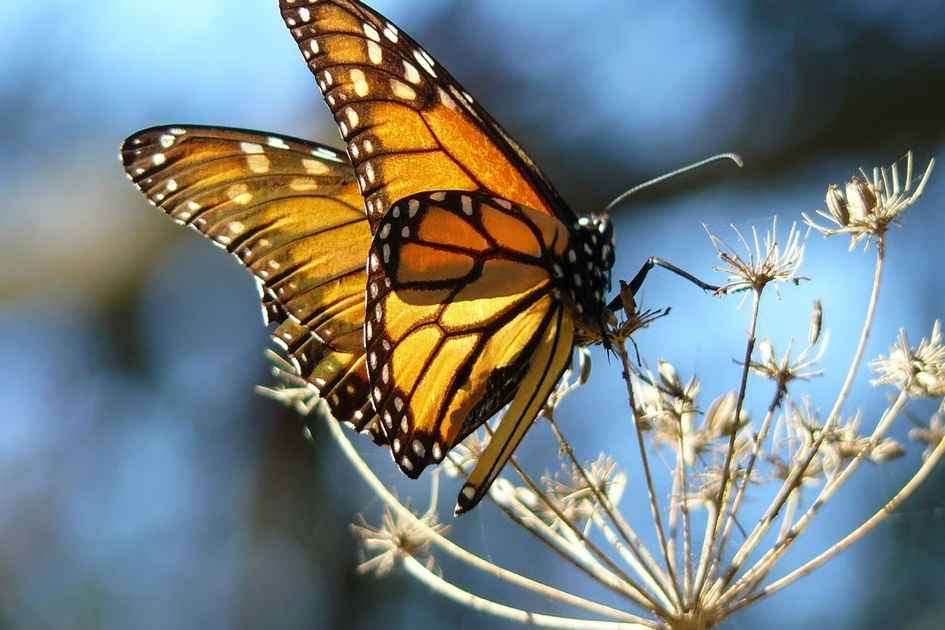



Researchers say butterflies are emerging as sensitive indicators of ecosystem change, but uneven monitoring across biodiversity hotspots risks leaving conservation decisions based on incomplete and geographically skewed evidence.
Climate change and extreme weather are driving widespread shifts in butterfly ranges across the world, according to a global study of nearly 2,000 species that also revealed major gaps in biodiversity monitoring.
The geographical distribution of the colourful winged insects is changing worldwide, probably because of climatic changes and extreme weather, according to the study published in Nature Ecology & Evolution on Wednesday.
Researchers from Australia’s Monash University, the German Centre for Integrative Biodiversity Research, Friedrich Schiller University Jena and the Helmholtz Centre for Environmental Research said the changes could indicate broader environmental shifts across ecosystems.
“The main message is that butterfly redistribution is already happening, and it is more complex than a simple story of species moving poleward or uphill,” co-author Shawan Chowdhury, a global change biologist at Monash University, said in an email to Courthouse News.
“Climate change and extreme weather are major drivers, but they are not acting alone. Land-use change, habitat degradation, agriculture, urban development and invasive species also shape where butterflies can survive. In many cases, climate change may push species to move, while land-use change blocks the route.”
The global analysis examined 6,182 recorded range shifts involving almost 2,000 butterfly species across more than 100 countries.
Chowdhury said butterflies can serve as early indicators of environmental change because of their short life cycles and sensitive ecological requirements.
“We found butterfly species shifting their ranges on every continent where they occur,” Chowdhury said. “The scale is astonishing, and it’s happening far beyond the well-studied regions of Europe and North America.”
The researchers found evidence of range shifts among 1,758 butterfly species, representing about 10% of all known butterfly species worldwide. The findings were based on published studies dating back to 1991.
Of the species with documented changes, 80% had expanded their ranges, 27% had experienced contractions and 22% had shifted along elevational gradients.
The percentages exceed 100% because many species experienced more than one type of range shift. Chowdhury said a species could, for example, expand in one area while declining in another.
Horizontal expansions, or movements from one area to another, were documented on every continent, with particularly high numbers recorded in tropical countries. Range contractions were more common in temperate regions, including Europe and North America, while elevational shifts were found almost entirely in the Northern Hemisphere.
The study also identified major differences in the documentation of butterfly range shifts across the 105 countries analysed.
Records cover more than half of all butterfly species in some European countries, including the Czech Republic, Finland, Luxembourg, Spain and Sweden. In most other countries, however, range shifts have been documented for fewer than 10% of butterfly species.
The researchers said they were able to build a more comprehensive dataset by including non-English scientific literature and 68 expert assessments.
“Recording contributions from butterfly experts from society and efforts of natural history societies [was] hugely important to understand global butterfly biodiversity patterns,” said Aletta Bonn, a professor of ecology at Friedrich Schiller University in Jena, Germany.
Despite those efforts, major gaps remain in Central Africa, Southeast Asia, New Guinea and the Amazon, even though the regions are important global biodiversity hotspots, the researchers said.
“The study helps balance the picture, but it also demonstrates an urgent need of concerted action to expand monitoring efforts globally,” co-author Guy Pe’er, a biologist with the German Centre for Integrative Biodiversity Research and the Helmholtz Centre for Environmental Research, both in Leipzig, Germany, said in a statement.
The researchers warned that conservation efforts could be guided by incomplete evidence without equitable, standardised and multilingual biodiversity monitoring.




