

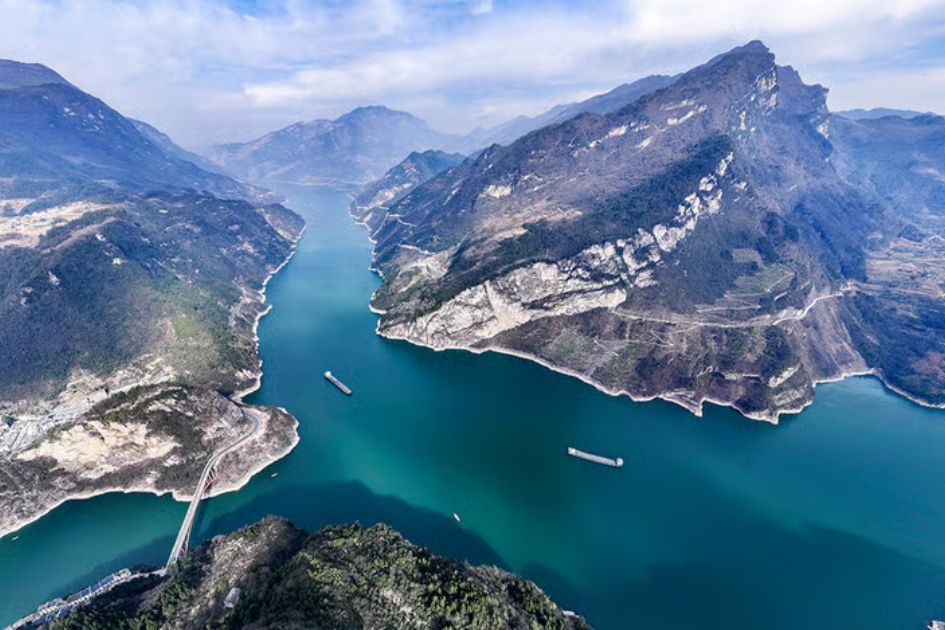



China’s sweeping conservation drive has reversed decades of ecological decline in the Yangtze, but the recovery has come with social costs for fishing communities and renewed concerns over continued dam building.
China’s longest river is showing signs of a remarkable ecological recovery after decades of degradation, with scientists reporting a sharp rise in fish populations and the return of rare species following sweeping conservation measures introduced in 2021. But the revival of the Yangtze has also highlighted the social costs and limitations of the country’s top-down environmental policies.
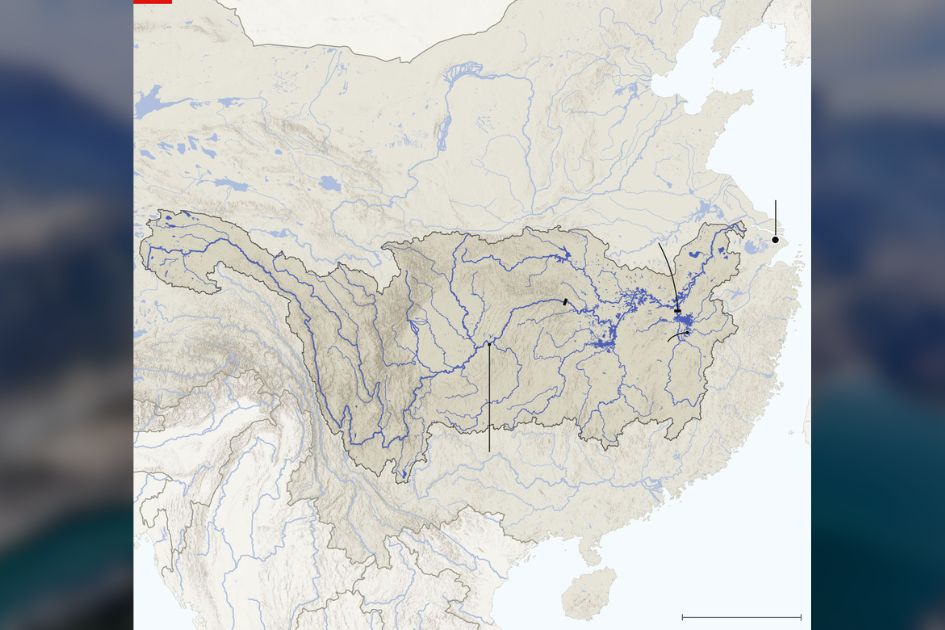
The 6,300-kilometre Yangtze, often referred to as China’s “mother river”, had long suffered from sewage, industrial pollution, overfishing and extensive dam construction. The damage pushed some of its most iconic species to the brink. The baiji, a nearly sightless white-bellied dolphin, is believed to be extinct, while the giant sword-nosed paddlefish has disappeared.
Research published in February by scientists from China, Canada, the United States and France found that fish biomass, the estimated total weight of all fish in the river, had increased by more than 200% since 2021 after seven decades of decline. In April, researchers recorded a rare species of sturgeon breeding in the wild for the first time in two decades. Another study released in July reported that a significantly larger share of fish in the river were reaching sexual maturity, improving prospects for future generations.
Government figures also show that the population of finless porpoises, a chubby, snub-nosed relative of the baiji known locally as the “river pig”, has risen to more than 1,400 across the Yangtze basin, compared with a low of 1,000 in 2017.
The Chinese Communist Party, once known for exploiting natural resources, has shifted towards protecting parts of the environment. State media describe China as a “global biodiversity champion”. In the Yangtze’s case, the results have been notable and may provide lessons for other heavily damaged rivers, including Southeast Asia’s Mekong. However, China’s “eco-authoritarian” model, characterised by centralised decision-making and little tolerance for opposition, has also drawn criticism because it often overlooks the concerns of affected communities and, at times, environmental advocates.
A central element of the recovery strategy was a 10-year commercial fishing ban covering the Yangtze, its main tributaries and the large lakes within its basin. Annual catches, which exceeded 400,000 tonnes in the 1950s, had fallen to less than 100,000 tonnes by the time the ban took effect in 2021.
Authorities enforce the restrictions through river patrols, drones, surveillance cameras and heavy fines. Chinese President Xi Jinping has personally backed the policy, while local officials’ promotion prospects have increasingly been linked to environmental performance. Although illegal fishing persists, it appears to be declining. Government figures show criminal cases related to illegal fishing dropped by 40% last year compared with 2024.
Water quality has also improved after officials shut down or relocated thousands of chemical factories near the river, planted forests along its upper reaches to reduce soil erosion and transformed many cities in the basin into so-called “sponge cities” by adding artificial wetlands, permeable surfaces and more green spaces. These measures have helped absorb rainfall, reduce flooding and filter stormwater before it reaches the river, creating a healthier environment for wildlife.
“The Yangtze’s initial recovery is testament to China’s ‘immense’ testimony to concentrate state resources on environmental problems,” said Wang Limin, a veteran Chinese conservationist.
Wang said he was especially encouraged by the growing population of finless porpoises because, as an “indicator species” and top predator, they serve as a sensitive measure of the ecosystem’s overall health. He also said their appeal to the public could help raise environmental awareness among Chinese citizens.
Despite the environmental gains, the policies have imposed significant costs on people who depended on the river. Around 230,000 fishermen lost both their jobs and their boats, which were either destroyed or confiscated.
State media reported that affected fishermen received compensation, retraining and, in some cases, new jobs that paid better than fishing. However, accounts from former fishing communities suggest many experienced a far more difficult transition.
In Jinxian county, located on the banks of Junshan Lake south of the Yangtze’s main channel, residents said only about one in five fishermen received compensation for losing their livelihoods and that the payments were well below their previous earnings. Many left to work as migrant labourers in large cities.
“No one listens to the common people. The government decided everything. You can’t argue with them,” said one former fisherwoman who now runs a restaurant.
A nearby propaganda sign reads: “Ban fishing together; move forward together.”
In a neighbouring village, Mr Zhang stood shirtless in the intense heat and pointed to the weed-covered dock where his fishing boat once moored. He said he had previously enjoyed some of the best fishing on the lake. Following government encouragement after the ban, he switched to raising swamp eels, a local delicacy, in ponds.
Unlike fishing, however, aquaculture requires substantial investment and carries financial risks if demand weakens.
“Everyone’s losing money this year,” he said.
China’s biodiversity strategy also faces criticism over its continued reliance on hydropower. Since the 1950s, authorities have built numerous dams along the Yangtze to control floods and generate electricity, including the Three Gorges Dam, the world’s largest, as well as thousands of smaller dams throughout the basin.
Scientists say these structures may have harmed river wildlife as much as overfishing because they block fish migration routes needed for spawning.
China continues to pursue ambitious hydropower development.
“The hydropower industry has really gotten a pass. Everybody else has stepped up, and nothing has changed with respect to hydropower,” said Steven Cooke of Carleton University in Ottawa, a co-author of the February study.
Cooke said the river’s recovery would remain limited unless dams were removed or redesigned with fish passages.
One of the most contentious current projects is a proposed three-kilometre dam between Poyang, China’s largest freshwater lake, and the Yangtze. The government says the project will help regulate the lake’s water level during the dry season, but many fear it will damage habitats used by migratory birds and finless porpoises.
Authorities approved construction of the dam earlier this year, reinforcing concerns among environmentalists that, like the Yangtze’s displaced fishing communities, they cannot always rely on the state as an ally.
This post is republished from The Economist.




