


Environmental groups warn that China-made fishing traps, chemicals and electric devices are destroying wetlands in Bangladesh’s Barind region, endangering native fish, biodiversity, public health and fishing livelihoods.
The rapid spread of China-made fishing traps, chemical honey traps and technology-driven fishing methods is posing a severe threat to wetlands’ biodiversity across Bangladesh, particularly in the drought-prone Barind region, speakers warned Monday (Feb 2) at a press conference organised by environmental and youth groups.
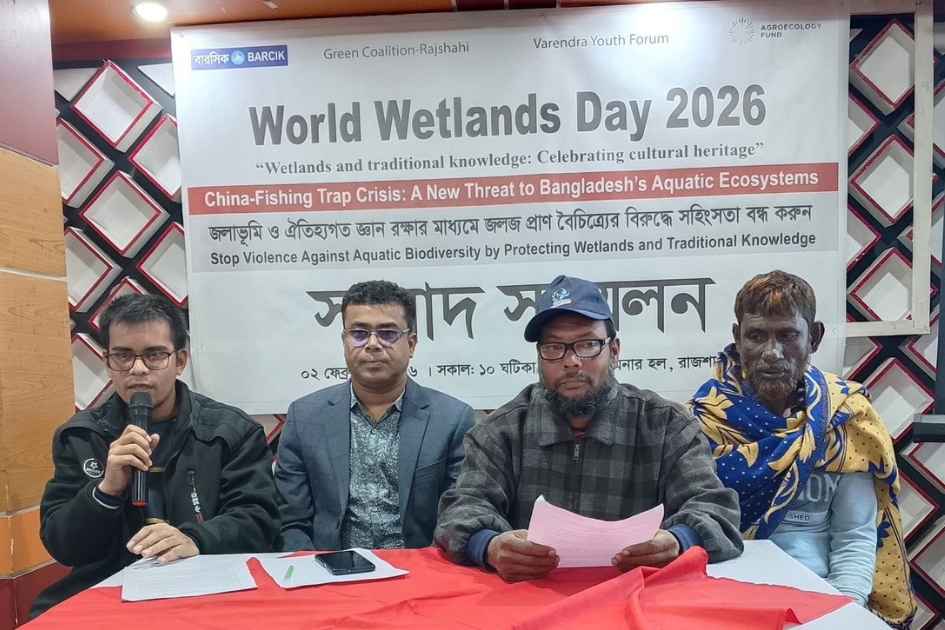
The media briefing was held at the Rajshahi SK Seminar Hall under the joint initiative of the Bangladesh Resource Centre, Green Coalition Rajshahi and Barind Youth Forum. The organisers expressed deep concern that rivers, canals, beels and seasonal wetlands are being devastated by the unchecked use of imported Chinese fishing traps and hazardous chemical and electrical devices.
They said water bodies in Rajshahi, including the Padma River and surrounding areas of Naogaon, Chapainawabganj and Natore districts, are increasingly affected by the widespread use of China-made duari nets, umbrella nets and monofilament current nets. At the same time, fishers are using LED lights, chemical honey traps and electric fishing devices to intensify fish harvesting in rivers and wetlands.
Speakers also highlighted the growing use of hormonal injections to accelerate fish growth and the use of sterilisation tablets fed to fish, practices that severely damage aquatic reproductive systems. As a result, native fish species, aquatic vegetation and overall biodiversity are rapidly declining, while the livelihoods of fishing communities and wetland-dependent populations face extreme risks.
Abu Sama, a fish farmer from the banks of the Barnai River in Paba upazila, said duari nets, hormonal injections and sterilisation tablets are being widely used in fish farming. Although these substances are applied in ponds, he said rain and flooding carry them into open water bodies, harming other aquatic species. “Native fish are no longer found in rivers and beels as they were in the past,” he added.
Md Shahidul Islam, anthropologist and regional coordinator of BARCIK, presented an observational research report based on recent field studies and ethnographic investigations. He said the findings show that while such technologies may boost income for some fishers in the short term, they ultimately turn water bodies into “dead” ecosystems. He warned that chemicals used in honey traps accumulate in wetlands and move through the food chain, posing serious threats to human health.
Islam further said that China-made duari traps and chemical fishing products are being sold openly through online platforms. Most of these products, he said, are imported freely or enter the country illegally from China. Despite clear restrictions under the Fisheries Protection Act 1950 and the Environmental Protection Act, he noted that enforcement remains weak, allowing widespread circulation of prohibited equipment.
Atiqur Rahman Atik, president of the Barind Youth Forum, described the situation as a structural failure in fisheries management rather than merely technological misuse. He said harmful fishing gear and chemicals continue to be imported, marketed and used in inland waters despite existing fisheries and environmental laws.
On behalf of fish farmers, Abu Sama placed seven demands at the press conference. These included an immediate ban and strict control on the use of poison, honey traps, electric shocks and illegal fishing equipment in wetlands and a complete halt to the import of China-made fishing poisons, hormones, honey traps and electric devices.
The demands also called for effective enforcement of fisheries and environmental laws with exemplary punishment for offenders, recognition of indigenous and traditional knowledge in wetland management and decision-making and special programmes to ensure food security and livelihoods for wetland-dependent communities.
Other demands included recognising wetlands not merely as natural resources but as areas linked to the right to life of humans and all living beings and stopping the online sale of banned fishing products through strict monitoring and regulation.
Speakers warned that failure to take immediate and effective action would cause irreversible damage to wetlands and fisheries resources in the Barind region and across Bangladesh, posing serious public health risks and leaving future generations with irreparable loss.




