

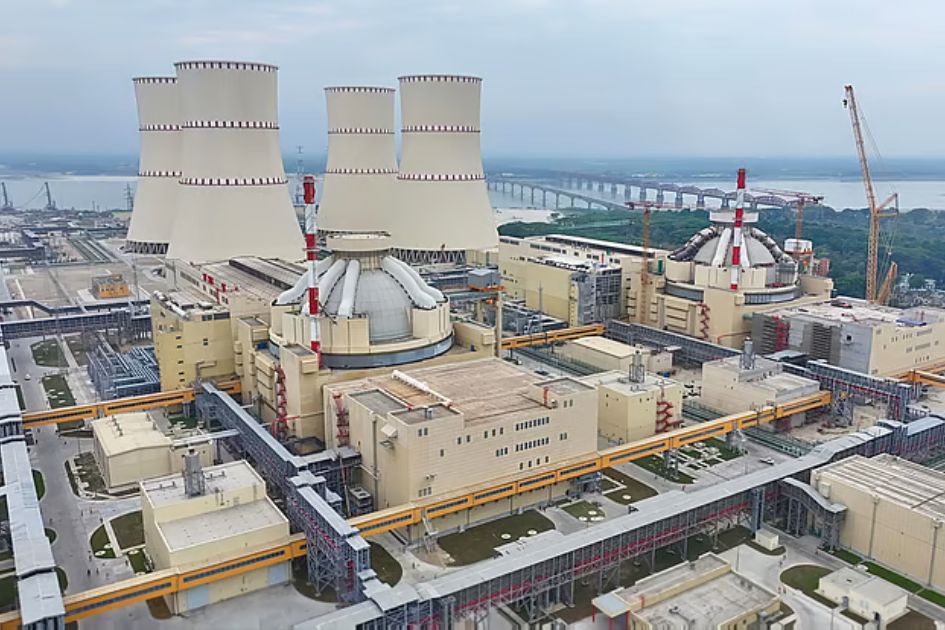

A simplified explanation of how nuclear power plants harness energy through uranium fission, producing electricity safely and efficiently in facilities like Rooppur Nuclear Power Plant.
Nuclear power generation, often viewed as a complex and mysterious process, is actually straightforward when broken down. The real challenge lies in managing it safely and efficiently. Nuclear energy is primarily harnessed through two methods: nuclear fusion and nuclear fission.
While nuclear fusion, where two atoms combine to form a new atom, releases massive amounts of energy, it is still not feasible to control the process artificially on Earth despite scientific advancements. This process powers the sun, where hydrogen atoms fuse into helium, generating the energy that lights our planet and sustains life.
In contrast, nuclear fission, which involves splitting atoms, is the method currently used to generate electricity. The most efficient method of fission involves bombarding a uranium-235 atom with a neutron. This causes the uranium atom to split, releasing large amounts of energy and several new neutrons, which in turn strike other uranium-235 atoms, creating a chain reaction.
The challenge with fission lies in controlling this chain reaction. If left unchecked, it can result in catastrophic incidents such as the Chernobyl or Fukushima disasters.
To keep the reaction under control, fuel rods made of enriched uranium-235 are placed in the reactor core, alongside control rods that absorb neutrons. This prevents the reaction from spiraling out of control.
Most of the uranium extracted from mines is uranium-238, which cannot sustain the fission process effectively. Only about 0.72% of mined uranium is uranium-235, which is usable in power plants. For use in power generation, uranium must undergo enrichment, and in facilities like the Rooppur Nuclear Power Plant, uranium is enriched to approximately 5%.
The enriched uranium is then formed into small pellets, which are housed in metal tubes, known as fuel rods. According to former chairman of the Bangladesh Atomic Energy Commission, Mohammad Shawkat Akbar, each fuel rod contains between 350 and 380 pellets. The rod measures around 3.93 to 4 meters in length, with a diameter of 9.1 millimeters. In total, the weight of the fuel used in a reactor can exceed 80 tons.
Once all the fuel is loaded into the reactor core, the control rods are partially removed. This allows the chain reaction to begin, generating significant heat. The generated heat is used to heat water, which is kept under high pressure in the Rooppur plant. While water typically boils at 100°C, the high pressure inside the reactor prevents it from turning into steam, even at temperatures above 300°C.
This superheated water is used to heat water in another chamber, creating steam. The steam then drives a turbine connected to a generator. While a motor uses electricity to rotate a shaft, a generator works in reverse, converting mechanical energy into electricity by rotating the shaft.
This is the process through which nuclear power plants efficiently generate electricity.




