

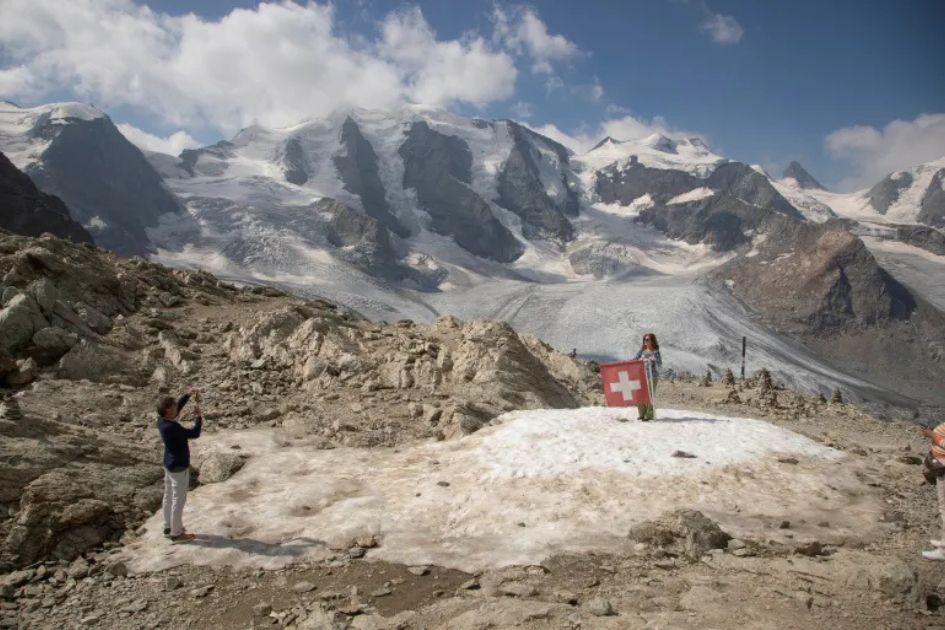



The UN report highlights Europe’s rapid warming, resulting in wildfires, droughts, and record-high temperatures. Urgent climate action is needed as the continent faces unprecedented environmental challenges.
Europe is experiencing unprecedented warming, according to a recent report by the UN and the European Centre for Medium-Range Weather Forecasts (ECMWF). The findings highlight the devastating impacts of climate change in the region, with extreme weather events becoming increasingly common.
The report reveals that 2025 saw above-average temperatures across most of Europe, with record-high sea temperatures and wildfires ravaging the continent. “Europe is the fastest-warming continent in the world, and its impacts are already severe,” said Florian Papenberger, director of the ECMWF. He also pointed out the ongoing drought conditions across Europe in May 2025.
The report underscores the alarming trend of wildfires caused by intense heat and dry conditions, which destroyed over one million hectares (nearly 2.5 million acres) of land last year. This is equivalent to the total land area of Cyprus. Additionally, approximately 70 percent of Europe’s rivers recorded lower water flows than usual.
A map released alongside the report shows significant marine heatwaves across most of the continent. Especially concerning are the intense temperature rises in the Atlantic Ocean near the UK, Ireland, and Iceland, as well as parts of the Mediterranean Sea.
The most striking evidence of climate change has been seen in Europe’s coldest regions. In July 2025, a 21-day heatwave broke records in the sub-Arctic countries of Norway, Sweden, and Finland. During this period, temperatures around the Arctic Circle exceeded 30°C (86°F), marking the longest heatwave in the region’s history.
The report also notes a sharp 30 percent decrease in snowfall across Europe in March 2025, with snow coverage shrinking to just 1.32 million square kilometers. This is the same size as the combined area of France, Italy, Germany, Switzerland, and Austria. Furthermore, extensive glacier loss was observed throughout Europe, with Iceland experiencing the second-highest level of glacier melt on record.
Samantha Burgess, strategic lead for climate at ECMWF, stated that the 2025 report paints a grim picture of the rapid pace of climate change, urging immediate action. “Increasing temperatures, widespread wildfires, and droughts are irrefutable evidence that climate change is no longer a future threat; it is our current reality,” she added.




