

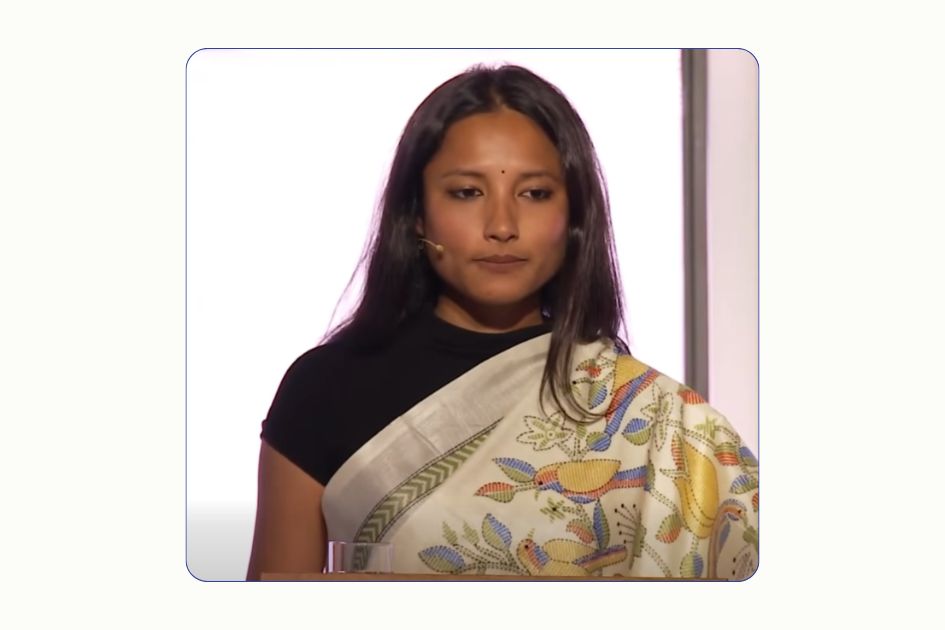



Bam told delegates in Oslo that peace and democratic justice require climate accountability, compensation and recognition that emissions cross borders while impacts fall hardest elsewhere.
Prominent Nepali activist Rakshya Bam has called for climate justice and greater accountability from high-emitting nations after catastrophic flash floods devastated Nepal, telling the Nobel Peace Conference that countries such as hers were paying the price for emissions they did not produce.
Speaking in Oslo before an audience of international politicians, global activists and Nobel laureates, Bam said the disaster was still unfolding in Nepal as she addressed the conference.
“As I am standing in front of you and speaking to you in Oslo, the disaster in my country is still not over,” Bam said.
She described widespread devastation across Nepal’s Himalayan and hilly regions, where rising floodwaters swept away entire villages, homes and infrastructure.
Early reports indicate that more than 1,000 people have been killed and over 4,000 remain missing, with upwards of 6,000 households and 17,000 children affected.
Bam used the disaster to highlight what she described as the structural injustice of the climate crisis, challenging high-emitting countries to confront their historical responsibilities.
She asked the audience to imagine a world in which carbon emissions were confined by national borders and could not cross into neighbouring territories.
“If carbon had borders, countries like mine would not be paying such a devastating price for emissions we did not produce,” Bam said.
“But carbon has no passport; it does not stop at a border. We share the same atmosphere… and if the consequences of our actions do not stop at borders, then neither should our responsibilities.”
Bam said her appeal should not be viewed as a request for international aid or charity. Invoking democratic principles, she called instead for binding accountability, financial compensation and systemic climate justice.
“We are not asking for charity; we are asking for justice and compensation,” she said.
Bam stressed that genuine peace and democratic justice could not exist without climate justice.
Concluding her address, she quoted Bob Dylan’s iconic anthem Blowin’ in the Wind, asking the global community how many lives must be lost before the world acknowledges that too many people have died.




