




Legal disputes, protest actions and encroachment allegations point to growing pressure on protected forests central to Bangladesh’s biodiversity, climate adaptation and long-term ecological security.
Protected landscapes are under pressure from infrastructure expansion and illegal occupation, raising questions about forest governance, biodiversity protection and climate resilience.
Along the edges of Bangladesh’s remaining sal forests, the signs of a deeper environmental crisis are becoming increasingly visible. Forest landscapes that once cooled cities, supported wildlife and protected communities from climate risks are now facing pressure from infrastructure expansion, illegal occupation and weak enforcement.
From a proposed waste transfer station inside Bhawal National Park in Gazipur to roads planned through elephant corridors in Cox’s Bazar and thousands of alleged illegal structures across Gazipur’s forest ranges, conservationists say Bangladesh’s protected forests are being squeezed from multiple directions.
The debate reflects a challenge faced by many climate-vulnerable countries: how to expand infrastructure and improve public services without destroying the ecosystems that provide natural protection.
Environmentalists, conservationists and legal experts warn that activities inside ecologically sensitive areas could undermine Bangladesh’s commitments under the Paris Agreement and the Kunming-Montreal Global Biodiversity Framework, both of which emphasise ecosystem protection, biodiversity conservation and nature-based solutions.
A national park caught in a development dispute
Located about 40 kilometres north of Dhaka, Bhawal National Park is one of the last significant remnants of Bangladesh’s tropical sal forest ecosystem.
The park provides habitat for wildlife, stores carbon, regulates temperatures and supports ecological services for one of the country’s fastest-growing urban regions.
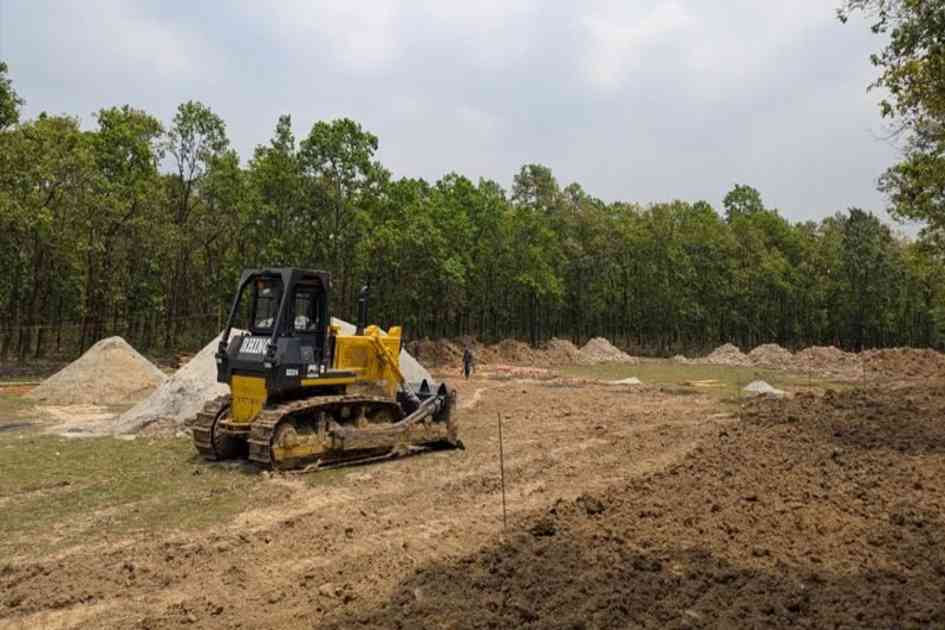
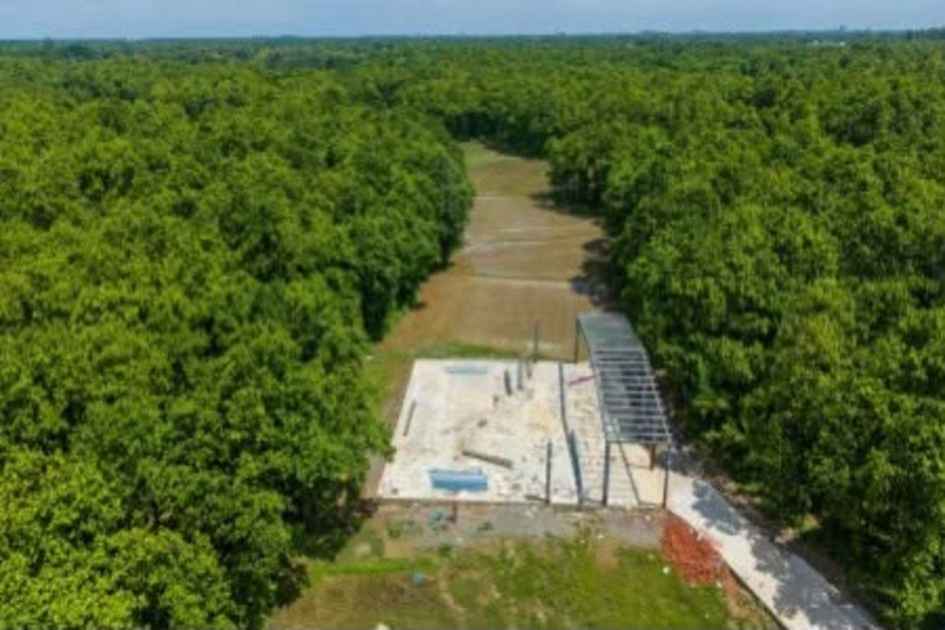
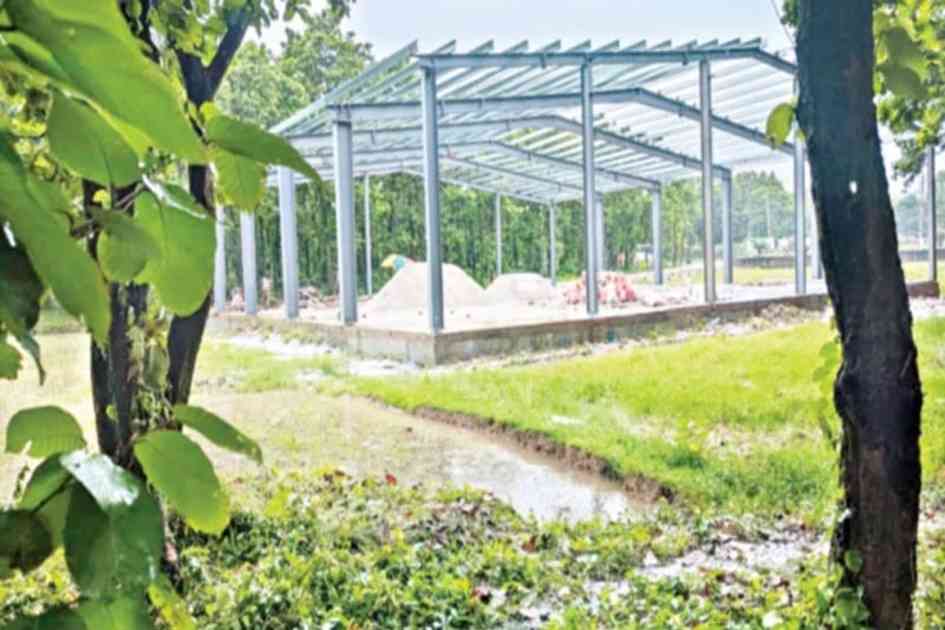
At the centre of the current dispute is a Secondary Transfer Station (STS) being constructed by Gazipur City Corporation. The facility is designed to temporarily store up to 2,000 tonnes of municipal waste before transportation to final disposal sites.
Environmental lawyers argue that locating such infrastructure inside a protected national park conflicts with protections established under Bangladesh’s Forest Act of 1927 and the Wildlife Act.
Environmental organisations have also questioned whether all required environmental clearances were obtained before construction began.
The Bangladesh Environmental Lawyers Association (BELA) challenged the project through a writ petition. The High Court later ordered construction activities inside the national park to stop and directed Gazipur City Corporation not to dump waste around the protected area for six months.
Campaigners have alleged that construction continued despite the court directive, raising concerns about environmental governance and enforcement. The City Corporation has rejected the allegations and maintained that the facility is necessary to address growing waste management challenges in Gazipur.
Gazipur City Corporation has said the project is being developed on privately owned land and that finding suitable locations for waste management facilities has become increasingly difficult due to rapid urban expansion.
Environmental groups dispute that argument, saying private ownership does not remove the ecological protections attached to a national park.
Forest officials have also raised concerns over the project. Records indicate that the Forest Department repeatedly objected to the facility, while sections of the park boundary wall were reportedly removed to allow construction equipment access.
The controversy intensified after the Ministry of Environment, Forest and Climate Change approved a temporary electricity connection through a small section of forest land to support the facility. Environmental organisations criticised the decision, while the ministry has not publicly responded to those concerns.
Wildlife specialists warn that storing large volumes of municipal waste near protected forests could affect soil and groundwater quality, damage air quality, attract scavengers and create long-term risks for wildlife.
Professor Akhtar Mahmud of Jahangirnagar University’s Department of Urban and Regional Planning said Bangladesh should pursue science-based waste management solutions rather than placing essential infrastructure in fragile ecosystems.
“Once these forests are fragmented, restoring their ecological functions becomes extremely difficult,” he said.
Protesters demand protection of forests
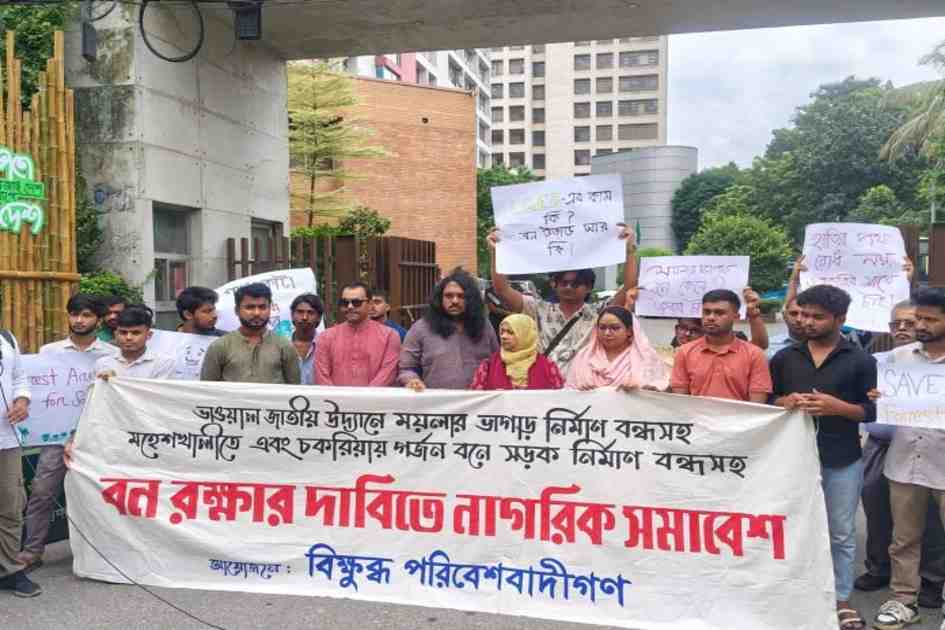
The concerns came into sharp focus on World Nature Conservation Day, when environmental organisations gathered outside the Forest Department headquarters in Dhaka demanding the relocation of the waste transfer station from Bhawal National Park and cancellation of proposed roads affecting protected forests and elephant habitats.
Representatives from BELA, Bangladesh Poribesh Andolon (BAPA) and other environmental organisations later submitted memorandums to Chief Conservator of Forests Md Amir Hossain Chowdhury and Local Government Engineering Department (LGED) Chief Engineer Md Belal Hossain.
BELA lawyer Rumana Sharmin Shanta called for the relocation of the waste transfer station outside Bhawal National Park and urged authorities to reconsider road construction proposals affecting elephant corridors.
BAPA Joint Secretary Humayun Kabir Sumon said Bangladesh’s Constitution places responsibility on the state to protect forests, biodiversity and natural resources.
“Economic development should not come at the expense of irreplaceable ecosystems,” he said.
The organisations demanded relocation of the Bhawal waste facility, cancellation of road projects that could damage protected forests and elephant corridors, stronger enforcement of conservation laws and greater investment in ecosystem restoration and nature-based solutions.
Gazipur’s forests face another battle: illegal occupation
Beyond individual development projects, conservationists say Gazipur’s forests are facing a longer-term challenge from illegal occupation.
Environmental activists and local stakeholders have accused parts of the Forest Department of weak monitoring, administrative failure and negligence, alleging that these gaps have allowed houses, shops, garages and other structures to spread across forest land.
Forest officials deny wrongdoing and say they are continuing efforts to recover occupied areas.
Local residents and environmental groups said forest encroachment continued even after the political transition of August 5, 2024. They alleged that no major eviction campaign was conducted in Gazipur for several months after the new government took office.
Environmental organisations, citing their own assessments, say that although more than 52,000 acres of CS gazette-listed forest land remain recorded in Gazipur, a significant portion has been occupied over the past two decades.
The figures have raised questions about field-level monitoring by senior forest officials, including the Chief Conservator of Forests and Divisional Forest Officer.
Chandora Beat and other forests under pressure
The highest number of complaints has emerged from Chandora Beat under the Kaliakair Range.
Local residents and environmental activists say more than 3,000 illegal houses, shops and other structures have been built there over roughly the past 19 months.
They say the Forest Department has identified 1,380 alleged encroachers, but large-scale eviction has not followed.
Similar concerns have been raised in Mouchak Beat, where local sources report that more than 2,000 illegal structures have appeared.
Environmental activists have also raised concerns about the Sadar, Kawraid and Satkhamair beats of the Sreepur Range, where they say thousands of structures have been built in recent years.
In Kaliakair’s Kachighata Range, allegations have emerged regarding illegal tree cutting and assistance to forest occupiers.
The allegations could not be independently verified.
The issue gained further attention after a journalist was allegedly attacked in June while collecting information about forest and government land occupation. A case filed over the incident included a key accused who local sources linked to alleged forest encroachment activities.
Officials reject allegations
Forest officials have rejected allegations of negligence and involvement in illegal occupation.
Chandora Beat Officer Iqbal Hossain said no new forest land had been occupied during his tenure and claimed that some occupied areas had instead been recovered.
Kaliakair Range Officer Shahidul Hasan Shakil said detailed information regarding encroachment issues would be available from the Divisional Forest Officer’s office.
Sreepur Range Officer Mokhlesur Rahman said around 12 acres of forest land had been occupied after August 5, 2024, but four acres had already been recovered.
He also said 340 acres of forest land had been restored through afforestation programmes over the past three years.
However, he said regular eviction drives had been difficult because of a lack of executive magistrates and administrative support.
“Regular eviction operations require cooperation from the administration. If that support increases, forest protection activities can be strengthened further,” he said.
Elephant corridors under threat
The pressure on Bangladesh’s forests extends beyond Gazipur.
Environmental groups have also raised concerns over proposed road construction through reserved forests in Chakaria and Maheshkhali in Cox’s Bazar, areas that provide important habitat for Asian elephants.
Campaigners cite the International Union for Conservation of Nature’s Atlas: Elephant Routes and Corridors in Bangladesh, which identifies the Khutakhali-Medhakachhapia landscape as one of the country’s significant elephant movement corridors.
They say around five kilometres of the proposed 11-kilometre Khutakhali-Eidgaon road would pass through reserved forest areas, while another road connecting JM Ghat and Kalarmarchhara could affect protected habitats.
Elephant corridors allow wildlife to move between fragmented forests in search of food, water and breeding areas.
When these routes are blocked or degraded, conservation experts warn that human-elephant conflict can increase, creating risks for both communities and wildlife.

Protecting forests as climate infrastructure
The debate comes as Bangladesh faces wider evidence of forest and wetland decline.
A 2023 study by the River and Delta Research Centre estimated that Gazipur district lost nearly two-thirds of its forests and wetlands between 2000 and 2023, with forest cover declining from 39,943 hectares to 16,174 hectares.
For a climate-vulnerable country, experts say protecting forests is essential for biodiversity conservation, climate adaptation and public wellbeing.
Protected forests, they argue, are not barriers to development but essential natural systems that protect communities from rising temperatures, extreme weather and ecological pressures.
For Bangladesh and other climate-vulnerable nations, the challenge is increasingly urgent: ensuring economic progress does not come at the cost of the ecosystems that make a safer future possible.
Environmental advocate groups are calling for nature-positive development, where infrastructure planning recognises ecological limits and long-term resilience.
“Protected forests are Bangladesh’s natural climate infrastructure,” said Sohanur Rahman, Executive Coordinator of YouthNet Global. “Development must follow a nature-positive and just transition approach that respects science, environmental law and the rights of future generations”, he concluded.




