

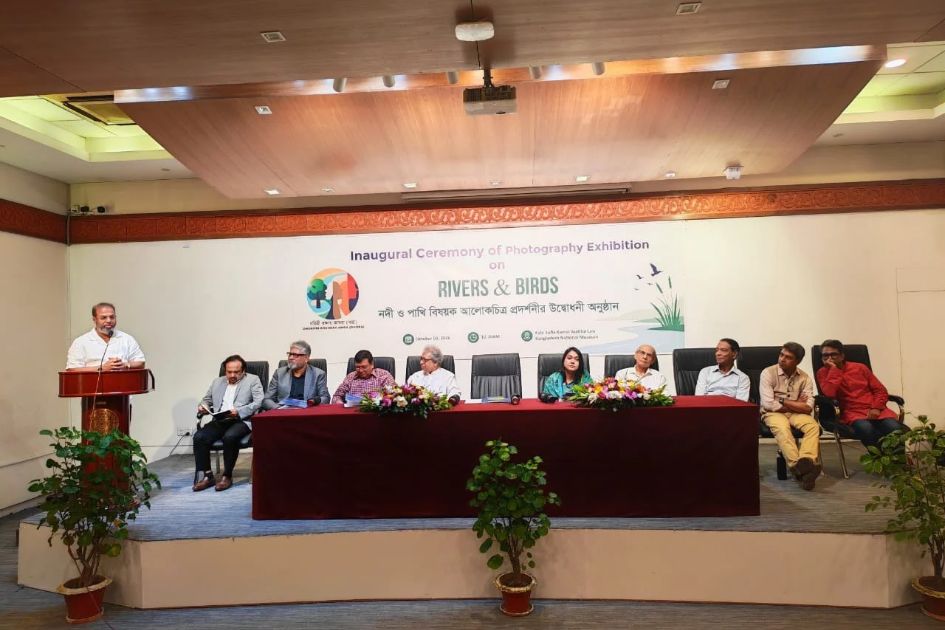



A photography exhibition organised by DHORA highlights Bangladesh’s rivers and birdlife as officials stress collective responsibility for protecting ecosystems, preventing pollution and preserving natural heritage.
Bangladesh Prime Minister Tarique Rahman has instructed the Rajdhani Unnayan Kartripakkha (RAJUK), the capital’s urban development authority, not to approve projects involving the filling of water bodies in Dhaka, State Minister for Environment, Forest and Climate Change Sheikh Faridul Islam said on Saturday.
Faridul Islam made the remarks at the inauguration of a four-day photography exhibition on rivers and birds at the Bangladesh National Museum in Dhaka.
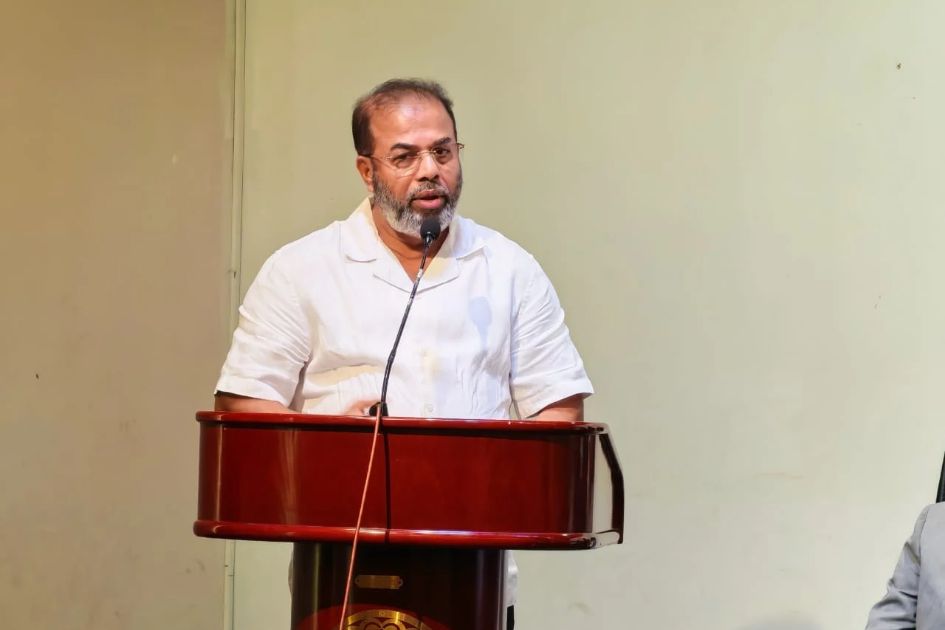
He said the government had taken steps to address environmental challenges including waterlogging, flooding and pollution. The government has also banned single-use plastics and polythene in the Sundarbans, the country’s largest mangrove forest.
“It saddens me to see many of the rivers that once flowed strongly now struggling. We are working to restore their natural flow, protect water bodies, curb plastic pollution and safeguard rivers, birds and the environment for future generations,” Sheikh Faridul Islam said.
The exhibition, titled “River and Birds”, was organised by Dhoritri Rokhhay Amra (DHORA) to raise awareness about the conservation of rivers, birds, nature and biodiversity.
It features river-themed photographs by photographer and photography teacher Abir Abdullah and bird photography by wildlife photographer Ansar Uddin Khan Pathan, highlighting Bangladesh’s rivers, birds and biodiversity and the need for nature conservation.
The exhibition was inaugurated at the Kabi Sufia Kamal Auditorium of the Bangladesh National Museum. It will remain open to the public from October 3 to 6 at the Nalini Kanta Bhattashali Gallery of the museum.
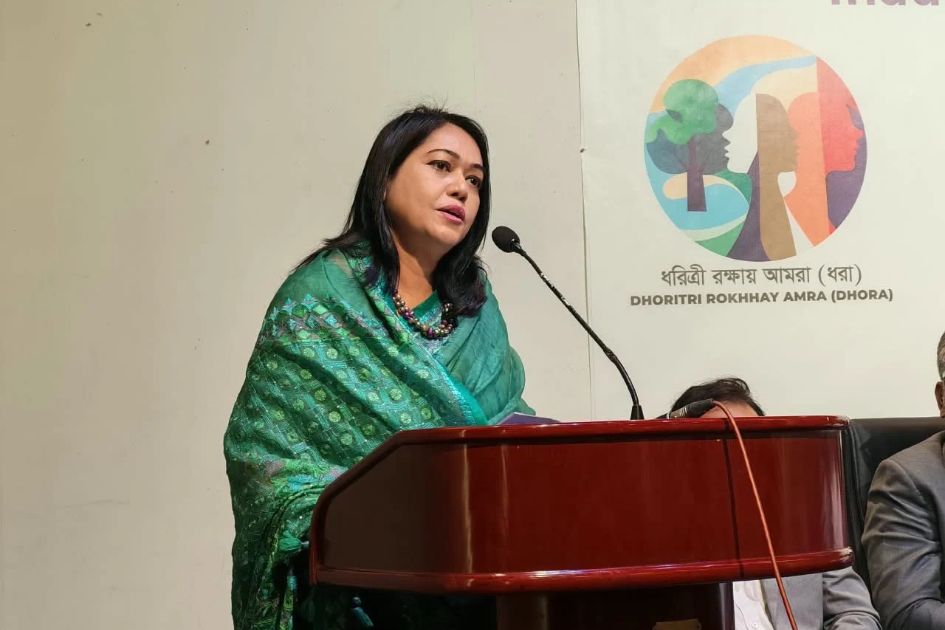
Mahbuba Farzana, secretary of the Ministry of Information and Broadcasting, said rivers and birds represented Bangladesh’s nature, culture, heritage, identity and stories.
“Rivers and birds are not merely two words; they embody our nature, culture, heritage, identity and countless stories. A river is not just flowing water but a complete ecosystem, while birds are an integral part of biodiversity. Today, we are witnessing rivers drying up and shrinking, and the songs of birds becoming increasingly rare,” she said.
“Protecting the environment and rivers is not the responsibility of the government alone; every citizen must play a role. The Information and Broadcasting Ministry stands ready to support public awareness efforts,” she added.
Dr. Mujibur Rahman Howlader, a member of DHORA’s Advisory Committee and former chairman of the National River Conservation Commission, said documenting river encroachment, pollution and environmental degradation and bringing those realities before the public could increase awareness and make efforts to protect rivers more effective.
M. S. Siddiqui, co-convenor of DHORA, said photography involved respect for people, originality and responsibility in addition to capturing scenes with a camera. He said greater professionalism, work and research were needed in the field.
Enam Ul Haque, founder of the Bangladesh Bird Club and a noted bird expert, said photography and love were deeply connected.
“There is a deep connection between photography and love. Those who photograph rivers gradually learn more deeply about the life of rivers; the same is true of birds, where photography nurtures both love and the pursuit of knowledge. This exhibition is therefore not only an opportunity to enjoy photographs, but also a reminder of the need to conserve nature,” he said.
Ansar Uddin Khan Pathan said rivers, wetlands and birds were deeply interconnected, with healthy rivers and wetlands helping protect bird habitats and food sources.
“Therefore, protecting birds requires protecting rivers, wetlands and the natural environment around them. The well-being of birds is also an important indicator of the health of our rivers, wetlands and the wider natural environment,” he said.
DHORA Member Secretary Sharif Jamil said the exhibition aimed not only to showcase birds but also to encourage greater affection for nature and action to protect rivers, wetlands and bird habitats.
Photographer Abir Abdullah said the camera had become a means of preserving memory and history since he began working as a photographer.
Every photograph in the exhibition tells a real-life story of river erosion, floods, human resilience and disappearing traditions, he said. Historic sailboats and boat-racing culture were also fading, he added, warning that failure to preserve such heritage risked losing an important part of Bangladesh’s identity.
Foysal Ahmed, editor of River Bangla and a member of DHORA, delivered the welcome speech.
The inaugural event was chaired by M. S. Siddiqui and moderated by Jabbar Hossain, a member of DHORA. Environmental activists, journalists, photographers, government officials, civil society representatives and diplomats attended the event.




