

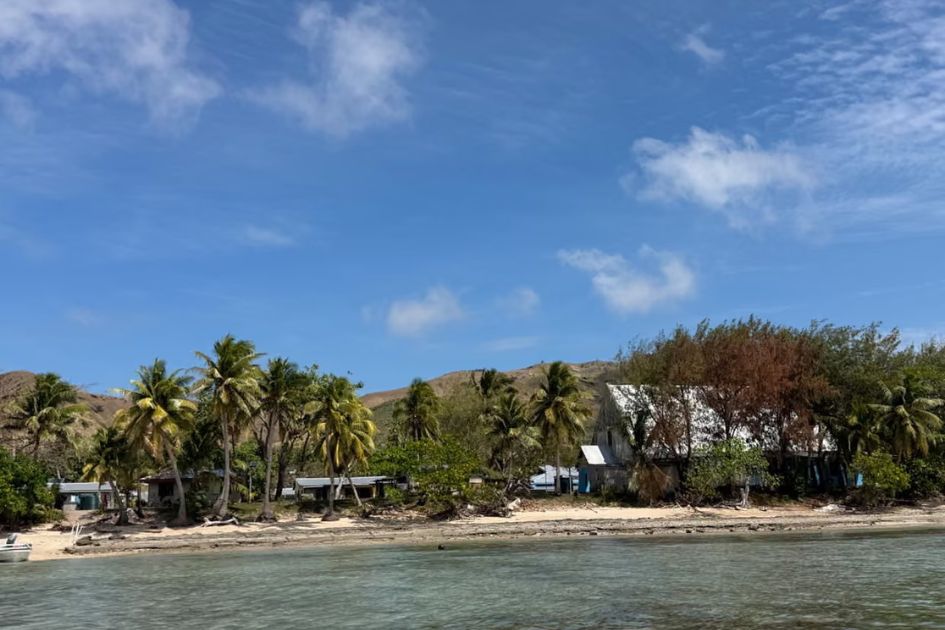



Fiji’s pre-COP talks are highlighting unresolved questions over climate finance, fossil fuels, adaptation, clean electrification and the future of the 1.5°C goal.
Turkey and Australia face scrutiny over climate finance, fossil fuels and the 1.5°C goal as Antalya summit approaches.
Pre-COP talks open in Fiji on Monday with Turkey and Australia under pressure to show that COP31 will deliver more than polished promises when the UN climate summit opens in Antalya next month.
The final pre-summit meeting runs through October 8, with Pacific leaders warning that keeping the 1.5°C goal alive is a “lifeline”, not a slogan.
Critics have described the online build-up by the two host nations as a social media “slop arms race”, referring to a flood of short, glossy videos and promotional content. They argue that the messaging has too often avoided the hardest questions facing the climate talks: coal, oil, gas and destruction of nature.
The scrutiny comes as extreme heat, fires, floods, glacier loss and food supply disruptions mount across the world.
Fiji talks set the tone
About 36 ministerial-level representatives, including most Pacific leaders and France, are expected to attend the pre-COP discussions, with Fiji hoping their presence in the region will build momentum ahead of COP31.
Fiji’s Permanent Secretary for Environment, Dr Sivendra Michael, said the meeting is primarily aimed at building consensus and narrowing differences before the main UN climate conference in Antalya, Türkiye.
Issues that can be resolved at officials’ level should be settled during the pre-COP process, he said, while unresolved or more politically sensitive matters can be elevated to ministers.
Three issues left unresolved in previous negotiations are expected to come before the pre-COP plenary: response measures on trade, the Mitigation Work Programme and the Global Goal on Adaptation.
Fiji is also working to finalise the Falefatupekasa Declaration, which is intended to reflect Pacific priorities and will be taken forward for consideration by leaders.
Dr Michael said the declaration is expected to reinforce the Pacific’s position on stronger climate action, greater support for adaptation and loss and damage, and practical solutions reflecting the region’s circumstances.
He said Fiji also wants Pacific priorities carried into the formal COP31 negotiations rather than treated separately from the realities facing island countries.
Other issues Fiji and the COP31 Presidency want to advance include the transition and technology change under the Adaptation Fund, operationalisation of the Just Transition Mechanism, an Action Agenda focused on zero waste, and recognition of the ocean-climate nexus.
Dr Michael said the presence of ministers and leaders in the Pacific provides an opportunity to ensure negotiations are informed by the realities facing island countries.
He also made clear that Fiji intends to maintain its red lines.
Fiji, he said, will not accept a decision text that does not recognise the Pacific’s red line.
The meeting will be held in Nadi and Tuvalu from Monday to Friday.
Pacific countries want major emitters to match their warnings with stronger policies, greater climate finance and cuts in greenhouse gas emissions.
For vulnerable countries, the central question is whether global promises can be translated into money, adaptation measures and measurable action.
“We want action, not more promises. The Pacific is already living with the impacts of climate change, and our voices must be heard at the negotiating table,” Fijian climate activist Lavenia Naivalu said.
Seven tests for Antalya
Several concrete tests could determine what COP31 delivers.
One is whether Nepal receives finance for reconstruction and early-warning systems following recent deadly flooding and glacier-related disasters.
Another is whether the proposed clean-electrification target comes with money, power grids and supporting policies.
Governments will also face pressure to publish new plans for reducing fossil-fuel use, while Turkey and Australia could face calls for commitments concerning coal use and exports.
Other tests include new adaptation finance towards the promised threefold increase, agreement on how the second Global Stocktake will operate, and a decision on the timetable for the next major IPCC reports.
Those measures could provide a clearer picture of progress than the volume of announcements or promotional material surrounding the summit.
Power target faces test
The hosts are promoting a global clean-electrification target as a possible headline outcome.
Supporters say faster electrification could help reduce dependence on fossil fuels. Critics argue that a target alone will not deliver the transition.
Investment, electricity grids, clean technology and supportive government policies would also be required.
The International Energy Agency has estimated that the world could need about 80 million kilometres of new electricity grids by 2040, illustrating the scale of the infrastructure challenge.
Action Agenda in focus
Some COP31 announcements could come outside the formal negotiations through an Action Agenda designed to showcase specific initiatives by governments, companies and coalitions.
COP30 president André Corrêa do Lago has said negotiations remain at the heart of the COP process while arguing that countries now have a stronger mandate for implementation.
For many developing countries, however, formal talks remain essential because finance, emissions commitments and accountability are negotiated there.
Host deal raises legal question
A new Host Country Agreement between the UN and Turkey requires participants enjoying privileges and immunities to respect Turkish laws and regulations and not interfere in the country’s internal affairs.
The interpretation of “internal affairs” could face legal scrutiny as the summit approaches.
IPCC decision looms
Governments are due to meet in Addis Ababa from October 12 to 16 to discuss the timetable for the next major reports of the Intergovernmental Panel on Climate Change.
Climate-vulnerable countries and several European states want the principal reports on physical science, climate impacts and pathways for cutting emissions completed by 2028 so they can inform the second Global Stocktake.
India, Saudi Arabia, China, Kenya and Russia are among the countries that have questioned the timetable, arguing that the process has become too rushed.
The decision could affect how much updated scientific evidence is available during the next phase of global climate negotiations.
Climate damage mounts
The climate briefing behind this report points to mounting impacts.
Oceans have continued to experience exceptional heat. Fires in Indonesia have exposed millions of people to hazardous air, while flooding in Nepal has killed people and left others missing.
About 300mm of rain fell in 48 hours across 27 provinces in Thailand, according to figures cited in the briefing.
A European heatwave has been linked in recent analysis to about €113 billion in GDP losses across 30 countries. Swiss glaciers have also lost about 20 per cent of their mass over five years, according to figures cited in the briefing.
New analysis cited in the briefing suggests warming could add more than three percentage points to annual food inflation by 2035.
Recent climate and supply shocks have coincided with price increases of around 300 per cent for West African cocoa, around 300 per cent for Australian lettuce and around 50 per cent for European olive oil.
El Niño is expected to continue affecting weather and supply chains into 2027 and beyond, keeping food security high on the climate agenda.
Coal and clean energy collide
Under a recent US-China agreement, China is expected to buy about 10 million tonnes of US coal in 2027 and 2028, roughly 0.2 per cent of its annual coal consumption.
At the same time, China’s solar power capacity has overtaken its coal capacity.
The developments illustrate the complexity of China’s energy transition. Renewable power is expanding rapidly while coal remains central to the country’s energy system.
In Africa, the African Energy Bank is preparing its first major investment programme, including oil and gas projects, while solar installations are expected to grow by around 45 per cent this year, according to the briefing.
Canada is facing a similar policy tension. Prime Minister Mark Carney’s government is promoting major energy and infrastructure investment, including support for a large new LNG project, while maintaining climate commitments.
Carney previously warned financial leaders about the economic risks posed by climate change.
Countries release new plans
A series of national climate plans has been published in recent months.
Oman has pledged a 7 per cent greenhouse gas reduction by 2035 from 2024 levels, while Albania has set a 20.9 per cent reduction target against business-as-usual emissions by 2035.
Madagascar estimates it needs about $13.8 billion to implement its latest climate plan, with around 90 per cent expected from outside the country.
Gambia is placing major emphasis on clean cooking, the Philippines on adaptation and human security, and Niger on land restoration and agriculture.
Palestine says conflict is undermining its ability to cope with climate impacts.
The plans show how governments are responding differently to the same global climate pressures.
Nature and oceans under pressure
Only one of 23 global nature targets is currently considered on track, according to the assessment cited in the briefing, with four years remaining to meet the targets.
Around 15 per cent of countries have plans to address environmentally damaging subsidies, despite a global goal to shift $500 billion by 2030.
A UN figure cited in the briefing estimates that about $30 is spent on activities damaging nature for every $1 spent protecting it.
The oceans have absorbed about 90 per cent of the excess heat from global warming. Scientists and campaigners want them brought more firmly into formal UN climate negotiations because of their importance to fisheries, coral reefs, coastal communities and energy development.
It remains unclear how prominently oceans will feature at Antalya.
UNGA shows deep divide
Climate change featured hundreds of times during the recent UN General Assembly debate.
Governments including Nepal, Bangladesh, Brazil, Jordan, Rwanda, Vanuatu, the UK, France, Malawi and Morocco raised the issue.
The US president described climate change as a “hoax”, while Iran and El Salvador largely avoided the subject.
The speeches showed the continuing political divide over climate policy even as climate impacts and economic risks remain major concerns for many governments.
UN Secretary-General António Guterres has described the current generation as the first with the tools to end the fossil-fuel age and the last capable of preventing climate catastrophe.
At the latest climate summit in New York, ministers and delegates representing more than 120 countries called for greater action, finance and urgency.
Antalya faces the real test
The decisive test in Antalya will be whether governments put new money, policies, infrastructure and measurable emissions action behind their promises.
For climate-vulnerable countries, that will matter far more than the volume of speeches, videos and declarations surrounding COP31.




