




The proposal could unlock 170 million tonnes of coal, but feasibility studies, rehabilitation, water management and environmental concerns remain central to any final decision.
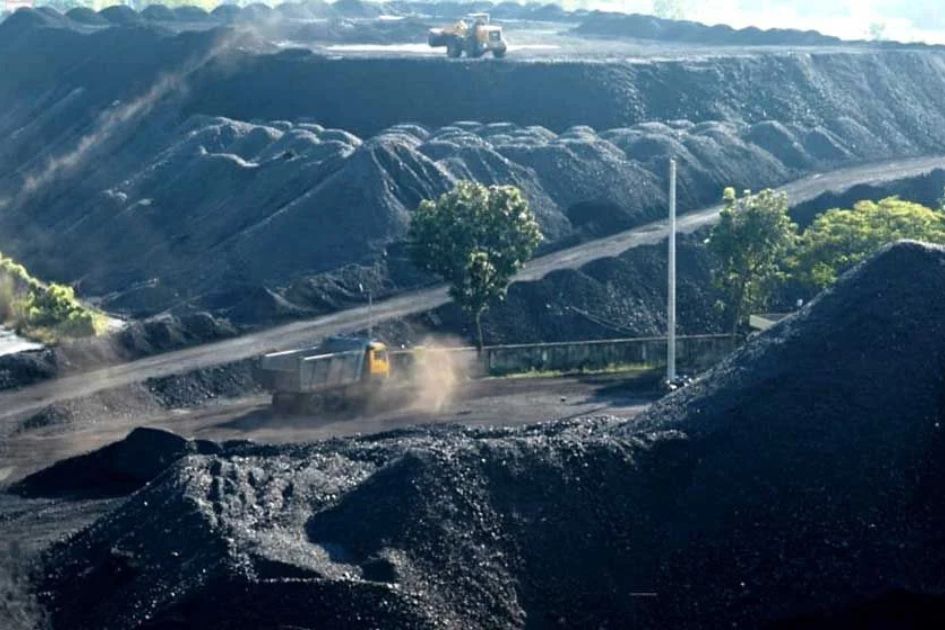
Bangladesh is considering open-pit coal extraction in the northern and southern sections of the Barapukuria coal mine as part of a plan to expand the use of domestic coal, with initial steps under way for studies and preparations.
Barapukuria Coal Mining Company Limited or BCMCL, estimates that about 170 million tonnes of coal could be extracted from the two sections. If annual production reaches around six million tonnes, mining could continue for between 28 and 30 years.
Sources at state-owned oil, gas and mineral corporation Petrobangla and BCMCL said the government is considering large-scale extraction of domestic coal because of the energy crisis and the financial and supply challenges associated with importing liquefied natural gas, oil and coal.
Alongside the existing underground mining operation, the government is therefore considering large-scale open-pit extraction in the northern and southern sections of Barapukuria.
The plan would require detailed technical and economic feasibility studies as well as consultations with local communities before implementation.
Petrobangla wrote to the Energy and Mineral Resources Division on July 2 seeking policy approval and guidance. However, feasibility studies and mine development could take about seven to eight years.
Land acquisition, the rehabilitation of between 18,000 and 20,000 people, water management and the handling of environmental impacts are among the major challenges facing the proposal.
BCMCL presented the mine’s current situation and future plans at a meeting chaired by Power, Energy and Mineral Resources Minister Iqbal Hasan Mahmud on September 23.
The presentation outlined progress in implementing a decision to extract coal through open-pit mining that had been taken at a meeting chaired by the prime minister on August 13.
The plan was drawn up as part of efforts to reduce coal imports and increase the use of domestic coal at existing and new coal-fired power plants.
A large share of Bangladesh’s coal resources has remained unused for nearly two decades amid debate and indecision over extraction methods.
Of the country’s five coalfields, coal is being extracted only from Barapukuria. The coal is used at the power plant there, although the plant frequently remains shut.
Against this backdrop, the proposal to introduce open-pit mining in the northern and southern sections has emerged alongside continued underground extraction.
According to BCMCL data, the northern section covers 2.81 square kilometres and the southern section 2.22 square kilometres. Together, the potential open-pit mining area covers 5.3 square kilometres.
The northern section contains 135 million tonnes of coal reserves, while the southern section holds 54 million tonnes.
Of the combined reserves of 189 million tonnes, BCMCL estimates that 90 percent could be recovered, putting the amount of extractable coal at 170 million tonnes.
The company’s presentation said coal seams in the two sections lie at depths of about 118 to 256 metres.
Under underground mining, only around 10 to 12 percent of the total reserves may be recoverable. Open-pit mining could potentially recover about 90 percent, according to the presentation.
The ratio of overburden that would have to be removed compared with the amount of coal is 3.3:1 in the northern section and 6.3:1 in the southern section.
According to the company, the relatively low ratios could help reduce production costs. Accident and mining risks would also be comparatively lower.
Increasing domestic coal use would also reduce dependence on imports and cut foreign currency expenditure.
Kaolin, clay and silica sand could also be recovered, materials that can be used in the ceramic, pottery and glass industries.
Previous studies have also recommended further assessment of the potential for open-pit mining at Barapukuria.
A 2014 study by the Institute of Water Modelling said water could be managed through pumping and a partial barrier system. It also recommended a detailed technical and economic feasibility study.
In 2018, US-based John T. Boyd recommended detailed research covering environmental conditions, groundwater and local communities.
German expert Dr Thomas von Schwarzenberg also recommended an open-pit mining feasibility study in 2019.
A proposal seeking approval for the study was submitted in 2023, while policy approval for a study was again sought in 2025.
Most recently, Petrobangla sent a letter to the Energy and Mineral Resources Division on July 2, 2026 seeking policy approval and guidance for completing a detailed feasibility study and an analysis involving consultations with stakeholders.
A Petrobangla official said implementation of open-pit mining at Barapukuria would depend on the findings of the study as well as rehabilitation, water management and environmental impacts.
The Ministry of Power, Energy and Mineral Resources has said a final decision on implementing the project should be made on the basis of a detailed study and consultations with stakeholders.
Questions also remain over coal production at Barapukuria after 2027.
The central section of Barapukuria contains geological reserves of 221 million tonnes. From September 2005 to August 2026, 16.585 million tonnes of coal were extracted, giving a recovery rate of 7.84 percent.
Current production capacity is one million tonnes a year.
Under the ongoing contract, about 3.835 million tonnes had been extracted by August 2026 against a target of 4.5 million tonnes.
According to the company, 666,000 tonnes remain under the existing target.
A Petrobangla committee has recommended extracting an additional approximately 369,000 tonnes. If approved, the total amount available for extraction under the arrangement would rise to 4.869 million tonnes.
The current contract is due to expire on December 29, 2027.
The prime minister has instructed authorities to enter into a new agreement with a Chinese company after the existing contract ends.
Work is also under way to prepare documents for an international open tender to maintain uninterrupted production.
However, the BCMCL presentation warned that the mine could remain closed after 2027 until production begins in a new section because there may be no extractable reserves left in the central section.
Studies are also being planned for other coalfields in Bangladesh.
In a 15-square-kilometre area northwest of Jamalganj, authorities are planning a 30-month preliminary study to assess the feasibility of extracting two million tonnes of coal annually, or 60 million tonnes over 30 years.
At Khalashpir, a 48-month feasibility study has been proposed with the same annual production target.
At Dighipara, the estimated potential is three million tonnes a year, amounting to 90 million tonnes over 30 years.
Source: The Daily Ittefaq




