

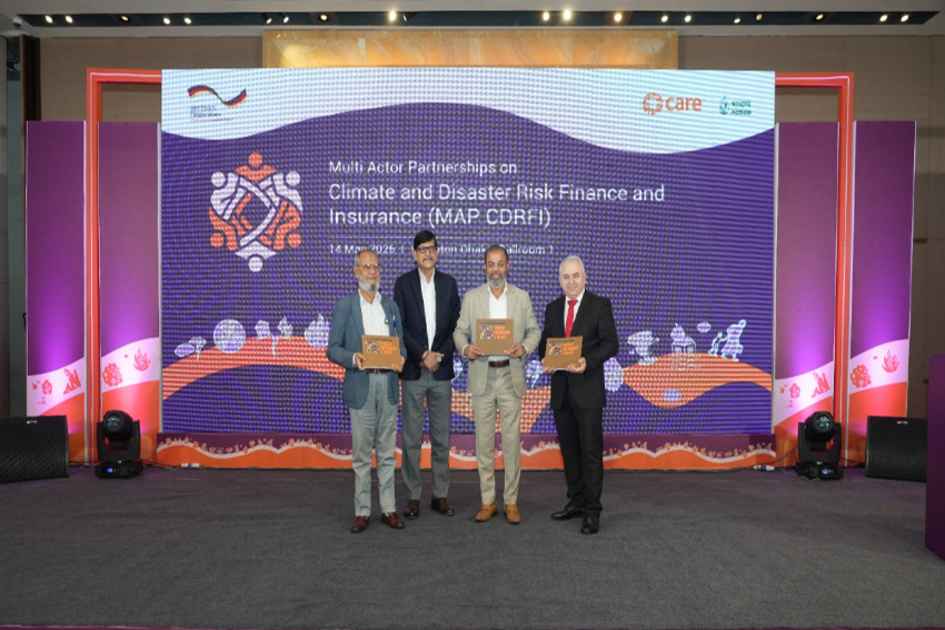



Bangladesh called for coordinated climate support and inclusive finance systems for vulnerable coastal communities during a Dhaka symposium focused on climate justice, loss and damage and sub-national climate risk financing.
Climate change is no longer a future threat but a lived reality for coastal communities, Bangladesh‘s State Minister for Environment, Forest and Climate Change Sheikh Faridul Islam said on Thursday, calling for coordinated support from the government, NGOs and development partners for people on the front lines of the crisis.
Speaking at a symposium in the capital, he said vulnerable communities could not confront the mounting climate challenges on their own.
He said Bangladesh was moving ahead with ambitious initiatives including large-scale tree plantation, canal excavation, investment in renewable energy and innovative climate solutions to build a sustainable future for the next generation.
The symposium, titled “Sub-national Perspectives in National and International Climate and Disaster Risk Financing Systems”, was jointly organised by CARE Bangladesh and AOSED and brought together government representatives, policymakers, development partners, civil society, private sector representatives, academics and community representatives.
The event aimed to turn three years of sub-national experience and evidence from coastal Bangladesh into practical recommendations for national and global climate finance policies.
Held under the Multi-Actor Partnership on Climate and Disaster Risk Finance and Insurance project, funded by German donor agency BMZ, the symposium focused on incorporating sub-national experience and evidence into policymaking and strengthening coordination among relevant stakeholders to reinforce a just, inclusive and sustainable climate and disaster risk financing and insurance system in Bangladesh.
Since July 2023, CARE Bangladesh and AOSED have been jointly implementing the three-year MAP CDRFI project in climate-vulnerable areas of Bagerhat and Satkhira districts.
Through 65 multi-actor platforms, the project has engaged more than 1,500 stakeholders to address critical gaps in climate finance, particularly around loss and damage, inclusion, institutional coordination and the limited reach to marginalised communities.
With the project set to conclude on May 31, the symposium created what organisers described as a strategic opportunity to compile lessons and experiences, formulate policy recommendations and bring sub-national experience into national and international discussions linked to the United Nations Framework Convention on Climate Change and global climate risk financing processes.
CARE Bangladesh Country Director Ram Das said climate risk finance and loss and damage finance were matters of climate justice.
He said these mechanisms must reach vulnerable populations, remain accessible without creating debt burdens and incorporate local knowledge within national frameworks.
Ulrich Kleppmann, head of development cooperation at the German embassy, said climate change was already reshaping the lives of coastal communities.
He said climate finance must better reflect the realities of vulnerable people and that locally developed solutions from Bangladesh could inspire global initiatives.
Mrityunjoy Das, deputy director of CARE Bangladesh’s Humanitarian and Resilient Futures Programme, said efforts would continue to bring together government, the private sector, communities and donor agencies to foster meaningful collaboration and introduce effective financing models.
Discussions at the symposium also covered how sub-national evidence could be used to reshape existing financing structures, the role of gender-sensitive data in expanding climate insurance for women and marginalised groups and possible pathways for linking local CDRFI initiatives with Bangladesh’s national climate policies.




