

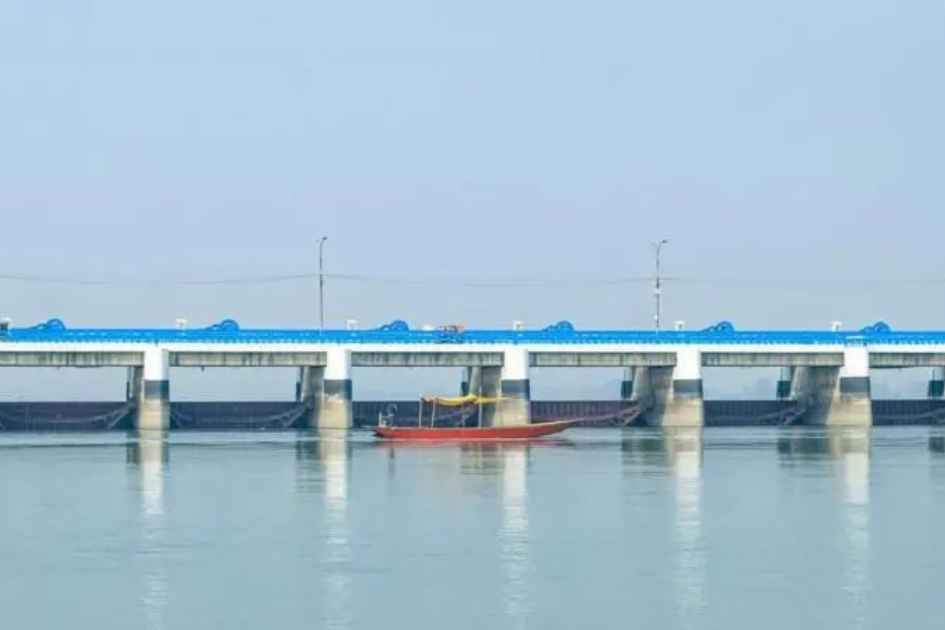



Bangladesh’s approval of the $3 billion Padma Barrage project has sparked nationwide debate over water security, ecological risks, sediment management and the need for stronger transboundary river governance with India.
Debate has intensified across Bangladesh following the government’s approval of the $3 billion Padma Barrage project, a major water infrastructure initiative aimed at addressing seasonal water scarcity and strengthening river management in the Padma basin.
The project was approved on Wednesday by the Executive Committee of the National Economic Council (ECNEC) in Dhaka. Officials said it will be implemented over five years with domestic financing.
Government estimates suggest the barrage could benefit around 70 million people across 24 districts through irrigation expansion, improved water retention and dry-season flow regulation.
Water Resources Adviser Shahid Uddin Chowdhury Annie defended the decision, saying, “This project is essential for ensuring long-term water security and reducing our vulnerability to seasonal river flow fluctuations.”
However, the approval triggered renewed concern among environmental experts, river rights advocates and policy analysts within 24 hours.
Environmental expert Khalekuzzaman warned that the project could face major limitations if upstream water flow from India remains inconsistent during the dry season.
He said, “Without guaranteed transboundary water flow, this kind of structure risks becoming ineffective in dry months and may worsen salinity intrusion in southern Bangladesh.”
He further said that large-scale river regulation could disrupt sediment movement in the Bengal Delta, stressing the need for stronger international water governance mechanisms before advancing such mega projects.
Meanwhile, Sheikh Rokon, secretary general of Riverine People, said the project revives long-standing concerns over river engineering interventions in Bangladesh.
He noted, “Despite decades of studies, key issues like sediment management and downstream flow stability remain unresolved.”
Rokon also cautioned that the renaming of the project from “Ganges Barrage” to “Padma Barrage” raises geopolitical and hydrological concerns regarding downstream river rights.
Adding to the debate, Sohanur Rahman, executive coordinator of YouthNet Global, said the decision demands greater public scrutiny and consideration of climate justice.
He said, “Any mega river intervention must be assessed not only through engineering ambition but also through the lens of climate justice, ecological safety and the rights of downstream communities. Development cannot come at the cost of environmental collapse.”
Experts also pointed out that the Padma River carries one of the highest sediment loads in the world, making long-term operation, maintenance and dredging requirements highly complex and expensive.
Despite the criticism, government officials maintain that the project is central to Bangladesh’s water security strategy, agricultural productivity and climate resilience in drought-prone regions.
As the project moves toward implementation planning, environmental groups and civil society organisations are expected to intensify calls for further technical review and public consultation.




