

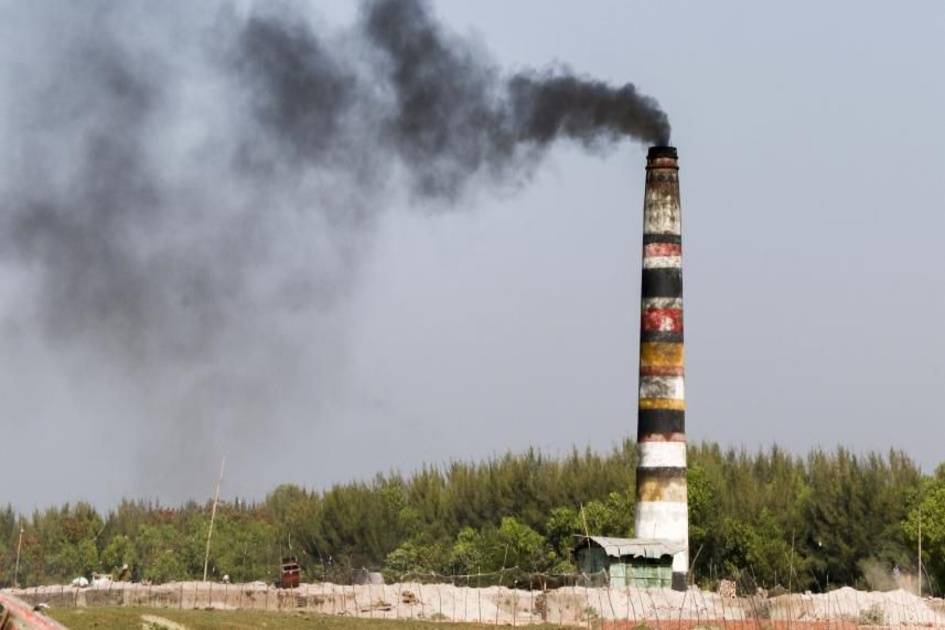



Bangladesh has unveiled a Positive List under its draft Carbon Market Framework to attract climate finance, expand carbon trading and meet NDC targets, while activists warn against social and environmental risks.
Bangladesh is emerging as a key destination for climate finance, unveiling a “Positive List” of priority sectors to accelerate carbon credit initiatives and attract both local and international investors. The move, part of the draft Bangladesh Carbon Market Framework, aims to help the country meet its climate targets while creating opportunities for sustainable economic growth.
Environmental activists have warned that these projects must deliver real solutions and fully respect the rights of indigenous communities. Experts say the initiative signals a shift from donor-dependent funding to a market-driven approach that could reshape Bangladesh’s climate finance landscape.
Prioritizing High-Impact Sectors
The Positive List identifies sectors with proven potential to reduce carbon emissions. Renewable energy projects, including solar and wind, take top priority. Solar-powered irrigation pumps in agriculture are promoted to reduce diesel use and lower emissions.
Forestry projects, including afforestation and reforestation in coastal, riverine, and hilly areas, are designed to naturally sequester carbon while creating new land. Waste-to-energy initiatives will convert municipal and agricultural waste into electricity and organic fertilizer. Green mobility projects, such as electric vehicles and sustainable public transport systems, aim to cut emissions further.
The framework also streamlines project approvals, with a portion of revenue from carbon trading directed to a National Climate Fund. The Bangladesh Carbon Registry ensures transparency and accountability for every project.
Forestry Projects and Carbon Trading
The Forest Department says its coastal afforestation projects are expected to create 116,000 hectares of new land over the next five years. Companies can leverage these areas for carbon trading through afforestation initiatives.
Deputy Chief Conservator Rokibul Hasan said several organizations have already shown interest in investing in carbon trading.
“They want to participate in carbon trading through afforestation projects,” he said. “There will be two models of investment: one is direct investment and the other is a public-private partnership (PPP).”
Hasan explained that investors will first conduct feasibility studies to determine how much land can be afforested and the estimated carbon sequestration.
“Based on these assessments, a Project Design Document will be prepared,” he said.
He added, “We will provide access to the land. They will implement the projects. Afterwards, the percentage of carbon that goes to the market and the percentage we retain will be determined during negotiations.”
Before any project begins, a technical committee under the Designated National Authority (DNA) will review whether local communities’ opinions have been considered, public consultations held and government guidelines followed.
The government established the DNA last June to set carbon trading policies and approve projects. Operating under the Ministry of Environment, Forest and Climate Change, the DNA is headed by the ministry’s secretary.
“Bangladesh is sending a clear message that we are committed to achieving our climate goals while creating opportunities for sustainable economic growth,” said Mohammad Navid Saifullah, additional secretary of the Ministry of Environment, Forest and Climate Change.
Mirza Shawkat Ali, member of the DNA and director of the Climate Change and International Convention Division at the Department of Environment, said, “Following the Paris Agreement’s Article 6 in 2024, we now have a new wave of carbon investment potential for Bangladesh. We expect to finalize the carbon trading framework by mid-month. In our 2025 NDC submission, carbon trading was a key consideration. We plan for 40 to 50 percent of our NDC targets to be achieved through carbon trading.”
Global Investors Show Strong Interest
International and local investors are already exploring opportunities in Bangladesh. Australian firm ATEC, South Korea’s EWC and Japan’s Mitsui and Sumitomo are conducting feasibility studies in forestry, agriculture and energy.
Local NGOs, including Arannayk Foundation Bangladesh, Mati Organic Limited and Bangladesh Bandhu Foundation, are participating alongside the Institute of Water Modeling.
Mitsui plans to implement an Alternate Wetting and Drying system on 250,000 hectares of farmland to reduce water use, boost crop productivity by 10 percent and cut methane emissions. Sumitomo is focusing on preventing methane leakage in gas lines. ATEC and EWC are promoting clean cooking stoves to replace traditional stoves and lower household emissions.
Australian firms have indicated potential investments of up to 75 million dollars.
“Bangladesh is becoming a very attractive market for climate finance,” a senior ATEC representative said.
Understanding Carbon Trading
Carbon trading allows countries and companies to manage greenhouse gas emissions more efficiently. Entities exceeding their emission limits must purchase carbon credits from projects that reduce emissions.
Bangladesh participates in both compliance and voluntary markets. Compliance markets help countries meet mandatory reduction targets while voluntary markets allow companies to improve their environmental credentials.
According to Bangladesh’s 2025 Nationally Determined Contribution, total emissions are projected at 418.4 million tons by 2035. The country has committed to reduce 26.74 million tons, with an additional 58.23 million tons contingent on international support. Officials project that 40 to 50 percent of these reductions could come from carbon trading.
Global Support and Past Experience
The World Bank provided 2.4 million dollars to develop a national carbon registry and market guidelines under the Partnership for Market Initiative. The Asian Development Bank has signed a memorandum to attract voluntary investors.
Bangladesh also has prior experience in carbon trading. In 2006, Infrastructure Development Company Limited earned 17 million dollars through solar home systems and improved cooking stoves.
Ethical Considerations and Climate Justice
Activist groups emphasize that carbon projects must respect ethical and social standards, including the rights of indigenous and local communities.
Sohanur Rahman, executive coordinator of YouthNet Global, said, “False solutions that prioritize profit over people risk undermining climate justice.”
He added, “Carbon projects must ensure indigenous communities are not displaced, land rights are protected and local voices are included in decision-making. True climate action must be equitable and participatory, not just market-driven.”
Government Perspective
The DNA under the Ministry of Environment, Forest and Climate Change oversees policy, project approvals and stakeholder consultations.
The Department of Environment has opened the Positive List and draft framework for public consultation until February 2026. Individuals, companies and organizations are encouraged to provide feedback.
Experts say the initiative could transform Bangladesh from a donor-dependent model to a market-driven and sustainable approach. It has the potential to attract global investment while promoting renewable energy, sustainable agriculture, green transport and forest conservation.
Environment adviser Syeda Rizwana Hasan said, “Carbon trading is not just about reducing emissions. It is about investment, technology transfer and climate preparedness.”
She added that partnerships such as Bangladesh-Japan collaborations are accelerating the national carbon market. Hasan warned that emission reductions must be accelerated to protect vulnerable coastal regions.
“Adaptation finance alone is not enough for long-term resilience,” she said




