

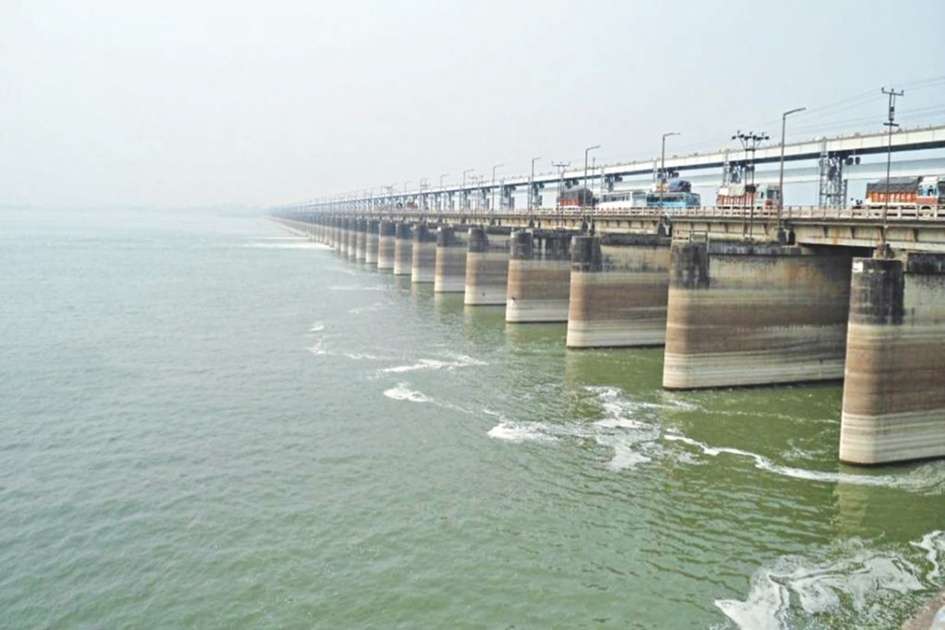



Experts say the treaty renewal offers Bangladesh and India a chance to address climate risks, ecosystem protection and data sharing beyond Farakka-based dry-season allocations.
Dhaka aims to secure dry-season water guarantees; analysts urge a science-based, basin-wide approach involving climate adaptation, data sharing and regional collaboration
As one of the world’s most climate-vulnerable countries, Bangladesh is seeking the return of a “guarantee clause” in the renewal of the Ganges water-sharing treaty with India to ensure predictable dry-season water availability from a river that supports millions of livelihoods and plays a critical role in agriculture, fisheries, navigation, freshwater security and ecosystem health.
With the existing 30-year Ganges Water Sharing Treaty set to expire on December 11, 2026, discussions are underway between Bangladesh and India to finalize a renewed framework before the deadline. Bangladesh’s Ministry of Water Resources has indicated that while the current sharing mechanism remains broadly acceptable, restoring a guarantee mechanism similar to the provision included in the 1977 agreement is a key priority for Dhaka.
Both countries have emphasized the importance of continued dialogue and cooperation to address shared water challenges and strengthen bilateral relations. As negotiations approach, experts say the renewal of the Ganges treaty represents an opportunity to move beyond short-term water allocation and build a long-term, climate-resilient framework that protects ecosystems, strengthens regional trust and secures livelihoods across the basin.
They stressed that a science-based and equitable agreement will be essential to safeguard the millions of people whose lives and livelihoods depend on the Ganges basin.
Seeking predictable dry-season water availability
The Ganges is more than a transboundary river; it is a lifeline for millions of people in Bangladesh. Adequate dry-season flows are essential for agricultural production, freshwater security, fisheries, river ecosystems and reducing salinity intrusion in the southwest coastal region.
The 1977 agreement, signed during the tenure of President Ziaur Rahman, included a guarantee mechanism to ensure a minimum share of dry-season water availability for Bangladesh. However, the provision was not included in subsequent arrangements signed in 1982 and 1985.
Bangladesh Water Resources Minister Shahid Uddin Chowdhury Annie expressed optimism that ongoing bilateral discussions would lead to a renewed agreement that protects Bangladesh’s national interests.
“If we can successfully re-engage the guarantee clause, we can effectively safeguard the national interests of our country,” he said.
Officials hope that a draft agreement could be finalized by September or October ahead of the treaty’s expiry.
Existing formula and emerging concerns
The current treaty governs dry-season water sharing at the Farakka point on the Ganges River in West Bengal, India. It follows a formula-based allocation system depending on river flow measurements during the dry season.
While the government considers the existing mechanism functional, water experts and policy analysts have raised concerns about whether the current approach can address long-term challenges, including climate change, increasing water demand and environmental degradation.
Experts have pointed out that measuring water availability only at the Farakka point may not fully reflect changes across the wider river system, as significant volumes of water are withdrawn through upstream channels before reaching the barrage.
They argue that upcoming negotiations should move beyond water quantity and include water quality, sediment management, environmental flow requirements and long-term ecosystem protection.
Climate change requires a new approach
Dr. A.K.M. Saiful Islam, a professor at the Institute of Water and Flood Management at Bangladesh University of Engineering and Technology in Dhaka, said the treaty renewal provides an opportunity to build a more sustainable and climate-resilient framework.
“While the 1996 treaty marked a historic milestone in cooperation between Bangladesh and India, changing realities, including climate change, increasing water demands and environmental degradation, call for a renewed and forward-looking framework,” he said.
He added that future negotiations should consider equitable and sustainable water sharing, environmental flow requirements, transparent data sharing and long-term water security for both countries.
Dr. Saiful Islam further noted that a science-based approach, supported by cooperation and reliable information sharing, can help transform shared rivers from potential sources of tension into pathways for regional collaboration.
“Water can be a source of cooperation rather than conflict. A science-based, climate-resilient and mutually beneficial agreement will strengthen regional trust and contribute to the sustainable future of the Ganges basin and its people,” he said.
Calls for basin-wide cooperation
Experts have also called for a broader river basin approach involving Nepal, where several major tributaries of the Ganges originate.
They said including Nepal in future water management discussions could support a more comprehensive and sustainable strategy for managing shared water resources across the region.
Analysts believe cooperation among Bangladesh, India and Nepal could help address long-term challenges linked to climate change, water scarcity and ecosystem degradation.
The Ganges Water Sharing Treaty was signed in 1996 between then Bangladesh Prime Minister Sheikh Hasina and Indian Prime Minister H.D. Deve Gowda. The agreement established the framework for sharing dry-season water flows at the Farakka point on the Ganges River in India’s West Bengal state.
Sohanur Rahman, executive coordinator of YouthNet Global, said the renewed Ganges water-sharing framework must place climate justice, ecosystem protection and the voices of vulnerable communities at the centre of decision-making.
“Transboundary rivers are not only about water allocation; they are about people, ecosystems and climate justice. Communities living along river basins are already experiencing the impacts of changing water flows, salinity and climate risks,” he said. “Any renewed agreement must ensure equitable water sharing, protect ecosystems and give meaningful space to youth and frontline communities in shaping the future of our rivers and livelihoods,” he added.




