


Bangladesh is preparing a national framework to regulate carbon trading under the Paris Agreement, with officials seeking stronger institutional arrangements, international standards and fair benefit-sharing before launching government-led carbon market activities.
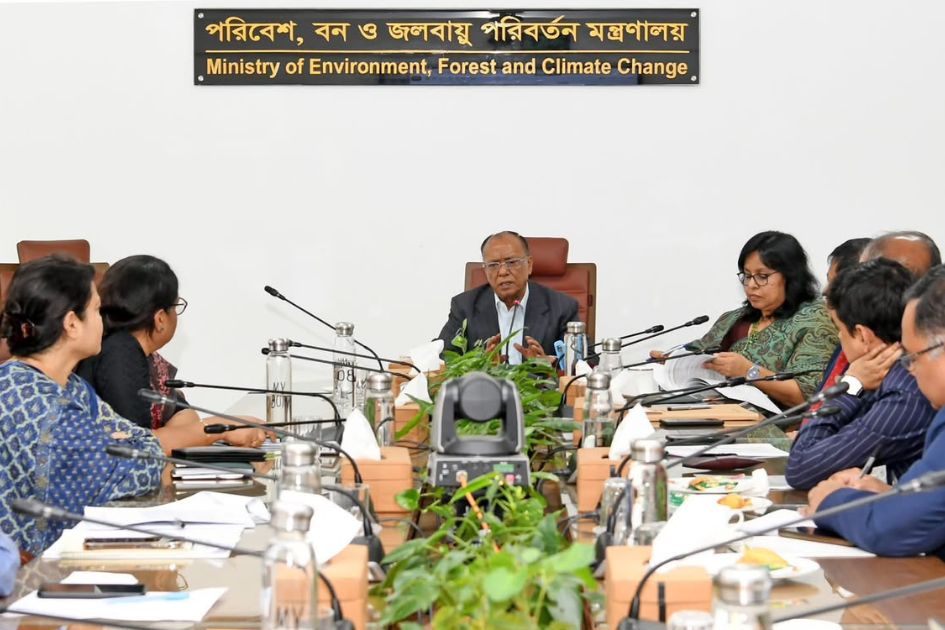
Bangladesh’s Environment, Forest and Climate Change Minister Abdul Awal Mintoo said on Tuesday that all relevant ministries, divisions and stakeholders must work together to establish a transparent, accountable and effective carbon market that safeguards the country’s national interests.
He made the remarks at an inter-ministerial meeting on the draft “Bangladesh Carbon Market Framework” held at the conference room of the Ministry of Environment, Forest and Climate Change at the Bangladesh Secretariat in Dhaka. The meeting was chaired by the ministry’s Secretary, Dr Fahmida Khanom.
Mintoo said the international carbon market could create new opportunities for Bangladesh in climate finance, technology transfer and environmentally friendly investment. However, he said environmental integrity, transparency and accountability must be ensured in carbon market activities while guaranteeing fair benefits for local communities and other stakeholders.
He said the carbon market could play an important role in implementing Bangladesh’s Nationally Determined Contributions (NDCs). To achieve this, he said, it was essential to ensure accurate accounting and verification of greenhouse gas emission reduction and removal activities while following international standards.
The draft Bangladesh Carbon Market Framework has been prepared under the overall supervision of the Ministry of Environment, Forest and Climate Change in its role as the Article 6 Designated National Authority (A6 DNA) under the Paris Agreement, with support from the World Bank’s Partnership for Market Implementation (PMI) programme.
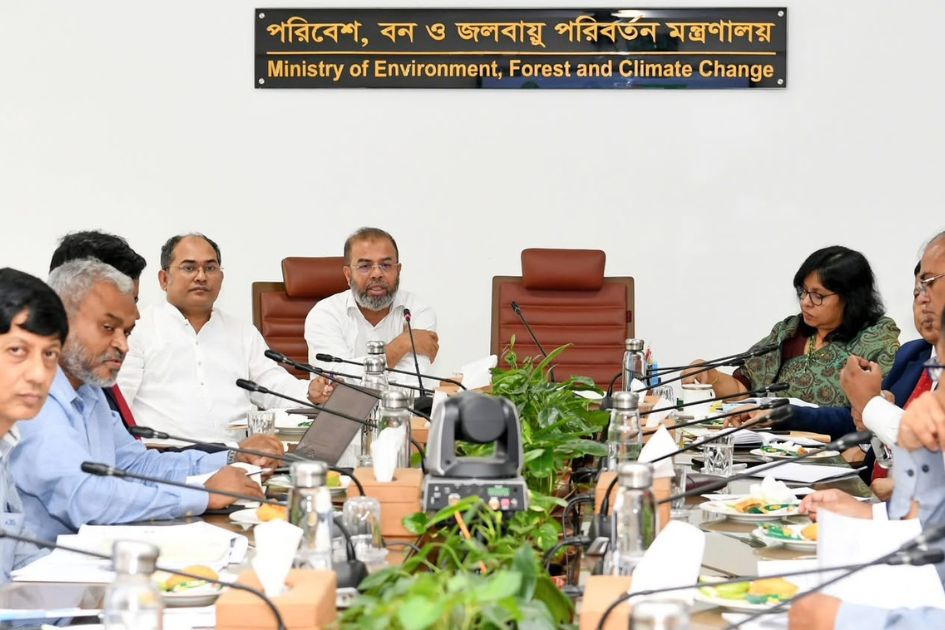
Speaking as special guest, State Minister for Environment Sheikh Faridul Islam said Bangladesh had begun carbon trading on a limited scale in the private sector but had not yet launched it officially through the government.
“We have been instructed by the honourable prime minister to start it as quickly as possible,” he said.
He also said the government planned to plant 20 million trees in coastal areas during December and January and was working on how Bangladesh could obtain carbon credits from the initiative.
The prime minister’s Special Assistant on Environment, Forest and Climate Change, Dr Md Saimum Parvez, said Bangladesh had not yet entered the carbon market and advised all concerned to work on entering it as quickly as possible.
Closing the meeting, Environment Secretary Dr Fahmida Khanom said the framework would be further strengthened and made more implementable based on feedback from relevant ministries, divisions and experts. She said it would establish a clear institutional mechanism for the approval, accounting, monitoring and profit-sharing of carbon credits.
During the meeting, Mohammad Navid Shafiullah, an additional secretary at the Ministry of Environment, Forest and Climate Change, and other senior officials attended alongside representatives from the Economic Relations Division, the Ministry of Railways, the Energy and Mineral Resources Division, the Ministry of Housing and Public Works, the Bridges Division, the Ministry of Foreign Affairs, the Ministry of Industries, the Planning Division, the Statistics and Informatics Division, the Road Transport and Highways Division, the Local Government Division, the Ministry of Agriculture, the Ministry of Fisheries and Livestock, the Ministry of Shipping and the Power Division.
Joint Secretary Dharitri Kumar Sarkar of the Ministry of Environment, Forest and Climate Change presented the draft Bangladesh Carbon Market Framework through a PowerPoint presentation.
Participants shared opinions and recommendations on different aspects of the proposed framework. The meeting decided that the feedback would be reviewed before taking the next steps to finalise the Bangladesh Carbon Market Framework.




