




Experts urge rich nations to deliver finance, reparations
Bangladesh renewed calls for climate justice at a Dhaka assembly, urging rich nations to deliver finance and reparations as experts warned delays threaten millions in climate-vulnerable communities worldwide today urgently.
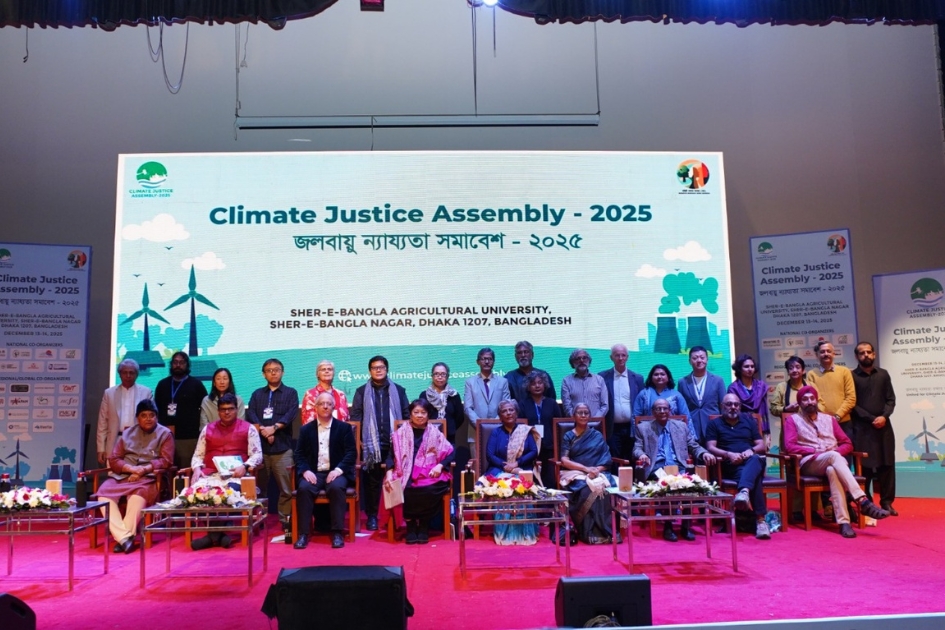
Bangladesh on Saturday renewed its demand for climate justice from wealthy, high-emitting nations as the Third Climate Justice Assembly 2025 opened in the capital, with speakers warning that delays in climate finance are pushing millions in vulnerable regions toward an existential crisis.
The two-day assembly, organised by civic platform Dhoritri Rakhhay Amra (DHORA), began at Sher-e-Bangla Agricultural University in Dhaka, drawing nearly 1,500 participants. Attendees included government representatives, international climate activists, researchers, policymakers, and community leaders already experiencing the impacts of climate change.
In her inaugural address, Sharmeen S Murshid, adviser to the ministries of Social Welfare and Women and Children Affairs, said Bangladesh contributes negligibly to global carbon emissions yet remains among the countries most exposed to climate risks.
“Bangladesh is one of the frontline countries of climate change. Yet poor countries are suffering the most as the Global North delays action,” she said. Stressing the historical responsibility of industrialised nations, she added: “We are not indebted to them. Rather, they are indebted to us. Climate justice is now a matter of accountability and effective action.”
Farida Akhter, adviser to the Ministry of Fisheries and Livestock and the chief guest at the event, said climate justice was inseparable from fairness and survival. She criticised continued global reliance on fossil fuels and said commitments under international agreements, including the Paris Climate Accord, had largely gone unmet. “The Global North often offers loans instead of justice,” she said.
The inaugural session was chaired by Dr Mujibur Rahman Howlader, convener of the organising committee, and moderated by Sharif Jamil, member secretary of DHARA. Sanjeeb Drong, general secretary of the Bangladesh Indigenous Peoples Forum, delivered the welcome remarks, highlighting the disproportionate impact of climate change on Indigenous and marginalised communities.
Sharif Jamil said climate justice was a matter of national survival for Bangladesh. “If we cannot begin ensuring justice within our own country, we will not be able to establish the demand for justice at the global level,” he said.
International speakers also criticised wealthy nations over climate finance and fossil fuel commitments. Lidy Nacpil, coordinator of the Asian Peoples’ Movement on Debt and Development from the Philippines, called for a faster global transition away from fossil fuels and stronger, grant-based financial support for climate-vulnerable countries. She said debt-driven climate finance mechanisms were deepening inequality rather than addressing the crisis.
Asad Rehman, chief executive of Friends of the Earth, said it was morally indefensible to impose the financial burden of the climate crisis on countries that did not cause it. “Through debt and repayments, money continues to flow from the Global South to the Global North, costing the South trillions of dollars every year,” he said. “Forcing those least responsible to pay for this crisis is not only unjust. It is obscene. The rich countries must pay.”
Cynan Houghton, deputy regional programme director of the TARA Climate Foundation, said the era of accepting pollution as the cost of development must end. She pointed to renewable energy as a viable and justice-based alternative, saying cities powered by solar energy and battery storage could be more productive and socially inclusive.
Participants said climate change is already severely affecting Bangladesh’s agriculture, fisheries, food security, and livelihoods, particularly in coastal and riverine areas.
Ahead of the opening, more than a thousand national and international climate activists joined a rally that began on the Sher-e-Bangla Agricultural University campus, marched through Agargaon, and ended at the conference venue. Demonstrators demanded accountability from major global polluters and immediate action to address climate impacts in vulnerable countries.
The assembly continues on Sunday with thematic sessions, workshops, and networking discussions focusing on climate finance, energy transition, adaptation, and people-centred solutions. A “Meet the Press” session is scheduled for 4:00 pm at the university auditorium.




