

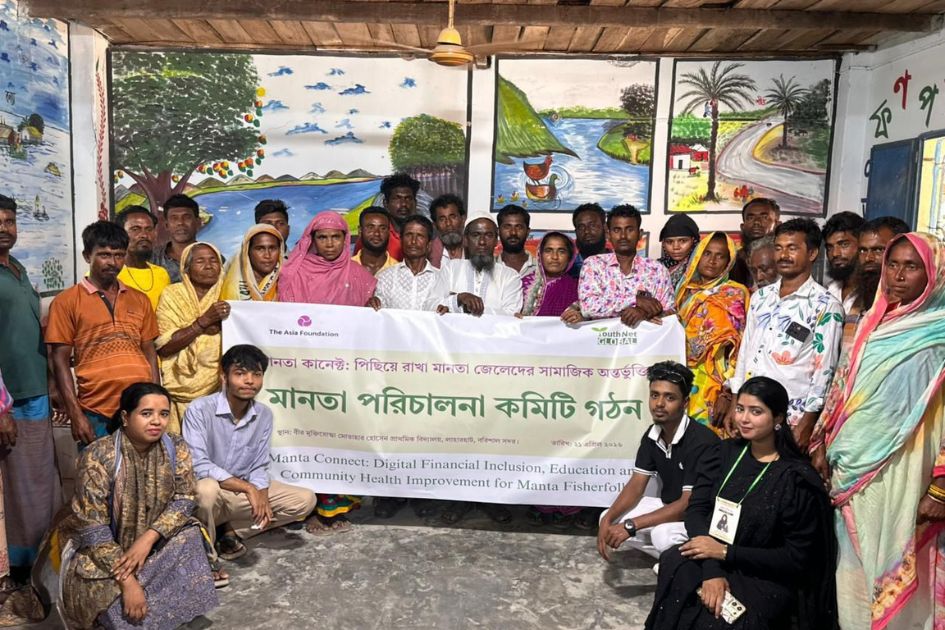

A marginalized Manta fishing community in coastal Barishal held its first participatory vote, forming a leadership committee to strengthen inclusion, access to services, and climate resilience in a vulnerable region.
A socially excluded fishing community in coastal Barishal has elected its own leadership body for the first time, marking a significant step toward inclusive governance and climate resilience.
The initiative took place in Laharhat, a river-dependent coastal area in Barishal Sadar, where members of the Manta community came together through a participatory election to form a “Manta Management Committee” aimed at improving their living conditions and social inclusion.
The Manta are a traditionally nomadic, river-dependent fishing community in Bangladesh, often living on boats and moving along rivers and coastal areas in search of fish and livelihood opportunities. Historically, they have remained socially and economically marginalized, with limited access to land ownership, education, healthcare and formal civic participation, including voting rights and government services.
Md. Jasim Sardar was elected president, while Abul Sardar became general secretary through a voting process that saw around 200 community members casting their ballots. The election was held at Bir Muktijoddha Motahar Hossain Government Primary School, with participants from Laharhat, Charbariya and Taltoli areas.
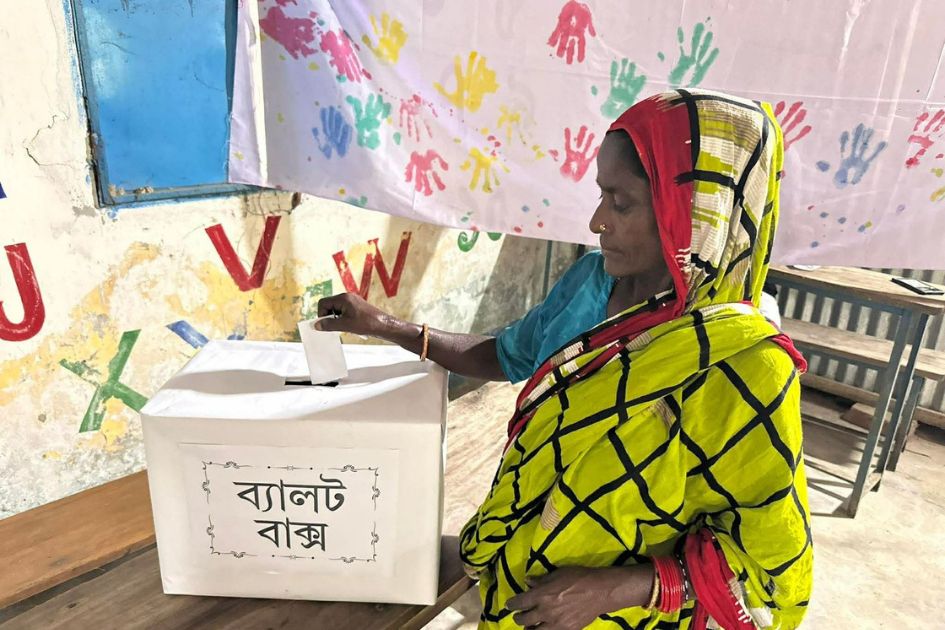
Voting took place on Tuesday in a festive yet peaceful atmosphere, as men and women, many voting for the first time, stood in line to exercise their voting rights, an uncommon experience for a community often excluded from formal democratic processes.
The initiative was jointly organized by YouthNet Global and The Asia Foundation, reflecting a growing emphasis on locally led adaptation and inclusive governance in climate-vulnerable regions.
“This is the first time our community has come together in such a participatory way,” said Jasim Sardar. “With everyone’s support, I want to work for the development of our people.”
Arifur Rahman Shuvo, general secretary of YouthNet Global, said the Manta community has historically remained outside formal governance structures due to their mobility and marginalization, often missing out on both representation and essential services.
He added that under the ongoing “Manta Connect” project, efforts are underway to expand digital financial inclusion, digital education and e-health services, alongside strengthening access to government services and local stakeholder engagement.
Bangladesh is widely regarded as one of the most climate-vulnerable countries in the world, facing rising sea levels, salinity intrusion and increasingly frequent extreme weather events. For river-dependent communities like the Manta, these impacts directly threaten their livelihoods, mobility and access to basic rights.
Experts say that empowering such communities through participatory governance is essential to advancing climate justice and ensuring equitable adaptation in frontline regions.
The initiative highlights how locally led, inclusive governance can play a crucial role in addressing the growing challenges of climate vulnerability in delta regions worldwide.
Sohanur Rahman, executive coordinator of YouthNet Global, emphasized the broader significance of the Manta Connect initiative. “For over a decade, we have worked to ensure that climate-vulnerable and mobile communities like the Manta are not left behind. This initiative is about restoring access, dignity and voice,” he said.




