

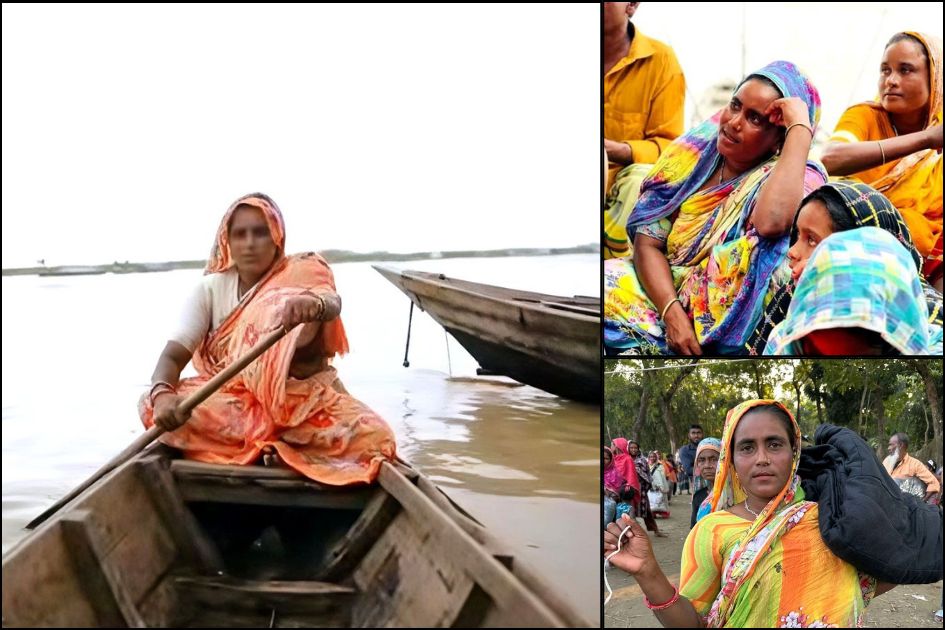



In Bangladesh’s floating Manta community, Momotaz Begum emerges as a grassroots leader, supporting women’s health, climate awareness, and alternative livelihoods amid rising environmental and social vulnerabilities.
The Manta community is a fisherfolk group living in the south-west coastal region of Bangladesh. Around 300,000 people live on boats after their families lost land many years ago due to river erosion. A group of about 400 people lives in Laharhat under Tungibaria Union of Barishal Sadar Upazila. For them, a boat is where they are born, grow up and eventually die. As the community has no land to live on, they cook, eat and sleep in the same boat. There are no boundary disputes like in urban or rural settings. They depend entirely on rivers where they catch fish to earn a living.
But now, declining fish stocks have made their livelihoods more difficult. Jashim Sardar, a local Manta leader in Laharhat, and others in the community once believed that the Almighty was punishing them for not properly following religious values. They thought the decrease in fish was a result of human sin. However, after discussions with climate advocates, the community began to understand issues such as water pollution, plastic pollution and salinity. They now see these challenges as human-made rather than divine punishment. Many in the community, including leaders, are aware that river erosion, frequent floods, cyclones and rising salinity are affecting their lives.
Women like Momotaz Begum are also aware of these changes. As the wife of community leader Jashim Sardar, she holds influence within the community. Women and girls respect her and seek her advice in times of need, especially regarding reproductive health. Skin diseases are common due to their river-based lifestyle, yet access to proper healthcare is limited. Most people rely on local pharmacies or unqualified practitioners. Only when conditions worsen do they travel long distances to hospitals. In a setting where even basic healthcare is difficult to access, discussing reproductive health remains rare. Social stigma prevents women from speaking openly about issues such as gender-based violence, pregnancy and reproductive roles. In such situations, Momotaz listens to women and helps them find ways to cope.
Fishermen now often pull up plastic instead of fish in their nets. According to the Manta community, ilish and other fish are no longer as abundant as before. Despite the hardship, they have adapted by collecting plastic waste and selling it for income. Women, including Momotaz, play a key role in this effort. Some have also started raising chickens and ducks on their boats, creating new income opportunities. These earnings are sometimes celebrated through small community gatherings and picnics, strengthening social bonds.
“The river is our home. Our whole life is on the boat. When the river changes, our lives change too,” said Momotaz Begum. With no reliable source of safe drinking water, families often collect water directly from the Meghna River without proper purification. During disasters, when Jashim Sardar is absent, Momotaz also takes on the responsibility of distributing relief. Her role reflects how women in this floating community are emerging as leaders in climate action and community support.
Women remain in vulnerable positions across all settings, whether urban, rural or among communities like the Manta. They are often more exposed to the impacts of climate change. Yet leaders like Momotaz represent strength and resilience. They may not identify themselves as leaders or feminists in a formal sense, but their actions contribute to broader movements for equality and justice.
According to Momotaz, women aged 20 to 35 want to learn new skills as they support fishing activities. They are eager to gain technical knowledge and integrate into mainstream society, where they are often deprived of basic rights such as education and healthcare. They seek opportunities to make productive use of their time.
Engaging men is also essential for achieving gender justice and environmental protection. Initiatives such as YouthNet Global are working to change perceptions. Programs like EcoMen encourage men to adopt caring forms of masculinity instead of harmful norms. Leaders like Jashim Sardar are beginning to embrace these ideas. Redefining care, masculinity and environmental responsibility can help build a more climate-resilient and inclusive community led by women like Momotaz Begum.
On this International Earth Day, her story stands as a reminder of the strength, leadership and contribution of women in climate-vulnerable communities.




