




Bangladesh combines IMF negotiations with a strong push for climate finance reform, debt relief, and resilience funding at Spring Meetings, highlighting fiscal pressures and vulnerability to global shocks.
Bangladesh has undertaken extensive diplomatic and technical engagement at the Spring Meetings of the International Monetary Fund and the World Bank Group in Washington DC, combining high-level financial negotiations with a strong push for climate finance reform, disaster resilience, and restructuring of global development financing systems.
Bangladesh’s participation at the Spring Meetings reflects a dual strategy of securing immediate external financing while positioning itself as a leading advocate for climate-vulnerable countries seeking reforms in global financial governance, climate finance architecture, and disaster resilience financing systems.
Finance Minister Amir Khosru Mahmud Chowdhury is leading a 14-member delegation comprising senior officials from the Ministry of Finance, Economic Relations Division, National Board of Revenue, Bangladesh Bank, and other agencies, alongside representatives joining from Washington-based institutions.
The delegation includes Finance Secretary Md Khairuzzaman Mozumder, National Board of Revenue Chairman Md Abdur Rahman Khan, Bangladesh Bank Governor Md Mostaqur Rahman, ERD Secretary Md Shahriar Kader Siddiky, ERD UN Wing Head AKM Sohel, Deputy Governor Md Habibur Rahman, senior officials from the Finance Division and ERD, as well as representatives including World Bank Alternate Executive Director Sharifa Khan, Ambassador Tareq Md Ariful Islam, and Economic Minister Md Fazle Rabbi.
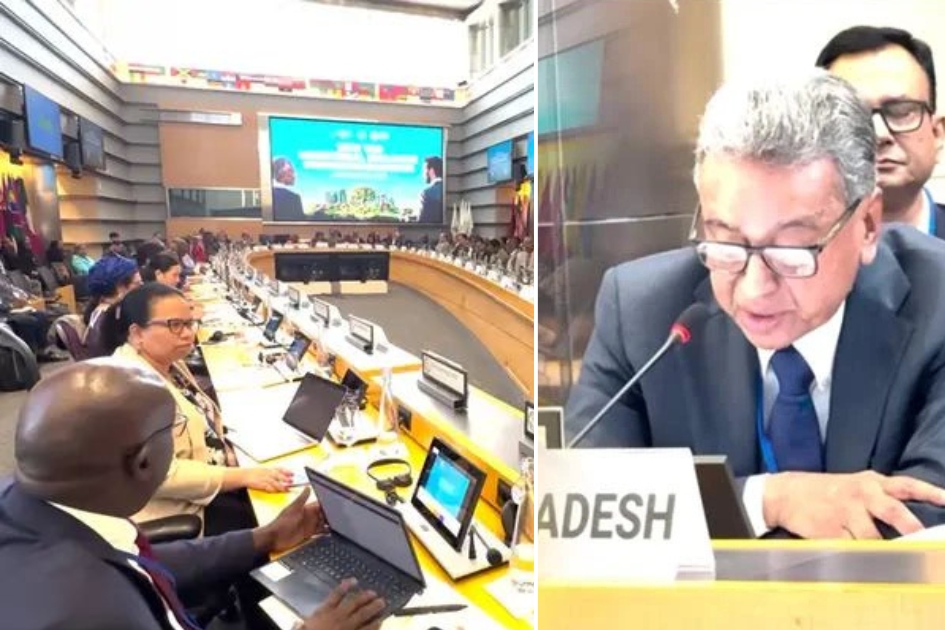
Speaking at the 16th Ministerial Dialogue of the Climate Vulnerable Forum and V20 on April 14, the finance minister said Bangladesh is facing tightening fiscal space due to rising debt servicing costs, climate-induced disasters, and global economic uncertainty. He warned that development financing is becoming increasingly constrained as vulnerability and external shocks intensify.
He said, “It is time to translate conference into practice and turn advocacy into action,” urging global partners to deliver urgent and predictable climate finance for vulnerable developing countries.
He noted that Bangladesh’s debt-to-GDP ratio has increased in recent years due to infrastructure borrowing and rising climate-related recovery costs, while fiscal pressure is increasing on social protection and adaptation spending.
The minister expressed concern over declining allocations for climate-focused safety net programmes, warning that vulnerable communities face growing exposure to floods, cyclones, river erosion, and livelihood shocks. The government has introduced targeted instruments such as Family Cards and Farmers Cards to support affected populations and strengthen local resilience.
Bangladesh also raised concerns over geopolitical instability, global inflationary pressures, and unilateral trade measures, arguing that such developments disproportionately impact climate-vulnerable developing economies and worsen poverty risks.
In response, Bangladesh presented a five-point reform agenda for the global financial architecture. The proposals include adoption of a Multidimensional Vulnerability Index instead of income-based eligibility for concessional finance, establishment of rapid and large-scale debt relief mechanisms, expansion of climate risk hedging instruments to mobilise private capital, introduction of pre-arranged emergency liquidity facilities for climate disasters, and acceleration of climate finance reforms within multilateral development banks.
Throughout the Spring Meetings, Bangladesh has taken part in a wide range of climate and finance-related sessions and technical discussions.
On April 15, Bangladesh participated in the Climate Finance Ministerial and Central Bank Governors Alliance meeting, where climate action was framed as a driver of growth, jobs, and financial stability. The country also joined a ministerial roundtable on carbon border adjustment mechanisms (CBAM), a country co-led session on adaptation and nature-based solutions, and technical discussions under the Climate Vulnerable Forum and V20 focusing on climate risk modelling and resilience planning.
Bangladesh also engaged in sessions on climate budget tagging and green budgeting tools, highlighting its efforts to integrate climate priorities into national budgeting and public financial management systems.
On April 16, the delegation will participate in discussions on disaster risk financing for climate shocks, emphasising the need for scalable insurance and financial protection mechanisms. Bangladesh also joined sessions on carbon markets, blended finance, and innovative climate investment instruments aimed at unlocking new funding sources for adaptation and mitigation.
On April 17, Bangladesh is scheduled to engage in high-level discussions on carbon market mechanisms and climate finance mobilisation strategies, alongside continued IMF and World Bank consultations.
A key technical role was played by Additional Secretary AKM Sohel of the Economic Relations Division, who represented Bangladesh in multiple climate finance and policy sessions. He delivered interventions at the Climate Finance Ministerial support track and participated in technical roundtables on climate risk financing, climate budget tagging, and green public financial management. He also contributed to discussions on integrating climate considerations into sovereign financing frameworks and strengthening institutional capacity for climate-responsive budgeting.
Alongside climate diplomacy, Bangladesh is holding negotiations with the International Monetary Fund regarding the next tranche of its ongoing programme. The country is seeking the disbursement of approximately $1.3 billion under its $5.5 billion arrangement, with the release now expected in a later board cycle depending on mission timing and review completion.
Bangladesh is also seeking around $3 billion in budget support from development partners including the World Bank, Asian Development Bank, and Asian Infrastructure Investment Bank to manage fiscal pressures, inflation, and external sector challenges linked to global economic uncertainty and domestic constraints.
Officials said discussions are also ongoing on possible additional IMF support of around $200 million, subject to reform progress and programme assessment.
As part of IMF conditionality, Bangladesh is expected to advance key reforms including introduction of a single value-added tax rate, strengthening tax administration, and implementing broader revenue system reforms. Authorities will also submit updated legislative commitments following changes in revenue policy frameworks, including new laws to replace withdrawn ordinances and improve fiscal governance.
A bank resolution law has already been passed after amendments, meeting part of the IMF structural benchmarks and helping stabilise financial sector reform progress.
The IMF continues to focus on two core reform pillars: revenue mobilisation and banking sector restructuring. Progress on tax-to-GDP improvement, VAT rationalisation, and financial sector governance will remain critical for continued disbursements and future programme support.
Bangladesh currently operates a multi-tier VAT system ranging from 5 percent to 15 percent. While authorities have indicated conditional agreement on moving toward a single VAT rate, discussions continue on sequencing and implementation, alongside reservations on turnover-based taxation proposals.
Bangladesh has already received five tranches of IMF support totalling $3.64 billion, with $1.86 billion remaining under the current programme.
Economic indicators presented during the meetings show a mixed macroeconomic outlook. Inflation has eased to 8.71 percent, remittance inflows reached a record $3.75 billion in March, private sector credit growth remains weak at around 6 percent, and export performance has declined significantly amid global demand pressures.
Economist Selim Raihan of SANEM said the current global and domestic pressures make the Washington meetings particularly crucial, noting that Bangladesh’s ability to secure additional financing will depend heavily on the credibility of its reform progress and the consistency of its fiscal and financial sector reforms.
YouthNet Global Executive Coordinator Sohanur Rahman said climate-vulnerable countries like Bangladesh must ensure that climate finance commitments translate into real delivery on the ground, stressing that youth engagement and local resilience systems should be central to global climate finance discussions.
The Spring Meetings will continue until April 18, with further engagements expected on climate finance mobilisation, debt restructuring frameworks, and global economic stability discussions.




