




Bangladesh moves to grant judicial powers to its river watchdog, aiming to strengthen enforcement, recognize rivers as legal entities and address growing threats from encroachment, pollution and climate stress.
Bangladesh is set to introduce a major overhaul of its river governance system, proposing to grant judicial powers to the National River Protection Commission for the first time in a move aimed at strengthening enforcement against river encroachment and pollution. Experts note that while the proposed legal changes could significantly strengthen enforcement their effectiveness will depend on institutional independence, coordination among agencies and sustained political commitment.
The draft National River Protection Commission (Amendment) Act, 2026 has been circulated by the Ministry of Shipping for inter-ministerial consultation and public feedback. It is expected to be placed before the Cabinet after review.
The draft law will undergo further consultation before being submitted to the Cabinet and subsequently Parliament for approval. If passed it is expected to reshape how Bangladesh governs its rivers and coastal ecosystems with wide-ranging implications for environmental protection and climate resilience.
If enacted the legislation would significantly transform the commission from a largely advisory body into an enforcement authority with quasi-judicial functions marking one of the most ambitious reforms in the country’s environmental governance framework in recent years.
Stronger legal muscle for river protection
Under the proposed law river encroachment, pollution, illegal construction, obstruction of water flow and unauthorized extraction of natural resources would be treated as criminal offences punishable by up to five years in prison, fines of up to BDT 1.5 million or both.
For the first time the commission would be empowered to conduct investigations, carry out enforcement drives and file cases directly. Its directives to government agencies would be legally binding.
The draft also proposes the establishment of dedicated “river courts” in every district alongside mobile courts to ensure swift adjudication of environmental offences.
Rivers to gain legal personhood status
A key provision of the reform is the formal recognition of rivers, canals and coastal zones as “living entities” and legal persons. The proposal builds on a 2019 High Court ruling that granted similar legal status to Bangladesh’s rivers including the Turag and appointed the commission as their legal custodian.
The draft further classifies these water bodies as “public trust property” reinforcing the state’s legal obligation to protect them for public benefit and ecological sustainability.
Expanded enforcement and seizure powers
The commission is also expected to be restructured as an independent statutory body with expanded authority including search, seizure, confiscation of assets and demolition or closure of illegal structures affecting waterways. Confiscated assets may be auctioned with proceeds deposited into the state treasury.
Officials say the reforms are designed to address long-standing enforcement gaps under the 2013 law which limited the commission to making recommendations without implementation powers.
Rivers under pressure, youth-led protection efforts grow
Bangladesh’s river systems continue to face severe pressure from encroachment, industrial pollution and climate-related impacts particularly in and around Dhaka as well as in the northwestern and southwestern regions.
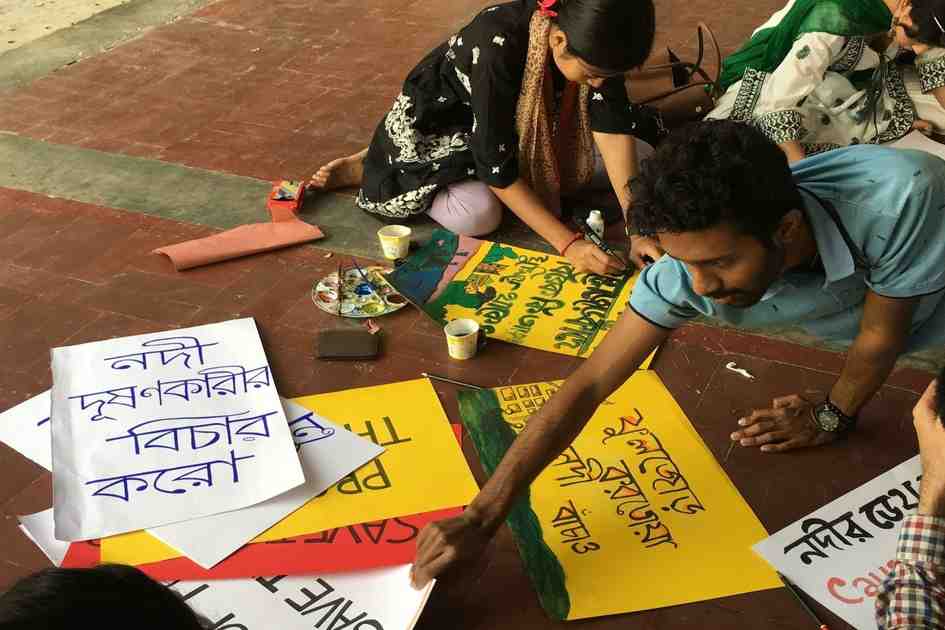
In parallel YouthNet Global is leading a youth-driven movement to protect the Phuljhor River and the nearby Karatoa River from severe industrial pollution. The initiative focuses on promoting recognition of rivers as living entities that are vital to the health, culture and survival of surrounding communities.
“Recognising rivers as living entities is essential to protecting both people and nature,” said Sohanur Rahman, executive coordinator of YouthNet Global. He added, “Sustainable river governance is not just about laws, it is about justice, identity and survival.”




