




Bangladesh plans 100,000 trained earthquake response volunteers and 450 emergency assembly points across Dhaka, alongside expanded rescue infrastructure and coordination reforms to strengthen disaster preparedness and urban resilience.
Bangladesh is developing a large-scale earthquake preparedness plan for the Dhaka metropolitan region, including the recruitment of 100,000 trained volunteers and the designation of 450 emergency assembly points, officials said on Wednesday.
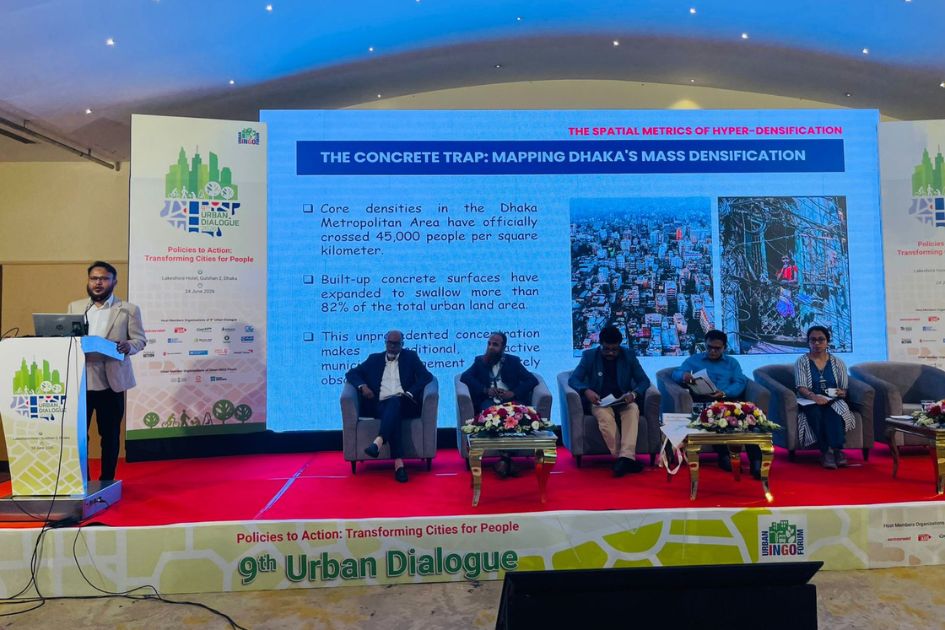
The initiative was announced at the ninth Urban Dialogue 2026 held in Gulshan, Dhaka, organised by the Urban INGO Forum Bangladesh. The event brought together government officials, urban planners and development actors to discuss urban resilience and disaster management.
Volunteer network to serve as first responders
Disaster Management and Relief Secretary Md. Saidur Rahman Khan said the volunteers would act as “first responders” during earthquakes and other major urban emergencies.
He said that while a previous database listed around 145,000 volunteers, it had become outdated. A revised list of about 50,500 young volunteers aged 18 and above has been prepared, with plans to gradually expand the network to 100,000 trained responders.
“We want to invest in this young population as trained volunteers,” he said, adding that they would receive training in first aid, emergency response and basic mental health support, along with the necessary equipment.
Officials said the expansion would be implemented in phases based on updated registries and structured training programmes.
450 assembly points planned across Dhaka
Officials are working with Dhaka North and Dhaka South city corporations to finalise 450 designated assembly points across the city. These locations are intended to serve as safe gathering spaces for residents after a major disaster and as coordination points for emergency response agencies.
The list has been submitted to the Prime Minister’s Office for approval.
Emergency equipment and coordination system expanded
Authorities said a consolidated list of 52 to 54 categories of heavy rescue equipment has been prepared in coordination with the armed forces, Fire Service and Civil Defence and other agencies.
Data collection is also underway on privately owned helicopters and national hospital bed capacity to support emergency logistics planning.
Officials said proposals are under consideration to bring the Fire Service and Civil Defence and the Bangladesh Meteorological Department under the Ministry of Disaster Management and Relief to improve coordination.
Experts highlight governance gaps
Delivering the keynote presentation, Professor Adil Muhammad Khan of Jahangirnagar University said stronger urban governance is essential as Bangladesh approaches graduation from Least Developed Country (LDC) status. He warned that infrastructural deficits and deep socio-economic inequalities require more inclusive and coordinated urban management.
Decentralisation and urban services highlighted
Speakers at the dialogue called for reducing Dhaka-centric development and strengthening services outside the capital.
Kabita Bose, Country Director of Plan International Bangladesh, said improved access to quality education and healthcare at divisional and district levels could reduce migration pressure on Dhaka.
“If quality education and healthcare similar to those available at Dhaka University were accessible in the regions, people would not need to come to Dhaka,” she said.
16-point declaration on inclusive urban policy
The dialogue concluded with a 16-point declaration on inclusive urban policy. Key recommendations included recognising access to safe water, electricity and sanitation as basic rights for all citizens, including slum communities; developing a National Heat Action Plan to address rising urban temperatures; establishing community-based childcare hubs for working mothers; and integrating sanitation and waste workers into municipal systems with fair wages, safety measures and social protection.
Officials said the framework is intended to strengthen coordination, preparedness and inclusion in urban governance as Dhaka continues to face increasing climate and disaster risks.




