

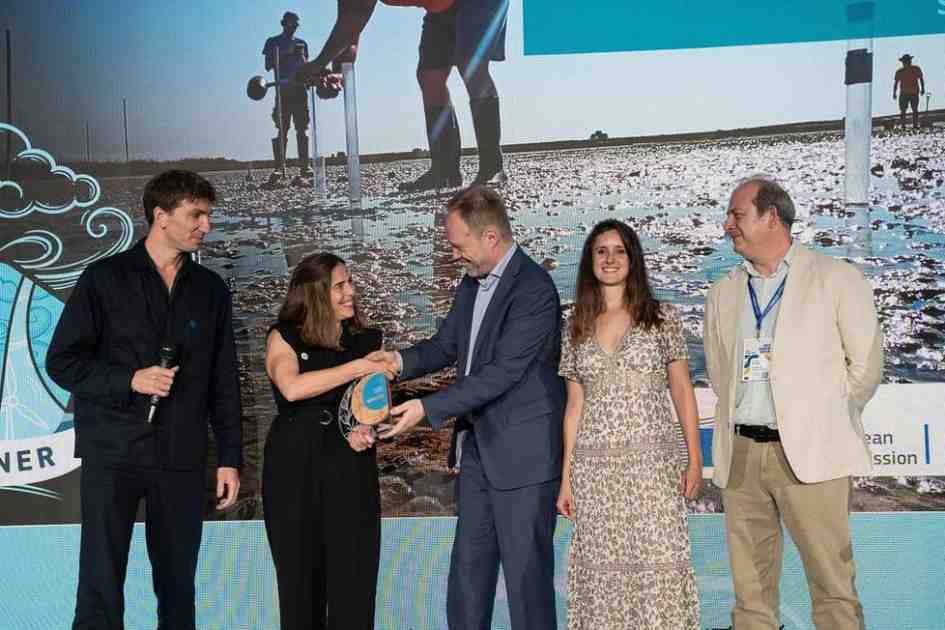



The LIFE WetLands4CLIMATE project won the EU’s top Climate Action award for restoring Spanish wetlands, cutting emissions, improving biodiversity and showing how nature-based solutions can strengthen climate resilience.
A European project that restored Mediterranean wetlands and demonstrated their potential to capture carbon has won the Climate Action category at the LIFE Awards 2026 during European Green Week.
The four-year LIFE WetLands4CLIMATE project received the award for developing a methodology that helps offset carbon emissions through the restoration and management of wetlands. The initiative highlights the growing recognition of wetlands as a powerful but often overlooked tool for tackling climate change while protecting biodiversity.
Despite their critical role in regulating the climate and conserving biodiversity, wetlands across Europe are disappearing rapidly. Their contribution to climate change mitigation is frequently underestimated by policy makers while limited high-quality data and complex management requirements have made their protection more difficult.
Backed by €2.1 million in funding, the project focused on three types of wetlands across Spain: freshwater wetlands in Castilla y León, saline wetlands in Castilla-La Mancha and coastal wetlands in Comunitat Valenciana.
The project delivered measurable climate benefits, preventing the release of 3,690 tonnes of carbon dioxide equivalent. That is roughly equal to the annual carbon emissions produced by more than 800 family cars.
Researchers also found that climate mitigation improved by 25% to 45% through sediment management and by between 100% and 700% through vegetation management.
The restoration work improved more than 58 hectares of coastal lagoons, 75 hectares of vegetation, 213 hectares of salt meadows, 3 hectares of eutrophic lakes and 5 hectares of temporary ponds.
Judges praised LIFE WetLands4CLIMATE for its strong scientific baseline, its engagement with the private sector and its alignment of wetland management with European Union climate objectives. The project also transferred proven methodologies and best practices to land managers across Europe.
Among its key outputs was a handbook designed to help managers, scientists and policy makers integrate climate mitigation into wetland management and restoration. More than 50 companies also took part in workshops on reducing their carbon footprint through wetland management and restoration.
“Wetlands are a climate solution and they also support biodiversity. When wetlands are restored the climate wins nature wins and society wins,” said Vanessa Sánchez Otega of Fundación Global Nature, which coordinated the project.
The European Climate, Infrastructure and Environment Executive Agency announced the award on June 25, recognising the project as an example of how wetland restoration can strengthen climate action while delivering lasting environmental benefits.




