




At the two-day dialogue, South Asian parliamentarians and development partners warned that delayed climate action could deepen disaster risks, urging prevention, resilience and coordinated governance across borders.
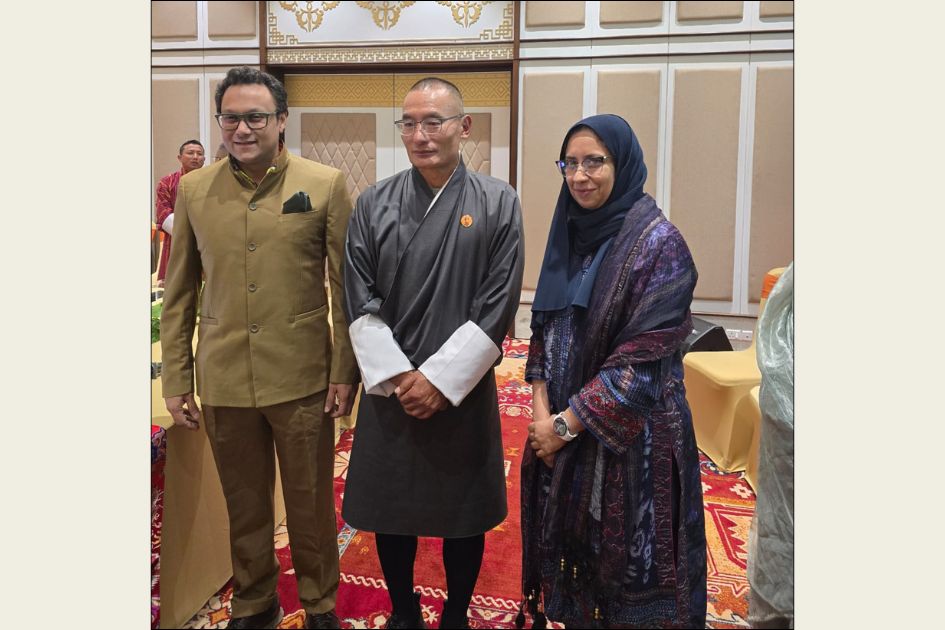
Bangladeshi lawmaker Sayeed Al Noman met Bhutanese Prime Minister His Excellency Dasho Tshering Tobgay during the South Asian Parliamentary Dialogue on Environment, Climate and Sustainable Development, calling for stronger regional cooperation to confront South Asia’s growing climate challenges.
The meeting took place on the sidelines of the high-level parliamentary dialogue, where political leaders, ministers, parliamentarians and international development partners discussed climate resilience, sustainable energy and long-term development.
Hon. Sangay Khandu, Deputy Speaker of Bhutan’s National Assembly, also attended the dialogue, which brought together senior policymakers from across the region.
Addressing the conference, Noman made a strong appeal for regional solidarity, saying climate change could no longer be addressed through isolated national efforts.
“Global empathy is required, not only individual country actions. Climate crises do not respect borders, and neither should our solutions.”
He said South Asia was increasingly facing shared threats ranging from devastating floods and landslides to prolonged droughts, environmental degradation and growing pressures on food and energy security.
Such challenges, he said, require an interconnected regional response rather than fragmented national strategies.
The Bangladeshi parliamentarian urged South Asian countries to establish a coordinated mechanism for climate governance supported by proactive disaster preparedness, sustainable development, enhanced cross-border cooperation and greater public awareness to foster responsible environmental behaviour.
Participants also reflected on the devastating impacts of recent climate disasters across the region, including the humanitarian consequences witnessed in Nepal, while warning that delayed action could expose millions more people to similar crises in the coming years.
Speakers throughout the discussions stressed that South Asia stood at a critical juncture where the choice was no longer between development and climate action, but between acting collectively today or paying a far greater human and economic cost tomorrow.
The two-day dialogue series was chaired by Dr. Sanjay Jaiswal, Chairman of the South Asian Parliamentarians Forum (SARPF), and featured contributions from Ms. Jahrat Adib Chowdhury MP, Chairperson of the Parliamentary Standing Committee on Foreign Affairs of Bangladesh; H.E. Lyonpo Younten Phuntsho, Bhutan’s minister responsible for climate and environmental affairs; Dr. Samantha Stratton-Short, Head of Strategic Advice and Support and Climate Action Programme Manager at UNOPS; Sonomi Tanaka, Country Director of the Asian Development Bank (ADB) for Bhutan; and Nar Bahadur of the International Solar Alliance (ISA).
Parliamentarians and representatives from governments, international organisations and development institutions across South Asia also participated in the dialogue.
Participants agreed that climate change had become a shared regional challenge requiring shared regional leadership, and that South Asia must move beyond reacting to disasters after they occur by investing instead in prevention, resilience and coordinated action that transcends national boundaries.




