

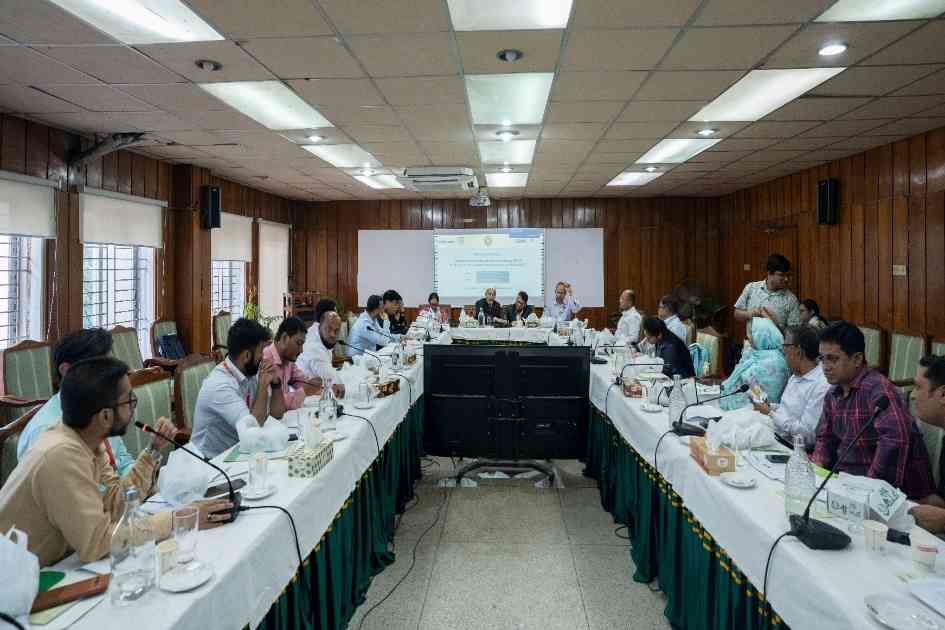



Speakers urged stronger local evidence, data systems and institutional coordination to ensure losses affecting identity, culture, mental health and social belonging are reflected in national climate policy.
Bangladesh climate officials, researchers and development partners on Wednesday discussed ways to incorporate evidence on non-economic loss and damage into the country’s national policy framework, as climate impacts increasingly affect mental health, culture, biodiversity, traditional knowledge, social cohesion and human mobility.
The policy dialogue, titled “Integrating Non-Economic Loss and Damage (NELD) Evidence into Bangladesh’s National Mechanism on Loss and Damage (NMLD),” was held on 29 July 2026 at the Bangladesh Climate Change Trust (BCCT) Conference Room in Dhaka.
The event was organized by BCCT, a government trust under Bangladesh’s climate policy framework, in collaboration with the International Centre for Climate Change and Development (ICCCAD) and ADAMS Foundation with support from the Royal Norwegian Embassy in Bangladesh.
Held under the theme “Advancing the Quantification of Non-Economic Loss and Damage for Evidence-Based Policy,” the dialogue brought together senior government officials, researchers, development partners, civil society representatives and climate experts.
Participants discussed how field-based evidence on non-economic loss and damage could strengthen Bangladesh’s evolving national policy framework, including the National Framework on Loss and Damage and the proposed National Mechanism on Loss and Damage.
Bangladesh continues to face severe climate impacts, including cyclones, floods, river erosion, salinity intrusion, heatwaves and sea-level rise. The dialogue focused on how losses beyond direct economic damage, such as impacts on mental health, identity, culture, biodiversity and social cohesion could be reflected in national systems.
The event aimed to present evidence generated through the Evidence-Based Approach to Address Non-Economic Loss and Damage project and the Multi-Actor Partnership to address loss and damage. It also examined how Bangladesh’s emerging loss and damage architecture is being shaped through Local Loss and Damage Policy Labs and Local Loss and Damage Hubs.
Participants discussed how community-generated data and local experiences can be integrated into national policy, monitoring systems, institutional coordination and climate finance mechanisms. They also sought to strengthen collaboration among government ministries, researchers, local governments and development partners while identifying practical recommendations for incorporating NELD indicators into the design of the NMLD.
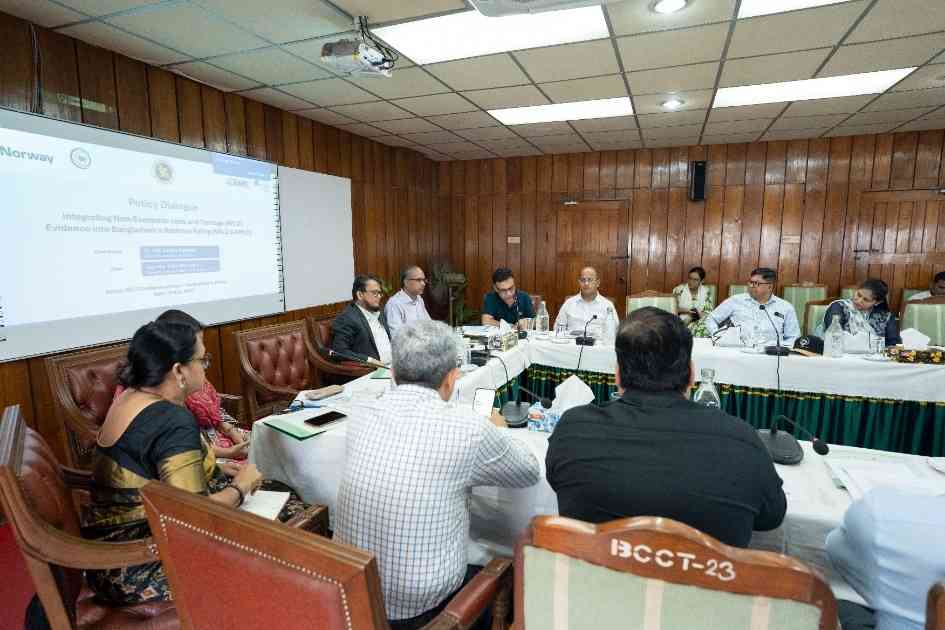
Mr. Bayazid presented ICCCAD’s work on advancing Bangladesh’s loss and damage agenda through research, policy engagement and institutional development. He explained the distinction between mitigation, adaptation and loss and damage, emphasizing that non-economic losses, including mental health impacts, loss of identity, culture, biodiversity and social cohesion are often irreversible and require dedicated policy attention.
Drawing on findings from the EBAAN project in Sunamganj, Barishal and Kurigram, he showed how community evidence is translated into policy through LDPLs and Local Loss and Damage Hubs, which he said strengthen evidence generation, community participation and climate finance readiness.
He also outlined a roadmap linking local evidence to the proposed National Framework and National Mechanism on Loss and Damage, with the aim of ensuring alignment with global climate finance mechanisms.
“We have collected valuable evidence from affected communities. The next challenge is to transform that evidence into policies and systems that can effectively address Loss and Damage,” Mr. Bayazid said.
Mr. Hafizul Islam Khan said understanding the nature of non-economic losses was the first step toward developing appropriate tools and methodologies. He said quantifying emotional and cultural losses remained one of the greatest challenges.
“How can we quantify a person’s feeling that disaster has taken away my land or my father’s grave through river erosion? These are real challenges that require localized methodologies,” he said.
He called for Bangladesh to move beyond short-term project-based interventions toward long-term programme-based approaches.
“We need to move from project-based work to programme-based work so that we can directly access climate finance and invest where it is most needed. Functional institutional arrangements must be developed and integrated into the national plan and the National Mechanism. We look forward to strong support from the Ministry in advancing these steps,” he said.
Ms. Rabeya Khatun, drawing on her experience in river erosion-prone areas, said climate displacement often caused losses that were not captured in economic assessments.
“I have seen people in Sirajganj who have lost their homes and moved 15 to 20 times during their lives due to river erosion. They lose not only their land, but also their identity, voting rights, and social belonging. These are non-economic losses that must be recognized,” she said.
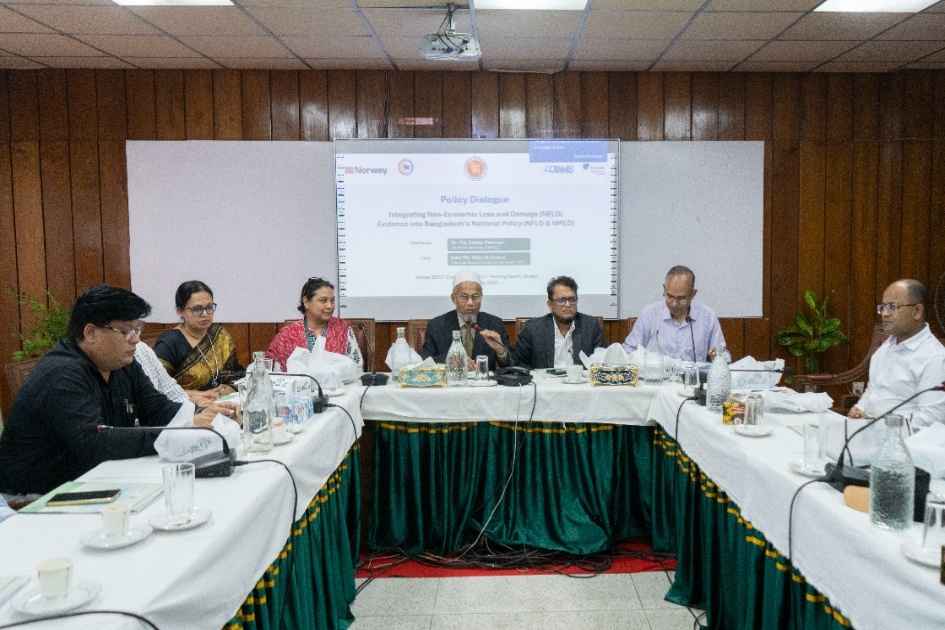
She said economic and non-economic losses should be treated with equal importance in policy discussions.
“Economic and non-economic losses should receive equal importance. As non-economic loss and damage is still an emerging field, we need more evidence, more discussions, and stronger policy integration. We look forward to working together with ICCCAD and other partners,” she said.
Mr. Shamsuddoha traced the evolution of loss and damage within UN climate negotiations, saying it took nearly twenty-five years for the issue to gain recognition under the Paris Agreement. He said mitigation and adaptation alone could not fully address climate impacts.
“We cannot jump directly into Loss and Damage without first addressing mitigation and adaptation. We must avoid climate risks where possible, minimize unavoidable impacts, and then address the remaining Loss and Damage,” he said.
“Loss and Damage exists alongside mitigation and adaptation; it is about addressing the impacts that remain after their effects have been minimized,” he added.
He said Bangladesh needed a strong loss and damage mechanism supported by dedicated institutions and sectoral systems.
“If knowledge is not disseminated across sectors, the National Mechanism will remain isolated. Most importantly, we must place people, not disasters, at the centre of our policies,” he said.
Dr. Fazle Rabbi Sadeque Ahmed said successful implementation of Bangladesh’s loss and damage agenda would require coordinated action among government institutions, researchers, civil society organizations and development partners.
He said greater collaboration, additional case studies, standardized guidelines and stronger evidence were essential to make non-economic loss and damage measurable and effectively integrated into national policy. He also reaffirmed that Bangladesh should continue strengthening mitigation and adaptation while advancing loss and damage as a key component of climate action.
In closing remarks, Dr. Shahpar Selim, representing the Royal Norwegian Embassy, reaffirmed Norway’s long-standing support for climate initiatives in Bangladesh, including capacity building and resilience programmes.
“We are witnessing climate action in practice, from field-level initiatives to student engagement, and everyone must take this shared responsibility seriously,” he said.
Dr. Md. Saidur Rahman, Additional Secretary at the Ministry of Environment, Forest and Climate Change, highlighted the need for stronger ICT-enabled data systems, localized actions and continued dialogue.
“Better evidence, particularly on the vulnerabilities of women, children, and local communities, is essential for effective Loss and Damage integration,” he said.
Dr. Fazle Rabbi Sadeque Ahmed again stressed the need for “more case studies, practical guidelines, and stronger evidence to advance the quantification and integration of non-economic Loss and Damage.”
Concluding the programme, Mr. Gazi Md. Wali-Ul-Hoque, Managing Director of BCCT, thanked participants for their engagement.
“Your thoughtful participation and constructive discussions have made this event meaningful, and I look forward to continued collaboration in advancing this important agenda,” he said.




