




Bangladesh seeks to turn the SDGs into a practical national action plan by aligning policies, budgets, financing and partnerships around priority targets.
Bangladesh’s Environment, Forest and Climate Change Minister Abdul Awal Mintoo on Tuesday called for coordinated action across government and other sectors to achieve the Sustainable Development Goals, stressing that the goals cannot be treated as the responsibility of a single ministry or institution.
Speaking at a national conference titled “Conference on Navigating Five Year Strategic Framework for Achieving SDGs: Policy, Partnership and Priorities” at the Bangladesh-China Friendship Conference Centre in Dhaka, Mintoo said the SDGs represent a national development framework integrating economic growth, poverty reduction, social inclusion, environmental protection and climate resilience.
For a climate-vulnerable country like Bangladesh, SDG 13, Climate Action, and SDG 15, Life on Land, are particularly important, he said.
The minister said each SDG indicator could be assessed and classified into three categories: On Track, At Risk and Critical.
Indicators that are falling behind the pace required to meet the 2030 targets should be designated as National SDG Priority Targets and given special action plans, he said.
With limited resources, the key consideration in prioritising SDG planning should be identifying where the greatest results can be achieved, Mintoo said.
Emphasising policy alignment, he said introducing new policies alone would not be enough. Existing policies, plans, budgets and development programmes must also be directed towards the same national outcomes.
Citing air pollution as an example, Mintoo said the problem could not be addressed solely through policies of the Ministry of Environment, Forest and Climate Change. The transport, industry, energy, construction, waste management, urban planning, public health, research and technology sectors would all need to work together, he said.
Policy Coherence and Policy Convergence are therefore essential, the minister said.
On financing for the SDGs, Mintoo stressed the need to make more effective use of Green Finance, Climate Finance, Blended Finance, Private Investment and Development Partner Financing rather than relying only on the government budget.
Environmental sustainability should be viewed not only as an expense but also as an investment opportunity, he said.
“2030 is no longer far away,” Mintoo said, adding that the next few years would determine how quickly and effectively Bangladesh could progress towards achieving the SDGs.
He called for existing policies, institutions, budgets, data, technology and partnerships to be aligned towards common national outcomes, saying the SDGs should be adopted not merely as an international reporting framework but as a practical national action plan for Bangladesh’s sustainable development.
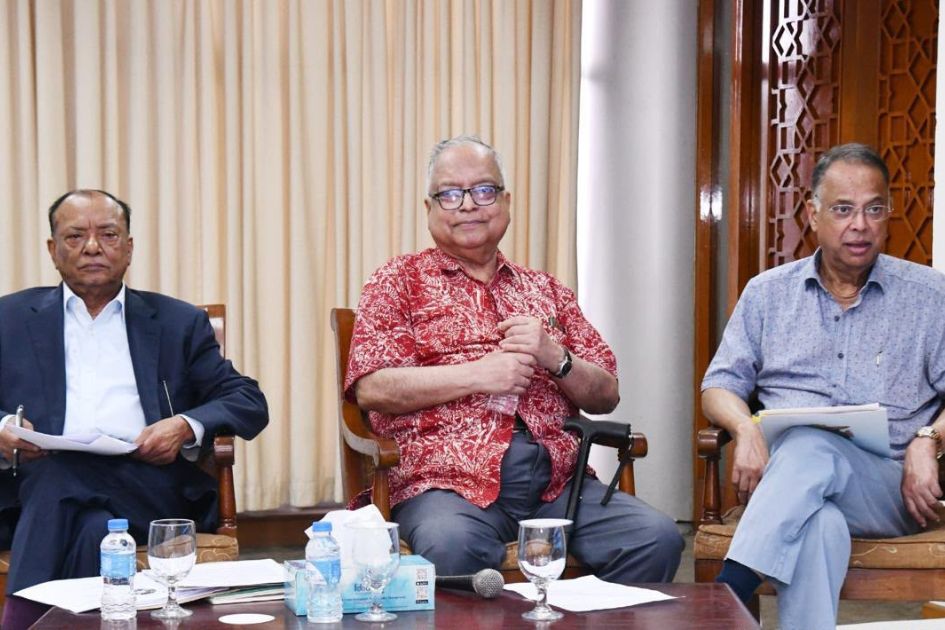
Power, Energy and Mineral Resources Minister Iqbal Hasan Mahmud attended the conference as the chief guest.
National Professor Dr Mahbub Ullah chaired the event. Special guest ABM Abdus Sattar, principal secretary to the prime minister, also attended.
Panelists included BUET Professor Dr Ejaz Hossain, Director General of the Bangladesh Institute of Development Studies Dr A K Enamul Haque, Centre for Policy Dialogue Executive Director Dr Fahmida Khatun and Planning Commission member Dr Niamat Ullah Bhuiyan.




