

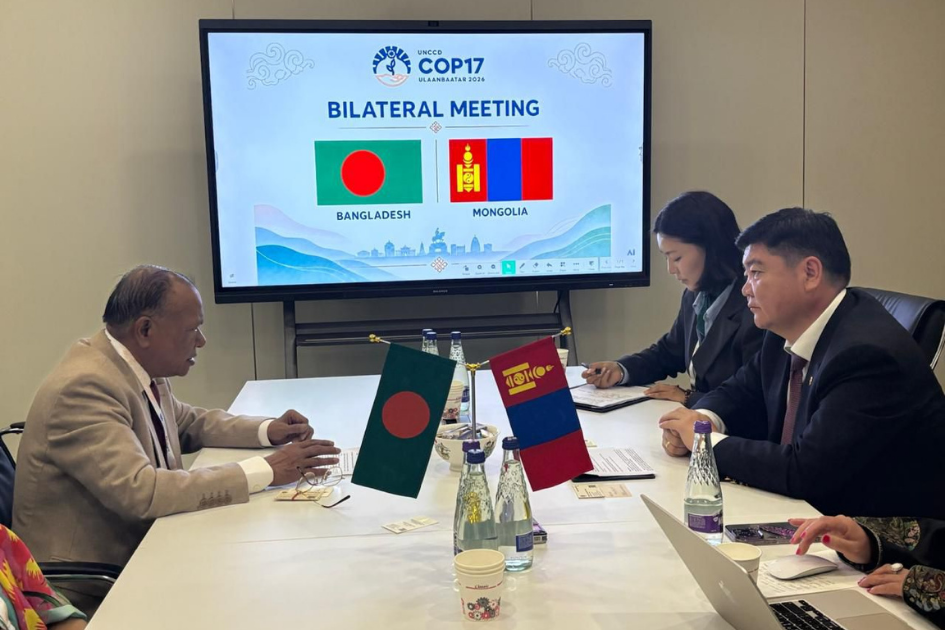



Bangladesh used the UNCCD COP17 platform to pursue cooperation on environmental restoration, renewable energy, migration and sustainable resource management with regional and international partners.
Dhaka Seeks New Partnerships with India, Mongolia on Drought, Land Restoration and Climate Resilience
Bangladesh has stepped up climate diplomacy at the 17th Conference of the Parties (COP17) to the United Nations Convention to Combat Desertification (UNCCD) in Mongolia, holding four high-level bilateral meetings with India, Mongolia and the International Organization for Migration (IOM) to strengthen cooperation on drought, land restoration, climate resilience and climate-induced migration.
The meetings, held on the sidelines of the UNCCD conference in Ulaanbaatar, focused on expanding environmental partnerships, protecting vulnerable ecosystems, promoting sustainable resource management and addressing growing challenges linked to climate change.
COP17 is bringing together countries to tackle global challenges of land degradation, desertification and drought – issues increasingly intensified by climate change and threatening food security, livelihoods and ecosystems worldwide.
“Strengthening regional and international partnerships is essential to address cross-border challenges such as climate change and land degradation,” Environment, Forest and Climate Change Minister Abdul Awal Mintoo said, adding that Bangladesh is ready to share its experience while learning from successful initiatives undertaken by partner countries.
During a meeting on Aug 24 with India’s Environment, Forest and Climate Change Minister Bhupender Yadav, Dhaka and New Delhi agreed to further strengthen their longstanding cooperation on climate and environmental issues.
The two sides explored collaboration in climate-resilient agriculture, efficient water management, drought-risk reduction, forest conservation and biodiversity protection. Given the shared ecosystems and climate risks across the Bay of Bengal region, both countries highlighted the importance of protecting the Sundarbans and coastal ecosystems.
The discussions also covered greater use of remote sensing and Geographic Information System (GIS) technologies, technical capacity-building and knowledge exchange.
Renewable energy cooperation emerged as another key area, with the two sides exploring opportunities for sharing experience and technology in solar power, battery energy storage, land-efficient renewable energy solutions and environmentally sustainable energy management.
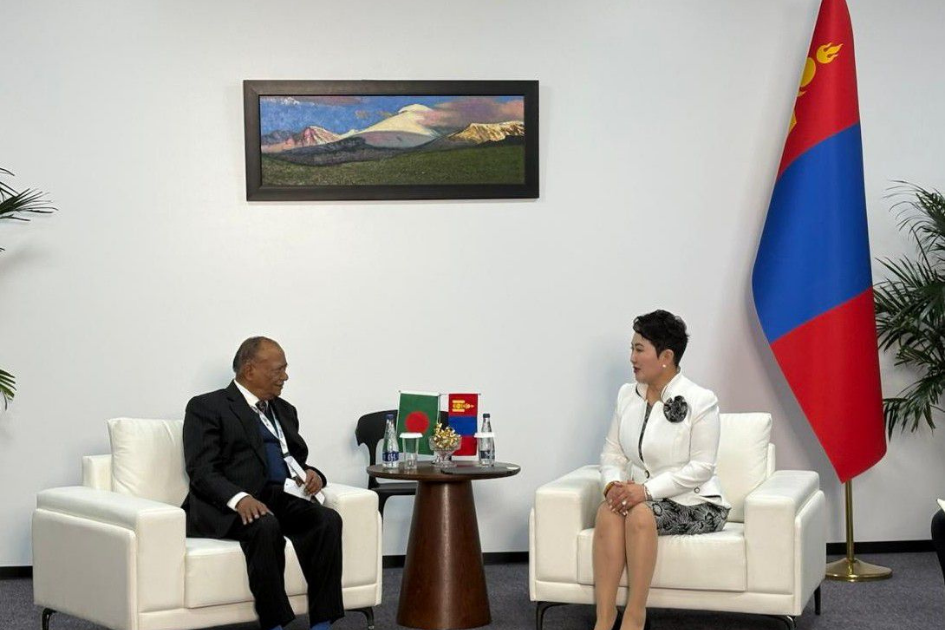
In talks with Mongolia’s Foreign Minister Battsetseg Batmunkh, Bangladesh and Mongolia discussed ways to deepen bilateral relations, including strengthening diplomatic representation through the possible opening of embassies in both countries.
Beyond environmental cooperation, the two sides explored expanding economic ties, including greater opportunities for Bangladeshi exports of agricultural products, processed foods, pharmaceuticals and readymade garments to Mongolia.
The talks also covered labour mobility, with both sides examining safe and regular migration pathways for skilled and semi-skilled Bangladeshi workers in sectors including construction, agriculture and services to support Mongolia’s workforce needs.
They stressed the importance of government-to-government arrangements, skill recognition and stronger protection mechanisms for migrant workers.
The Bangladeshi delegation also met IOM Deputy Director General for Operations Ugochi Daniels on Aug 26 to discuss the growing links between climate change and human mobility.
The meeting highlighted the need for stronger international cooperation to support climate-vulnerable communities, enhance resilience and ensure safe, orderly and regular migration as climate impacts increasingly affect livelihoods and displacement patterns.
In another meeting with Mongolia’s Environment and Climate Change Minister Sandag-Ochir Tsend, Bangladesh and Mongolia agreed to explore a formal framework for environmental cooperation through a proposed Memorandum of Understanding (MoU).
The two countries identified land restoration, biodiversity conservation, climate adaptation, sustainable natural resource management and capacity development as potential areas of collaboration.
Bangladesh expressed interest in learning from Mongolia’s experience in rangeland management, desertification control and drought resilience, while offering to share its own experience in restoring wetlands, coastal ecosystems and promoting community-led environmental stewardship.
The two sides also explored cooperation in GIS and remote sensing applications, drought early-warning systems, expert exchanges, training programmes, joint research and pilot projects.
The meetings underline Dhaka’s effort to build stronger climate partnerships beyond borders as countries seek collective solutions to rising drought risks, ecosystem degradation and climate-driven displacement.
Through expanded cooperation with regional and international partners, Bangladesh aims to strengthen climate resilience, restore ecosystems and advance sustainable development efforts at a time when environmental challenges are becoming increasingly interconnected globally.




