




Bangladesh plans mass tree planting and carbon markets to tackle climate risks, cut emissions and generate revenue, but success hinges on governance, transparency and long-term ecosystem protection and inclusive growth
Bangladesh is preparing to plant 250 million trees between 2026 and 2031 in a high-stakes effort to strengthen climate resilience while entering the fast-growing global carbon market. The initiative, linked to leadership within the Bangladesh Nationalist Party, reflects a dual ambition: confronting escalating climate risks while unlocking new economic opportunities through carbon trading.
One of the world’s most climate-vulnerable nations, Bangladesh is already grappling with rising sea levels, intensifying cyclones, river erosion and increasing temperatures. These pressures are steadily eroding livelihoods and straining the national economy, making innovative climate financing mechanisms increasingly urgent.
Against this backdrop, the government is exploring carbon trading as a potential revenue stream. Analysts suggest the emerging market could generate more than $1 billion annually while supporting the country’s transition to low-carbon development. Following the 12 February national election, the new administration has placed carbon markets at the center of its economic strategy. After a 4 March meeting with senior officials from the Ministry of Environment, Forest and Climate Change, government representatives indicated that carbon trading could become a major revenue source.
State Minister Shaikh Faridul Islam emphasized the government’s intent to align environmental action with economic growth. “Carbon markets can help Bangladesh turn climate action into economic opportunity,” he said. “Our goal is to build a transparent system that attracts international investment while protecting our Environment.”
He noted that while the ready-made garment sector continues to dominate exports, carbon trading could emerge as a new pillar of the economy by linking environmental protection with global climate finance. With the right transparency and safeguards, carbon markets could help Bangladesh move beyond donor-dependent climate finance toward a more sustainable, investment-driven model.
Carbon Markets in Context
Globally, two main types of carbon markets operate: compliance and voluntary. In compliance markets, countries that fail to meet emissions reduction targets can purchase carbon credits from others to offset excess emissions. In voluntary markets, companies buy credits to compensate for emissions and strengthen their environmentally responsible image.
Carbon credits function as permits that allow an entity to emit a specific amount of greenhouse gases, typically equivalent to one tonne of carbon dioxide. By assigning a price to carbon, the system creates financial incentives to reduce emissions and supports the transition to low-carbon development.
Bangladesh’s experience with carbon markets dates back nearly two decades. In 2006, Infrastructure Development Company Limited registered its first Clean Development Mechanism project under the United Nations Framework Convention on Climate Change. Since then, IDCOL has sold approximately 2.53 million carbon credits, generating about $16.25 million in revenue, around Tk 170 crore. Most of this revenue came from improved cookstove programmes, with additional contributions from solar home systems.
While important, this revenue represents only a fraction of the potential. The ready-made garment sector, facing rising global demand for sustainable practices, could soon emerge as a major participant, purchasing credits to meet supply chain emissions targets. “With the right policies and investments, Bangladesh can position itself as an important player in the global carbon market,” said Alamgir Morshed.
Other sectors are also contributing. Five brick manufacturers adopted Hybrid Hoffman Kiln methods, reducing coal use by half and cutting approximately 65,603 tonnes of carbon dioxide emissions between January 2018 and March 2020, generating around Tk 3 crore. In the waste sector, Dhaka-based NGO Waste Concern established a pioneering compost plant that reduced 62,000 tonnes of carbon dioxide emissions and earned about Tk 25.67 lakh, although no credits have been sold since 2014.
Trees and Carbon Credits
The proposed tree plantation drive could play a significant role in Bangladesh’s emissions strategy. A mature tree absorbs around 20 kilograms of carbon dioxide annually. If fully realized, 250 million trees could remove up to 5 million tones of CO₂ each year. At current voluntary carbon market prices of $5 to $15 per tone, this could generate $25 million to $75 million annually, with long-term potential exceeding $100 million as the market matures.
A key component is a national digital tree monitoring system. Each tree will be assigned a unique digital identity, tracking its GPS location, species and growth. Experts say this system is essential for ensuring transparency, credibility and compliance with international Measurement, Reporting and Verification standards.
However, challenges remain. Tree survival rates are often low due to weak long-term maintenance. Effective coordination among government agencies, investment in digital infrastructure and sustained community engagement are critical. Carbon market volatility and governance risks further underscore the need for strong regulatory oversight.
Sohanur Rahman, Executive Coordinator of YouthNet Global, warned against overdependence on carbon credit sales. “If Bangladesh sells too many carbon credits now, it risks future shortages as emissions rise with industrialisation. Climate finance must not undermine long-term resilience,” he said. Lessons from Kenya, where large-scale tree planting increased tree cover but failed to halt natural forest loss, highlight the need for strong governance and ecological integrity.
Strategic site selection, including coastal belts, riverbanks and degraded lands, can maximize impact. Expanding Trees Outside Forests, such as roadside and homestead plantations, may enhance carbon absorption. Mangrove restoration in the Sundarbans offers additional benefits, including storm protection, biodiversity conservation and blue carbon potential.
Beyond Forestry: Industrial and Transport Emissions
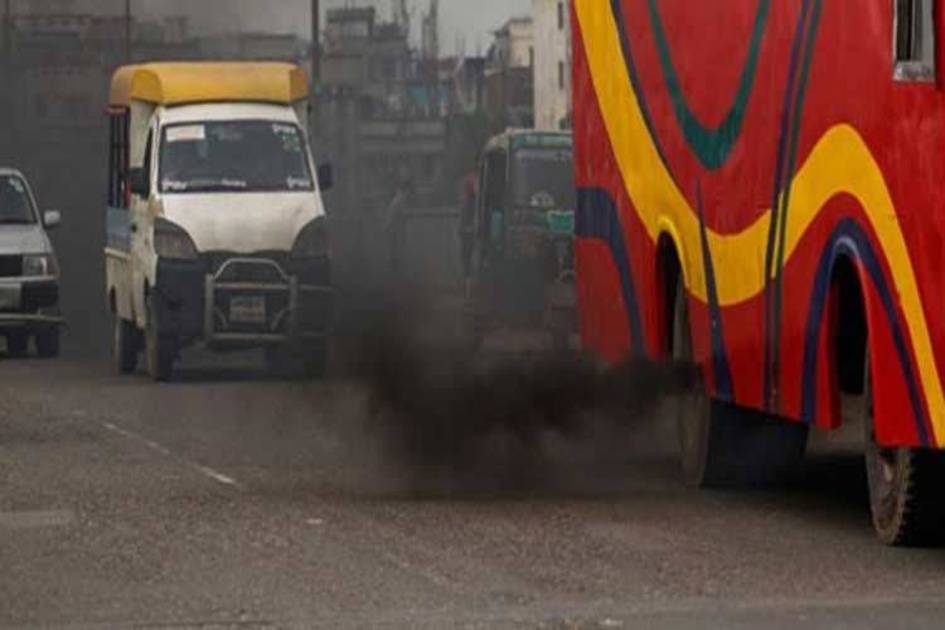
Forestry alone cannot offset growing emissions. In 2023, the transport sector produced 11.6 million tonnes of CO₂, accounting for 13 percent of total emissions, with road transport contributing 77 percent. Rapid urbanization is expected to add 3.2 million two- and three-wheelers by 2050, increasing air pollution and greenhouse gas emissions.
Under its latest climate commitments, Bangladesh aims to reduce transport emissions by 7.74 percent unconditionally and 14.04 percent conditionally by 2035. Plans include expanding electric vehicles, improving fuel efficiency and promoting mass transit systems such as MRT and BRT. A just transition framework aims to ensure equitable mobility for women, elderly people and persons with disabilities while supporting workers through training, micro-credit and financial incentives. Inland water transport, one of the most sustainable mobility options, continues to require more policy attention.
Global Market Dynamics
Carbon credits are generated through projects that reduce or avoid emissions, including renewable energy, energy efficiency, reforestation and methane capture. Verified projects are certified by recognized third-party bodies under the UNFCCC and aligned with the Paris Agreement, particularly Article 6, which enables international carbon trading.
Globally, carbon prices fluctuate depending on policy, project type and market demand. Recent disruptions, including the Russia-Ukraine war, have lowered demand and prices for carbon credits, highlighting the volatility of this emerging market.
Dr Sakib Bin Amin of North South University emphasized that strong institutions and public awareness are essential for success. “Without robust policy design and transparency, carbon markets cannot function effectively,” he said. Analysts suggest complementary measures, including carbon taxes, blue carbon projects and green technology partnerships, could further strengthen Bangladesh’s climate strategy.
Looking Ahead
As Bangladesh finalizes its carbon market framework, the stakes are high. Success will depend not just on the number of trees planted or carbon credits sold, but on whether these initiatives deliver real climate resilience, protect ecosystems and ensure a just and inclusive transition.
“This initiative could reshape climate action in Bangladesh. By linking plantation efforts with carbon markets, we can not only reduce emissions but also create new economic opportunities for local communities,” said Dr Saimum, foreign affairs special assistant to the BNP chairperson.
With careful planning, strong governance and sustained community engagement, Bangladesh has the potential to emerge as a credible player in the global carbon economy while building long-term climate and economic resilience.




